The Welsh Government is not providing enough funding to national institutions to support its free entry policy, the Senedd’s culture committee has said.
In a report published earlier this month, which examined charging for exhibitions at Amgueddfa Cymru, the committee said the “Welsh Government has a responsibility to fund our national culture institutions adequately so they can afford to provide free entry”.
“The Welsh Government has not met this responsibility,” the report continued. “Over a decade, the Welsh Government has cut public funding for cultural services in Wales to the extent that it is now among the lowest in Europe.”
The government reduced Amgueddfa Cymru’s revenue funding by 6% last year in what the museum described as the “biggest cuts to Amgueddfa Cymru’s budget ever”.
Around 90 staff out of 600 took voluntary redundancy after the cut, and the institution introduced visitor charges for special events such as tours and exhibitions, in addition to closing its sites earlier in the winter.
Although the government reversed much of the cut in this year’s budget, the report said any increase in funding had been “wiped out by inflation”.
Advertisement
This has left Amgueddfa Cymru facing a real-terms revenue cut of about 2% between 2023-24 and 2025-26.
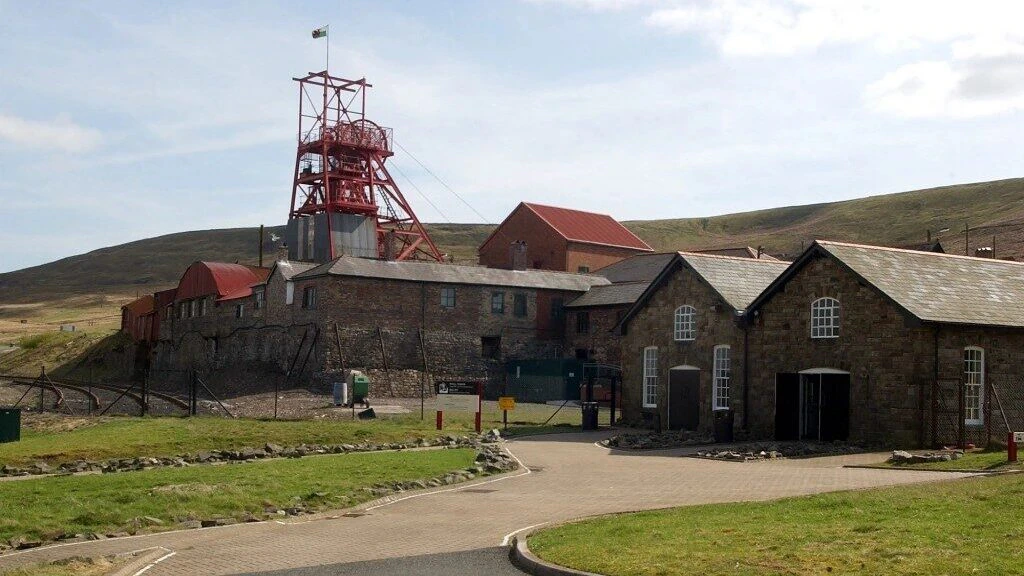
The committee said the current level of funding provided by the government was not adequate to facilitate the free entry policy, which was implemented across Amgueddfa Cymru sites in 2001. This has led to measures such as a charge being introduced for the underground coal mining tour at Big Pit National Coal Museum in Blaenavon, Torfaen.
The report comes amid ongoing debate about the funding of Wales's national institutions. The previous deputy minister for arts, sport and tourism told the Senedd committee last year that the government was considering the reintroduction of admission fees at Amgueddfa Cymru sites.
The Welsh Government has since confirmed that it remains committed to free entry, but the report said it was an “indictment of these historic low levels of funding” that the minister had mooted dropping the free entry policy.
Big Pit tour
The report called for the current entry charge for the underground tour of the mine at Big Pit to be dropped. The charge, which stands at £8 for full price ticket and £3 or £5 for a concessionary ticket, was first introduced on a trial basis last year and remains in place.
Advertisement
Although 98% of visitors indicated that they were happy with the amount they paid during the pilot phase, the committee said it believed that the “principle of free entry to the sites should extend to the underground tours at Big Pit”.
The report said the situation was a “question of principle rather than of data”.
“We believe that the underground tours are a unique and integral part of Big Pit, which provides an invaluable insight into the central role of coal mining in Welsh history,” said the committee. “People should not have to pay to gain this insight into their own past.”
The committee said the charge was contrary to the government's free entry policy. “The Welsh Government’s general policy on free entry does not include caveats that this policy can be suspended if data supports its suspension,” said the report.
“Accordingly, we think underground tours at Big Pit should remain free as a point of principle, and free entry should not be abandoned based on the data gathered from charging trials.”
The report said that the committee appreciated that it is “expensive for Amgueddfa Cymru to provide access to the underground workings at Big Pit”.
Advertisement
“However, we think this is an argument for the Welsh Government to provide an adequate level of funding, not for Amgueddfa Cymru to charge for access,” it said.
“We acknowledge the imperative Amgueddfa Cymru faces to raise additional income, given years of underfunding from the Welsh Government,” added the report.
“We are concerned that Amgueddfa Cymru feels compelled to introduce charges due to budgetary pressures and reiterate our call for the Welsh Government to increase its funding for culture, including for Amgueddfa Cymru.”
The report also examined the value of charging for temporary exhibitions, finding that the income they raised was “relatively modest”.
The committee heard evidence that while some touring temporary exhibitions had been successful, others had been “very expensive disasters”, and that it was difficult for such exhibitions to return a profit once staff time was taken into account.
The report found that “rather than being primarily commercial prospects, charged-for temporary exhibitions are ways to subsidise a diverse and varied offer”.
The committee recommended that “any income from exhibitions should not replace the need for the Welsh Government to fund Amgueddfa Cymru adequately”.
In its consultation for the report, the committee heard evidence from museum sector representatives including Mark O'Neill, the former head of Glasgow Museums, Lisa Ollerhead of the Association of Independent Museums, Nia Elias from Amgueddfa Cymru/Museum Wales and Rhodri Llwyd Morgan, from the National Library of Wales.