
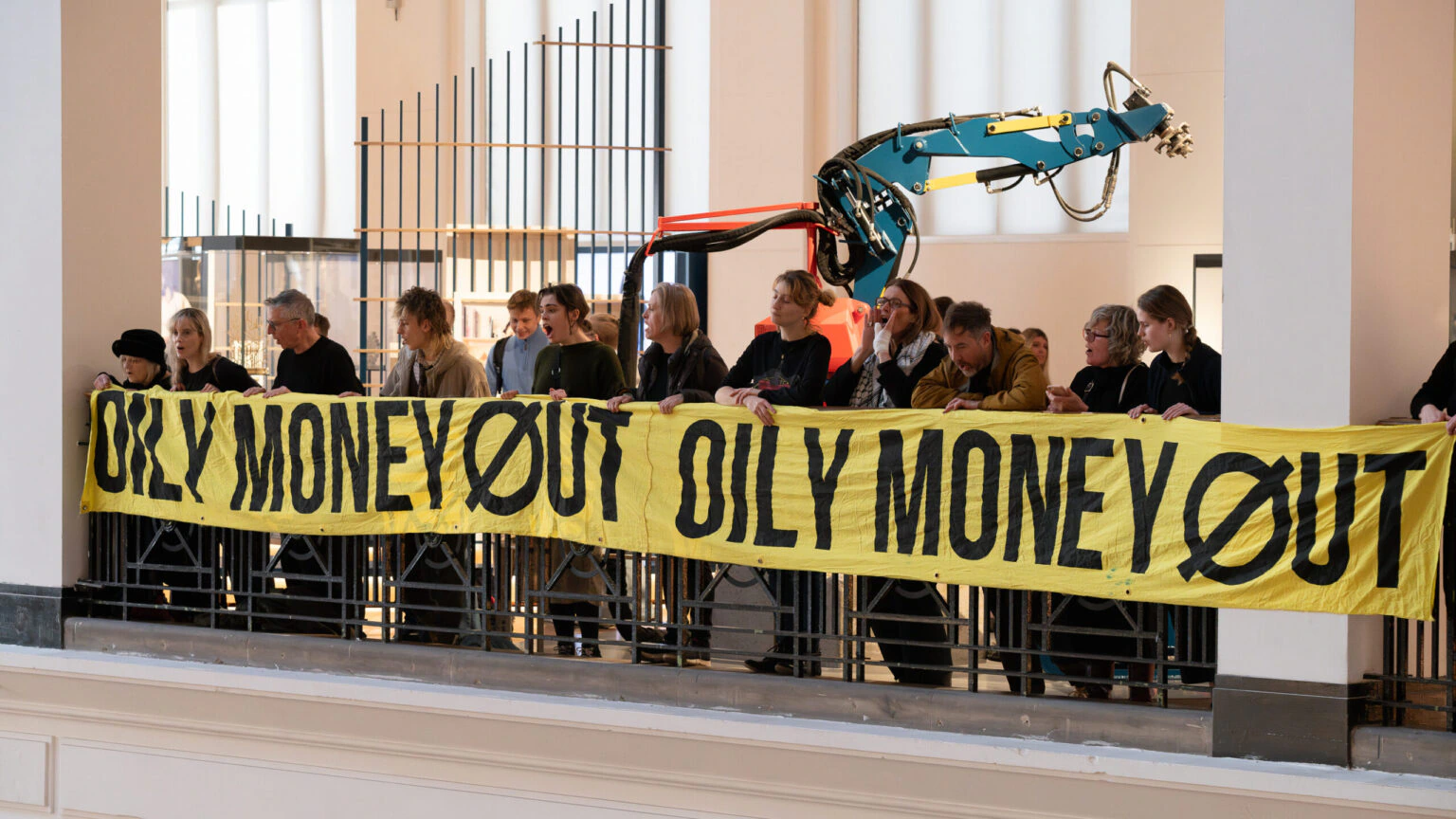
Museums should adopt an ethical red line on sponsorship rather than focusing on “some imagined opposition to philanthropy”, the activist coalition Culture Unstained has said.
The group, which represents a range of campaigners against fossil fuel money in the culture sector, has responded to a letter published in the Financial Times last week calling for an end to the “relentless negativity” around the use of corporate money to support the arts.
The letter was signed by a number of cultural institutions, including the Science Museum Group, British Museum, National Gallery and Victoria & Albert Museum. The organisations wrote that activism against sponsorship had the potential “for ‘killing off’ arts and culture in the UK” and argued that cultural institutions “need to operate within the economic structures in which society operates”.
But a spokesperson for Culture Unstained told Museums Journal that the group is not opposed to philanthropy and believes that taking an ethical and sustainable approach to sponsorship would be a “win-win” for the culture sector.
"No-one has actually demanded the directors of the British Museum and Science Museum reject all philanthropy,” said the spokesperson.
“However, their own stakeholders have repeatedly called on them to simply follow the majority of other museums in transitioning away from sponsorship deals with those profiting from fossil fuels, arms and tobacco – three of the most deceptive and destructive sectors of industry in the world.
Advertisement
“Rather than engaging with deeply held concerns about climate justice, human rights and the genocide in Gaza, and adopting what should be, in 2025, an obvious ethical red line, they choose to invest their energy in creating some imagined opposition to philanthropy, and sign letters that do little to further the debate we actually need; how to achieve the win-win of a culture sector that is both sustainably – and ethically – funded.”
The debate comes amid continuing protests against cultural institutions.
A group of teachers, scientists and parents launched a call this week for a “educational, cultural and academic boycott” of the Science Museum over its relationship with the oil giant BP and Adani Green Energy, which is part of an umbrella group with significant interests in coal and arms production.
The boycott is supported by the National Education Union, the UK’s largest education union, which passed a motion at its conference in April to support teachers who refuse to take school trips to the Science Museum until its fossil fuel sponsors are dropped.
A statement from the group urged schools and universities “not to bring student groups to the Science Museum while Adani and BP remain sponsors”.
The signatories said they would refuse to contribute to Science Museum events and activities and would refuse contracts with the museum.
The Science Museum Group has strongly defended its stance on working with fossil fuel companies, saying the industry is playing a vital role in the transition to green energy. The institution dropped the Norwegian oil firm Equinor as a sponsor last year over its failure to reach climate targets.



This is a debate is more nuanced than that requires more that “imagined opposition” and “red line” sound bites because we’re talking about complex supply chains along with a situation where deeply held personal beliefs hit the need to have defined, objective and agreed processes. Core to this debate is who get to decide what the “red lines” are and who should be adhering to them? So for example, should a museum turn down sponsorship from a company developing cancer treatments that don’t force patients to be in hospital as they can be used at home, reducing stress and supporting wellbeing? Sounds extreme right, but bear with me…
Should it be Museums themselves, government or activists who set the red lines and, whoever it is, why them? If it should be activist groups, then which groups? Just Culture Unstained or any/all activist group or campaigning organisation and what happens if there’s any contradiction between them?
The spokesperson has laid out fossil fuels, arms and tobacco. But what about pornography, gambling, vaping, sugar, alcohol, pharma, factory farmed meat & fish, consumer electronics, water companies, non-sustainable furniture, etc. etc.? Are they all OK?
What about industries and companies linked to the above industries – protests against Baillie Gifford & Barclays demonstrate that there’s opposition to banking groups because of their links to countries & industries. So if they’re out then you also have to consider pensions, insurance, legal services, IT companies all of whom will have these as clients and that’s before we even get into geopolitics and human rights. What about other companies that also use the services of those What about industries that use fossil fuels – most plastics, airlines, trains, buses, ferries, space craft, ships and cars? What about companies that use these vehicles for deliveries or plastics for packaging?
So back to the company developing those cancer treatments. These have the potential to significantly improve the experiences of cancer patients of all ages, who could have anything against that? But, they have to be developed in micro-gravity so they hit a combination of pharma, space (fossil fuels & defence), and plastic. So you tell me.
(forgive the typos, it’s pre-coffee o’clock)
Thank you Alexandra for your comment. Absolutely perfect explanation of the much more complicated situation we’re actually working within.