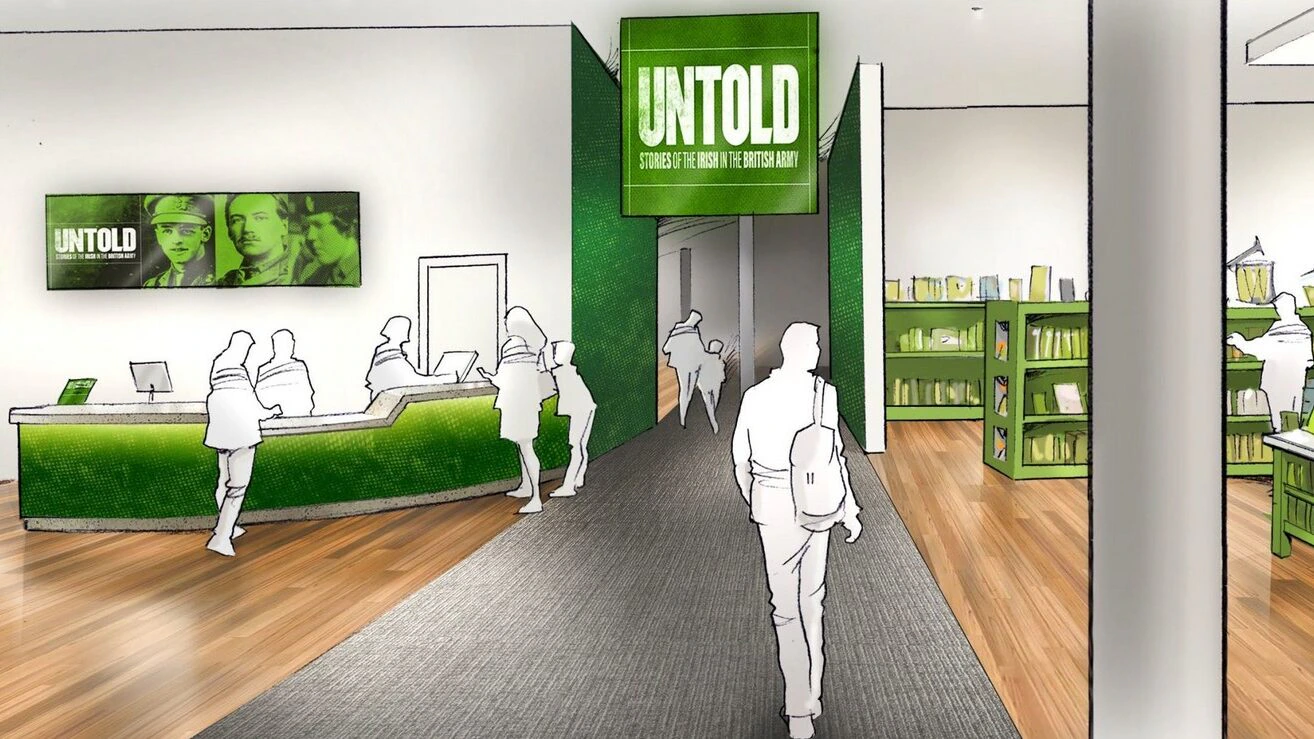
Plans have been unveiled for a £13.6m museum that will explore the 350-year history of Irish soldiers and their families in the British Army.
Untold: The Museum has received development funding of £249,239 from the National Lottery Heritage Fund to create a permanent museum across two sites in Belfast and Enniskillen. The museum plans to apply for a full National Lottery grant of £1,721,595 at a later date.
A statement announcing the project said the museum would “recognise, explore and preserve the shared heritage of more than three centuries of Irish men and women from all traditions”.
The museum will incorporate collections and archives with “modern, objective interpretative design”. The collections are currently housed across six existing regimental museums and will be consolidated as part of the project.
The museum will tell the story of Irish soldiers in the British Army since the 1600s and will be characterised by its “all-island, all-community nature”.
It aims to connect with contemporary social and political histories and communities, and serve as an educational resource for schools and colleges across Ireland.
Advertisement
Irish soldiers have played a significant role in British military history, comprising around 40% of the British Army during the 19th century.
Troops from the 27th (Inniskilling) Regiment of Foot fought at the Battle of Waterloo and were described by Napoleon Bonaparte as “the most obstinate mules I ever saw”.
In November 1918, the 2nd Leinsters became the first British Army regiment to march across the field of Waterloo since Napoleon’s defeat in 1815.
Untold will open as a single museum on two sites, with access to the collections further enhanced through a new online platform.
Phase one will see the creation of new galleries in a restored, listed linen warehouse at 28 Bedford Street, Belfast, scheduled to open in 2027.
The 1867 red brick warehouse was one of local Irish architect William Barre’s final designs and will open fully to the public for the first time in its history. The Architectural Heritage Fund has put a grant of £10,000 towards conservation work on the building.
Advertisement
Phase two will focus on redeveloping the existing regimental galleries at Enniskillen Castle.
Museum chair Hugh Crossey said the project would “hopefully inspire people to see things differently and make meaningful connections across generations”.
“Thanks to National Lottery players we can now begin to develop plans for phase one – to reimagine No. 28 Bedford Street as an inclusive space for exploration and discovery,” he said.
“Education will be at the heart of all the exhibitions, offering our visitors the chance to explore the lives of the Irish men and women who rose above divisions of class, politics and religion and overcame extremes of hardship to make an indelible mark on our history. In sharing these stories, Untold seeks to contribute to ongoing peace and reconciliation across the island.
“We are already surprised at the number of people from a range of traditions who have discovered ancestorial and family histories amongst Irish regiments in the British army. When fully completed I would encourage everyone to visit this new immersive exhibition and learn more about our – and potentially their – shared heritage.”
Paul Mullan, the Heritage Fund’s Northern Ireland director, said: “Thanks to money raised by National Lottery players, we’re able to award Untold: The Museum a development grant to secure their collections and help put in place plans for a new museum that would bring back into use an exceptional heritage building in Belfast’s Linen Quarter.
Advertisement
“We wish the team every success in this development phase and encourage people to get involved in consultation activities that will shape plans to reflect on the diverse stories from four hundred years of military history in an inclusive and accessible space.”
The collections that will be consolidated as part of the project are: The Inniskillings Museum, The Royal Irish Fusiliers Museum, The Royal Ulster Rifles Museum, The Royal Irish Regiment Museum, The Collections and Archives of The Royal Irish Regiment, and The Collections and Archives of The North Irish Horse. Southern regiments that were disbanded after Irish independence in 1921 will also be included in the story.
The museum has been established “with organisational sustainability at its core”. All future design work aims to address the environmental impact of museum displays and the long-term conservation of collections and facilities.
The museum will be running community and education workshops during 2025.