The team behind the redevelopment of Mosul Cultural Museum, which was looted and damaged following the capture of the city by Islamic State militants in 2014, hope it will become a powerful symbol of cultural and community regeneration in Iraq.
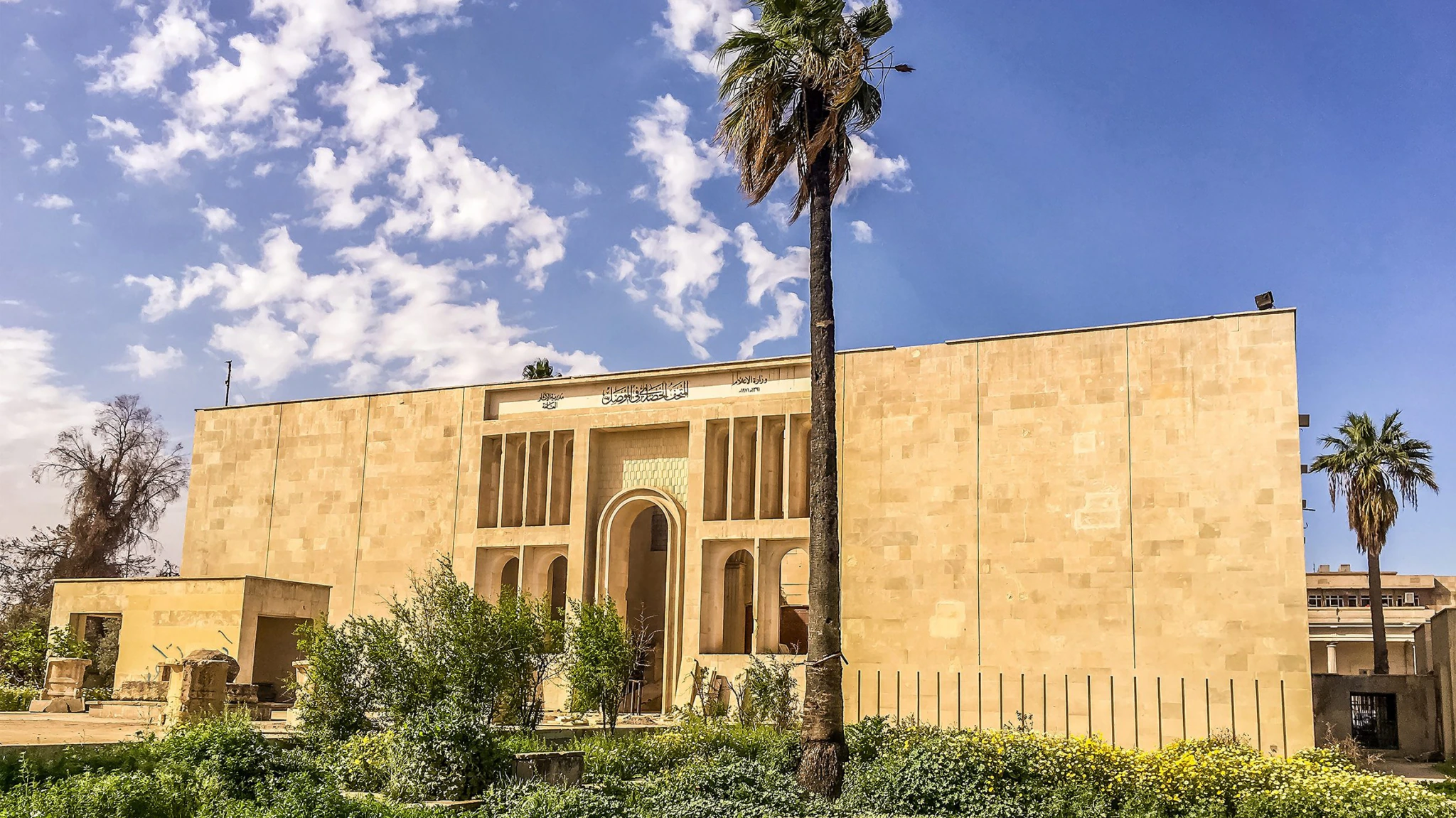
The museum, the second largest in the country after the national museum in Baghdad, was established in 1952 to tell the story of northern Iraq.
Following Mosul’s capture by Islamic State in 2014, many artefacts were looted and the building itself suffered extensive damage.
Items from the collection that were damaged or destroyed include a colossal lion from Nimrud, two lamassu (guardian) figures and the throne base of King Ashurnasirpal II (king of Assyria from 883 to 859 BC).
More than 28,000 books and rare manuscripts were burned during the attack on the museum.
Since 2018, an international consortium led by the Iraqi State Board of Antiquities and Heritage (SBAH), has been working to restore Mosul Cultural Museum.
Advertisement
The other partners are Musée du Louvre and the Smithsonian Institution, which have been supporting staff and helping with the care and conservation of the collections.
The World Monuments Fund (WMF) joined the consortium in 2020 to oversee the restoration programme of the museum building and its surroundings.
Funding for the restoration has come from the International Alliance for the Protection of Heritage in Conflict Areas (ALIPH). This global fund dedicated to the protection and rehabilitation of cultural heritage in conflict zones and post-conflict situations was created in 2017 in response to the massive destruction of cultural heritage over the past two decades, predominantly in the Middle East and the Sahel region of Africa.
ALIPH is a public-private partnership featuring several countries and private donors.
The consortium behind the restoration recently released further details of the project. It also opened as exhibition, The Mosul Cultural Museum: From Destruction to Rehabilitation, which can be seen online following its run at the Royal Hall in Mosul.
The Mosul Cultural Museum was designed by Mohamed Makiya, Iraq’s leading modernist architect. Makiya, who was 101 when he died in 2015, was born in Baghdad. In 1946, he founded Makiya Associates in Iraq, later expanding the firm to Bahrain, Oman, London, Kuwait and Doha.
Advertisement
In 1959, Makiya became a founding member of Baghdad University’s Department of Architecture, where he helped teach the country’s first generation of trained architects.
In the late 1980s he moved to London, where he set up the Kufa Gallery to promote Iraqi and Arab culture through exhibitions and discussions.
Despite Mosul Cultural Museum being inaugurated in 1952, its main building, designed by Makiya, first opened to the public in 1974.
The partners have been stabilising this building, restoring of its collections, and training and equipping the Mosul Cultural Museum team with the tools needed to reopen the museum in 2026.
“The full funding has just come through so we have to now mobilise everybody,” said Alessandra Peruzzetto, regional director, Middle East and North Africa, for the World Monuments Fund. “The first phase is completed and the design has been agreed. The next stage is the actual construction. A lot of infrastructure has to be put in place before we can do that.”
The firm leading the design is Donald Insall Associates, an architectural practice and historic buildings consultancy that specialises in the care, repair, adaptation and conservation of historic buildings, as well as designing new buildings for sensitive sites.
Advertisement
“It is is a very beautiful building,” said Tanvir Hasan, the lead director at the London office of Donald Insall Associates. “We're excited about bringing it back to life and showing what Mohamed Makiya was about, as much as the objects in it.”
Hasan said that a key aim of the restoration is to make the building more accessible and update the displays so that they reflect modern museological practices.
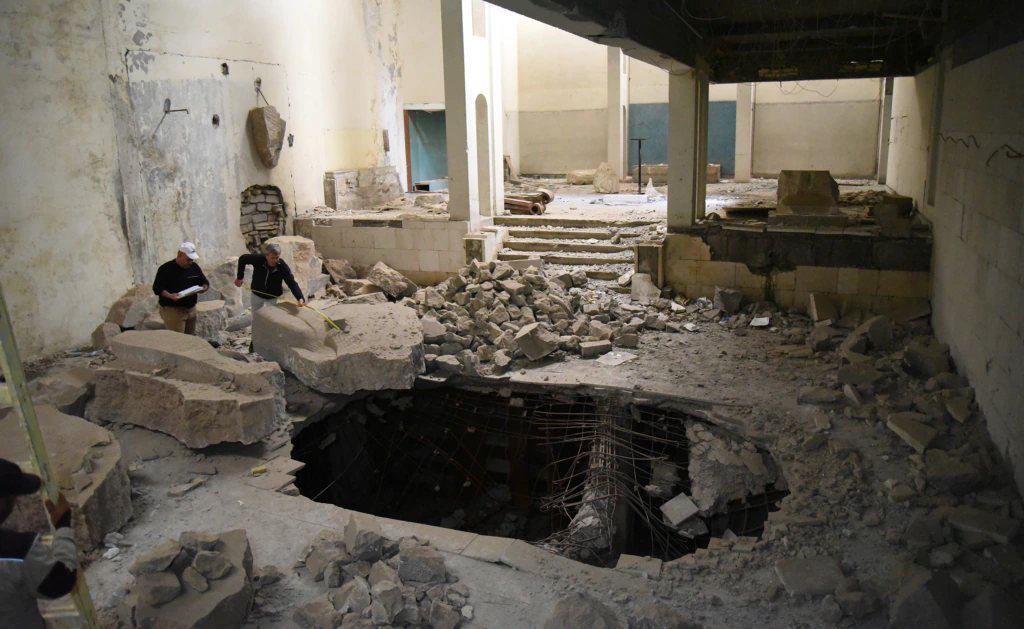
The part of the museum that suffered the most damage during the Islamic State attack was the central Assyrian Gallery, where the detonation of a bomb opened a large crater in the floor. To remind visitors what happened, the footprint of the damage will be visible.
Alterations made in later years to make the building less susceptible to damage, such as reinforcements to the main facade and the closing of two terraces, will be undone to open the building up again.
The museum’s garden will be revived, re-establishing much-needed green space in Mosul.
Once the restoration works are complete, the hope is that the museum will resume its position as a cultural landmark for the people of Mosul.
Hasan hopes that the reopening will be an important sign that life in Mosul is returning to normal after the upheaval created by Islamic State.
“It is bringing back normality to a very traumatised society – it is a return to everyday life,” Hasan said.
“People forget what psychological effect continuous war and disruption has had on the people. So we hope it [the restored museum] will bring peace and it will unite people who have been so disunited. We hope that it will help to heal some of the wounds.”