
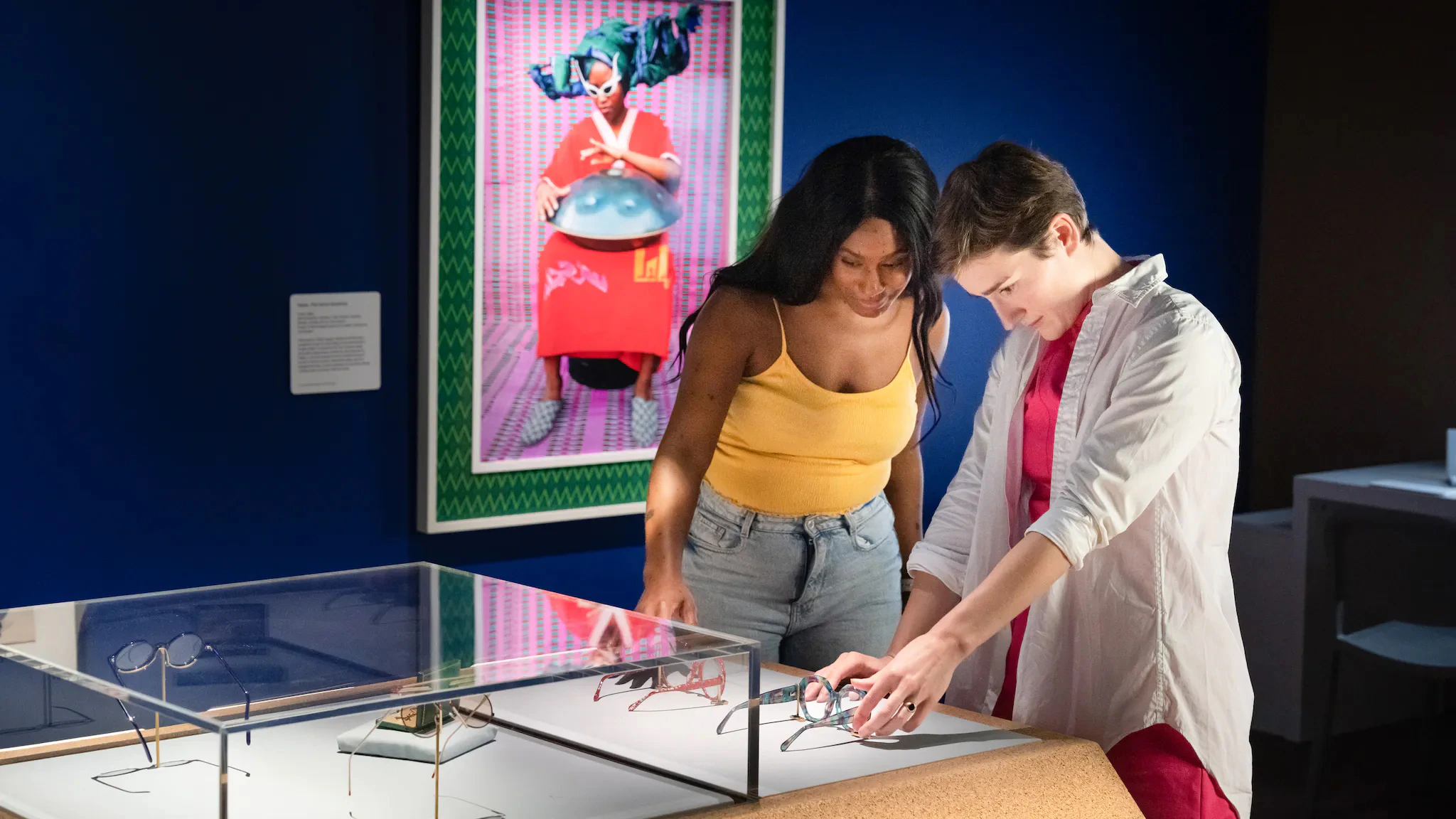
The Museums Association is among the partners in a research project exploring how access and inclusion can be transformed by putting disability at the centre of museum practice.
The £1m Sensational Museum project, which will acknowledge the diversity and difference of all visitors, begins in April and will run until July 2025. It will focus on two key areas: how museums manage the objects in their collections and how the stories behind these objects are communicated to the public.
The project is being led by Hannah Thompson, a professor at Royal Holloway, University of London.
“Many people want or need to access and process information in ways that are not only, or not entirely, visual,” Thompson says. “But museums are very sight-dependent places. Let’s imagine a museum experience that plays to whichever senses work best for you. The project aims to give all visitors inclusive, engaging, enjoyable and memorable experiences.”
The team also includes social design specialist Anne Chick, University of Lincoln; psychologist Alison Eardley, University of Westminster; and Ross Parry, a professor of museum technology at the University of Leicester.
“The Sensational Museum project will do something we have never tried before – following a museum object through its journey," Parry says. “Right from being collected and entering the museum for the first time, through its moment of documentation, up to when it is displayed and experienced in exhibitions and public activities.
Advertisement
“As we follow that object, we will be able to trace and evidence what gets imposed by our systems and practices – the moments when sensory assumptions are made in describing and recording the object, and in the way museum staff are assumed to interact with it. We have the opportunity, in other words, to re-imagine a new accessible form of collections management – both for people visiting and working in museums.”
The sector lead for the project is Esther Fox, who leads Curating for Change, an initiative that supports d/Deaf, disabled and neurodiverse curators. The impact lead is Matthew Cock, the chief executive at VocalEyes, which works to ensure that blind and visually impaired people have the best possible opportunities to experience and enjoy art and heritage.
“We are delighted to partner with the Sensational Museum on this exciting initiative to really examine what museums mean for audiences and staff," Fox says. “Our work with Curating for Change puts disabled people at the heart of leading change within museums and we are excited to support the Sensational Museum in building on this approach.”
Other project partners include Barker Langham, Collections Trust, Group for Education in Museums, The Museum Platform, Scottish Museums Federation, Wellcome Collection and AVM Curiosities.
Disability awareness has to come from within the sector, before it can promote it to audiences.
quite agree, the problem in the past has been a approach within the sector that prioritises visitor inclusivity. There are museums in UK that tout how accessible they are and have won awards for the same. What they really mean is that the galleries are accessible to visitors. Some of these have no workspaces that for instance could be used by someone using a wheelchair. The MA a while back acknowledged only about 1% of employees were disabled. This despite some humanities degrees noting 20-40% of their students have registered disabilities. Until this is addressed its difficult to take seriously any attempt by the sector to promote disability awareness out of the sector.
Be interesting to see if any of these ‘we help the disabled’ schemes actually come with jobs attached for people with disabilities. That is the help disabled people need in the Museum Sector, speaking from personal experience as someone who has struggled with disability since childhood. Too many of these schemes are of the ‘for us not with us’ type. What is really needed is for museums to dismantle barriers to disability employment in the sector by providing training and upskilling and then writing job specs so that people with disabilities are not excluded. As a largely graduate profession museum work needs to have a workforce that reflects the % of disabled people studying relevant degrees.
Both the Sensational Museum project and the Curating for Change initiative sound very exciting; I look forward to seeing how they progress. However, I’m concerned that fundamental work, developed by disabled people led-organisations over the last 50 years will be ignored (and precious resources will be wasted) as well-meaning but ignorant people try to re-invent the wheel, all over again. The Social Model of Disability (and its accompanying Language Code) was developed by disability activists back in 1976 and is adopted by many organisations and government bodies who wish to develop a strategy for change.
The opening sentence of this article states: “The Museums Association is among the partners in a research project exploring how access and inclusion can be transformed by putting disability at the centre of museum practice.” I very much hope it does not put “disability” at the centre of museum practice. I hope it puts “accessibility” at the centre. And, I hope, the Museums Association will formally adopt the Social Model of Disability at some point in the near future and integrate it into all its practices and policies.