National Museums Scotland (NMS) is to return a memorial pole to its place of origin in what is now British Columbia, Canada.
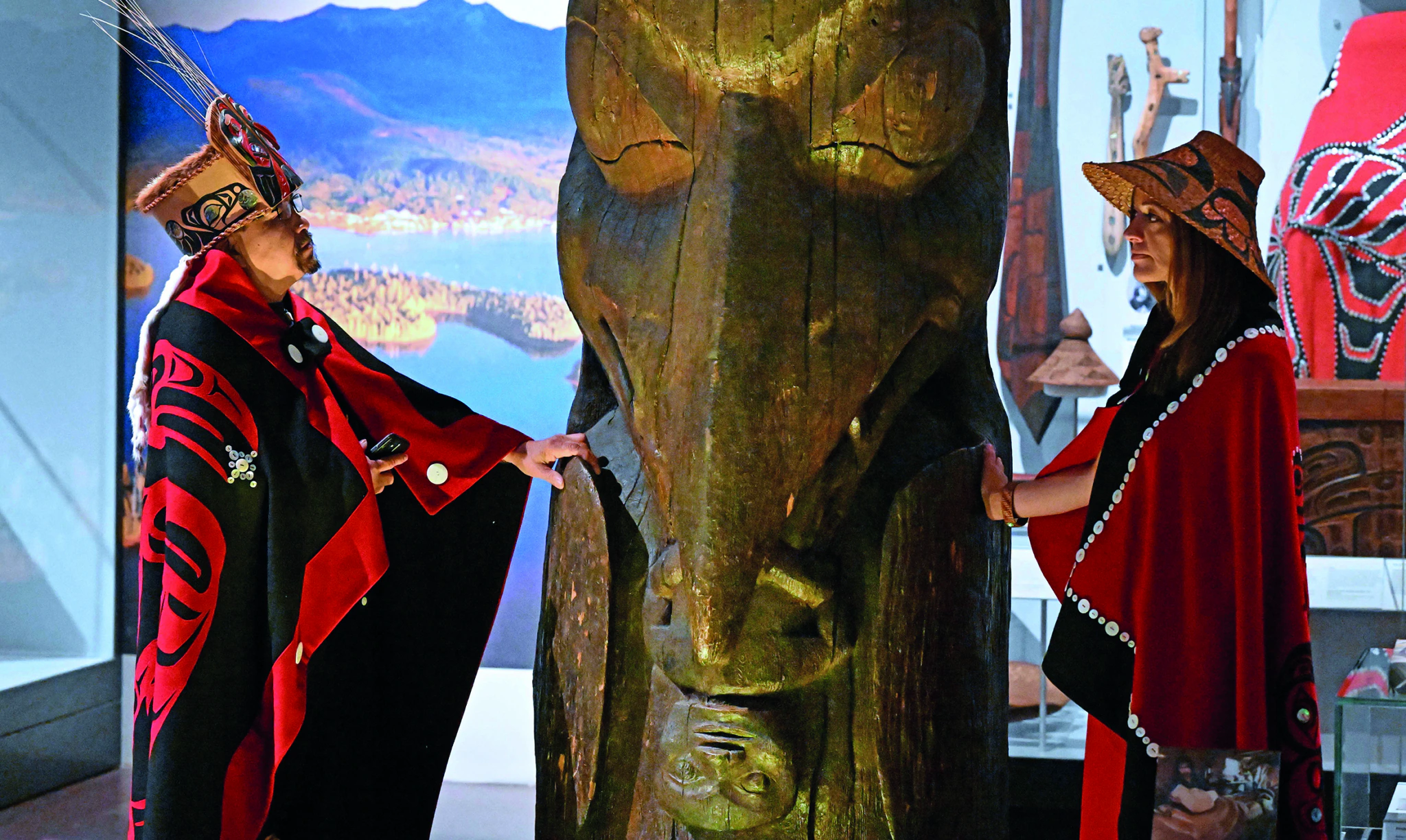
The House of Ni'isjoohl Memorial Pole has been on display in the National Museum of Scotland since 1930. The item was brought to the country almost a century ago.
Representatives from the Nisga'a Nation asked for the object to be returned during a visit to Edinburgh in August. The request was formally agreed by the NMS board of trustees of and then approved by the cabinet secretary for the constitution, external affairs and culture.
“We are committed to promoting understanding and dialogue with respect to those parts of the museum’s collection associated with our nation’s colonial history and its difficult legacies,” said NMS director Chris Breward. “The fact that our trustees have agreed to this request demonstrates our readiness to act on this commitment.
“We are pleased to have reached this agreement and to be able to transfer the Memorial Pole to its people and to the place where its spiritual significance is most keenly understood. We hope this is not the end of the process but the next step in a fruitful and ongoing relationship with the Nisga’a.”
Sim'oogit Ni'ijoohl, (Chief Earl Stephens) of Nisga’a Nation, said: "In Nisga’a culture, we believe that this pole is alive with the spirit of our ancestor. After nearly 100 years, we are finally able to bring our dear relative home to rest on Nisga’a lands. In means so much for us to have the Ni’isjoohl memorial pole returned to us, so that we can connect our family, nation and our future generations with our living history."
Advertisement
The Ni'isjoohl Memorial Pole was carved from red cedar in 1855 by artist Oyea Tait and his assistant carver, Gwanes, in memorial of Ts’aawit, a Nisga'a chief of British Columbia, Canada. It shows a series of interlocking figures relating to Ts’aawit's family history through his ancestors, family crests, and his clan.
The pole originally stood in front of the house of Ts’aawit's relatives in Ank’idaa village on the Nass River. In 1929, Marius Barbeau purchased the pole from its Nisga’a owners on behalf of the Royal Museum of Scotland, which later became the National Museum of Scotland. Barbeau was an ethnographer and curator at the National Museum of Canada from 1911 until 1949.
Sharon Heal, the director of the Museums Association, said: “We very much welcome this collaborative and ethical approach from National Museums Scotland. As our Supporting Decolonisation in Museums guidance says, repatriation of museum objects can be a ‘powerful cultural, spiritual and symbolic act’ that can help heal past wrongs. This is a great example of an open and proactive approach which places justice at the centre of the relationship.”