Staffing and temporary exhibitions will be severely affected in the event of funding cuts, a Museums Association survey has revealed.
The survey, completed by all nine hubs in England, assessed the potential impact on the hub museums of cuts to Renaissance in the Regions and local government funding.
The questionnaire posed two scenarios – a 25 per cent cut to Renaissance and an end to the scheme – and asked how each would affect the hub, museums and the sector as a whole.
In the event of a 25 per cent cut, all hubs said they would have to reduce staff numbers. And because many Renaissance staff are in learning and outreach, these activities will bear the brunt of the cuts.
Many respondents said either scenario would trigger a wide-ranging review to ensure a balanced service was maintained. There are fears that cuts to training and staff development will affect collections care and the professionalism of the sector.
The survey also revealed that since Renaissance was set up in 2002, audiences to the hub museums had increased on average by 46 per cent.
But the hubs warned that a 25 per cent cut to Renaissance funding could result in a 9.8 per cent drop in visitor numbers, and if Renaissance was axed, the fall would be 30 per cent on average.
Most respondents emphasised that it was difficult to consider Renaissance cuts in isolation from reductions in core funding that are certain across the country.
Temporary exhibitions will be hit hard with the resulting worry that displays would become static. With fewer temporary exhibitions, those that remain will be lower cost and, as a result, lower profile. Some said this would result in fewer visitors.
One hub museum said a 25 per cent cut in Renaissance would mean an immediate end to temporary exhibitions. Regional partnerships with national museums and intermuseum loans are also likely to decrease.
“In the absence of this funding, museums would be more likely to play safe and stick to exhibitions that appeal to existing core audiences,” was one response. As a result, wider work with non-traditional audiences was regarded as particularly vulnerable in a climate of cuts.
Overall, there were deep concerns of a turning back of the clock on the status of museums in the mind of councils and the wider society.
“I fear that museums will, once again, become a marginalised service lacking the capacity to fully exploit the potential of the collections and buildings to address wider social agendas,” said one hub member, who feared for the stability of museums and pointed to the danger of the sale of collections.
Another cautioned: “It is often forgotten how pitiful many of England’s regional museums were before Renaissance came along. Most did not deliver anywhere near the broad objectives that they do today.
“The end of Renaissance, or a serious curtailing of it, risks dragging museums back into the dark ages from which they have mercifully emerged.”
Although one hub said it had worked hard to develop a sustainable legacy from Renaissance programmes that it hoped would survive, it said that museums are people-based organisations, and Renaissance had enabled the employment of a greater range of experienced and skilled specialists.
“The loss of their input will inevitably reduce the range, scope and ambition of our work,” said the hub.
Reduce opening hours
25 per cent cut: 44%
100 per cent cut: 56%
Close sites or part of sites
25 per cent cut: 33%
100 per cent cut: 56%
Introduce or increase admission charges
25 per cent cut: 44%
100 per cent cut: 67%
Reduce staffing
25 per cent cut: 100%
100 per cent cut: 100%
Cut outreach, events or activities
25 per cent cut: 100%
100 per cent cut: 100%
Click here for a summary of the survey's key findings
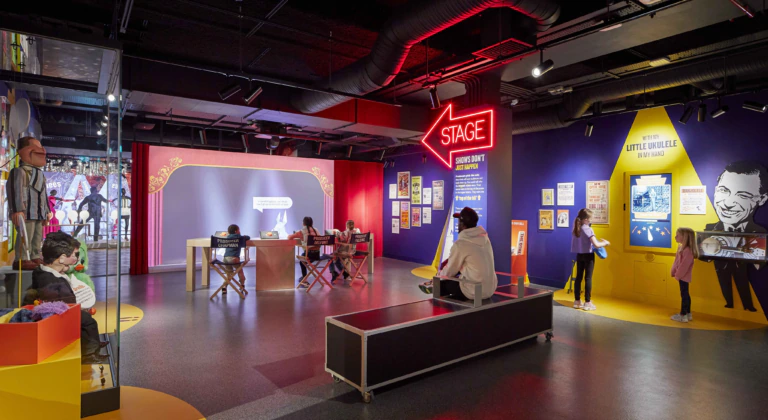
Image: an exhibit from the Galleries of Modern London at the Museum of London. If budgets are cut, hub museums will find themselves plunging down the prosperity scale
The survey, completed by all nine hubs in England, assessed the potential impact on the hub museums of cuts to Renaissance in the Regions and local government funding.
The questionnaire posed two scenarios – a 25 per cent cut to Renaissance and an end to the scheme – and asked how each would affect the hub, museums and the sector as a whole.
In the event of a 25 per cent cut, all hubs said they would have to reduce staff numbers. And because many Renaissance staff are in learning and outreach, these activities will bear the brunt of the cuts.
Many respondents said either scenario would trigger a wide-ranging review to ensure a balanced service was maintained. There are fears that cuts to training and staff development will affect collections care and the professionalism of the sector.
The survey also revealed that since Renaissance was set up in 2002, audiences to the hub museums had increased on average by 46 per cent.
But the hubs warned that a 25 per cent cut to Renaissance funding could result in a 9.8 per cent drop in visitor numbers, and if Renaissance was axed, the fall would be 30 per cent on average.
Most respondents emphasised that it was difficult to consider Renaissance cuts in isolation from reductions in core funding that are certain across the country.
Temporary exhibitions will be hit hard with the resulting worry that displays would become static. With fewer temporary exhibitions, those that remain will be lower cost and, as a result, lower profile. Some said this would result in fewer visitors.
One hub museum said a 25 per cent cut in Renaissance would mean an immediate end to temporary exhibitions. Regional partnerships with national museums and intermuseum loans are also likely to decrease.
“In the absence of this funding, museums would be more likely to play safe and stick to exhibitions that appeal to existing core audiences,” was one response. As a result, wider work with non-traditional audiences was regarded as particularly vulnerable in a climate of cuts.
Overall, there were deep concerns of a turning back of the clock on the status of museums in the mind of councils and the wider society.
“I fear that museums will, once again, become a marginalised service lacking the capacity to fully exploit the potential of the collections and buildings to address wider social agendas,” said one hub member, who feared for the stability of museums and pointed to the danger of the sale of collections.
Another cautioned: “It is often forgotten how pitiful many of England’s regional museums were before Renaissance came along. Most did not deliver anywhere near the broad objectives that they do today.
“The end of Renaissance, or a serious curtailing of it, risks dragging museums back into the dark ages from which they have mercifully emerged.”
Although one hub said it had worked hard to develop a sustainable legacy from Renaissance programmes that it hoped would survive, it said that museums are people-based organisations, and Renaissance had enabled the employment of a greater range of experienced and skilled specialists.
“The loss of their input will inevitably reduce the range, scope and ambition of our work,” said the hub.
What cuts in Renaissance funding would mean to hub museums
Reduce opening hours
25 per cent cut: 44%
100 per cent cut: 56%
Close sites or part of sites
25 per cent cut: 33%
100 per cent cut: 56%
Introduce or increase admission charges
25 per cent cut: 44%
100 per cent cut: 67%
Reduce staffing
25 per cent cut: 100%
100 per cent cut: 100%
Cut outreach, events or activities
25 per cent cut: 100%
100 per cent cut: 100%
Click here for a summary of the survey's key findings
Image: an exhibit from the Galleries of Modern London at the Museum of London. If budgets are cut, hub museums will find themselves plunging down the prosperity scale