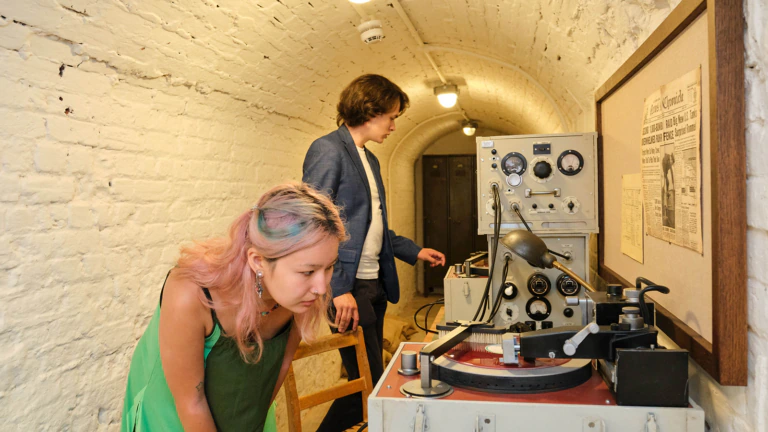
So far, one prisoner from HMP Sudbury has taken part in the resettlement scheme, which aims to help prisoners adapt to life on the outside before gaining parole.
Graham Brown, the chief executive of the Galleries of Justice, said: 'It's a fascinating scheme and exactly the sort of thing we should be involved in.'
Jane Lillystone, the head of marketing and business development at the museum, added that the project fitted into its philosophy on crime reduction. The museum was recently rebranded as the National Centre for Citizenship and the Law.
A spokeswoman for Sudbury Prison said that prisoners are eligible to work outside the prison in unpaid community work or take up an unpaid training or education place 24 months from their release date. Prisoners serving a life sentence have to complete a resettlement scheme as part of their parole process.
The Galleries of Justice became the home of the Prison Service Collection in July (see p40). This brought the museum into contact with the prison service and it was suggested that it contact Sudbury Prison in Ashbourne, Derbyshire, about the resettlement programme.
Staff at the Galleries of Justice were consulted before the start of the programme. Brown said there was some initial nervousness about the scheme, but doubts were allayed once it was explained what stage of his sentence the prisoner was at.
Brown added that the prison has a strict selection procedure before prisoners are allowed out on work experience, which includes a health and safety evaluation and a risk assessment.
'They suggested someone to us and we interviewed him as we would anybody else,' said Lillystone. She added that they were trying to treat the prisoner like any other member of staff. 'It's a good scheme and we're hoping to bring more people into the galleries and use them in different roles,' she said.
The prisoner currently works unpaid in the cafe four days a week. He told Museums Journal that he particularly enjoyed meeting the different types of people that visit the museum.
'They are fascinated by the architecture of the building and its macabre history. The fact that it is reputed to be haunted adds to its character.'
He said that working in the museum had highlighted the difference in the treatment of prisoners today compared with 50 years ago. 'This makes me appreciate how the prison system has moved forward.' He added that the fact that his opinions were valued made him feel he could succeed on his eventual release.
'I want to be there every day because I enjoy the work so much. I really feel that I am allowed to express myself. I can't thank the Sudbury team enough for giving me the opportunity to be part of the programme.'
Sharon Heal
Graham Brown, the chief executive of the Galleries of Justice, said: 'It's a fascinating scheme and exactly the sort of thing we should be involved in.'
Jane Lillystone, the head of marketing and business development at the museum, added that the project fitted into its philosophy on crime reduction. The museum was recently rebranded as the National Centre for Citizenship and the Law.
A spokeswoman for Sudbury Prison said that prisoners are eligible to work outside the prison in unpaid community work or take up an unpaid training or education place 24 months from their release date. Prisoners serving a life sentence have to complete a resettlement scheme as part of their parole process.
The Galleries of Justice became the home of the Prison Service Collection in July (see p40). This brought the museum into contact with the prison service and it was suggested that it contact Sudbury Prison in Ashbourne, Derbyshire, about the resettlement programme.
Staff at the Galleries of Justice were consulted before the start of the programme. Brown said there was some initial nervousness about the scheme, but doubts were allayed once it was explained what stage of his sentence the prisoner was at.
Brown added that the prison has a strict selection procedure before prisoners are allowed out on work experience, which includes a health and safety evaluation and a risk assessment.
'They suggested someone to us and we interviewed him as we would anybody else,' said Lillystone. She added that they were trying to treat the prisoner like any other member of staff. 'It's a good scheme and we're hoping to bring more people into the galleries and use them in different roles,' she said.
The prisoner currently works unpaid in the cafe four days a week. He told Museums Journal that he particularly enjoyed meeting the different types of people that visit the museum.
'They are fascinated by the architecture of the building and its macabre history. The fact that it is reputed to be haunted adds to its character.'
He said that working in the museum had highlighted the difference in the treatment of prisoners today compared with 50 years ago. 'This makes me appreciate how the prison system has moved forward.' He added that the fact that his opinions were valued made him feel he could succeed on his eventual release.
'I want to be there every day because I enjoy the work so much. I really feel that I am allowed to express myself. I can't thank the Sudbury team enough for giving me the opportunity to be part of the programme.'
Sharon Heal