The energy schemes should help managers of museums make potentially significant cost savings, as well as helping to protect the environment.
'Energy efficiency is an issue that's of great concern to all the national museums and will be to all museums across the country and it's certainly something that we'll be looking at going into the next spending review,' said Emily Candler, the secretary of the National Museum Directors' Conference.
'Plant inefficiency is one of the major headaches for many museums,' she said. 'With energy costs having risen so dramatically over the past year, it's become an important issue and with considerable investment there are savings to be made,' she added. Energy is the second highest cost for museums after staff.
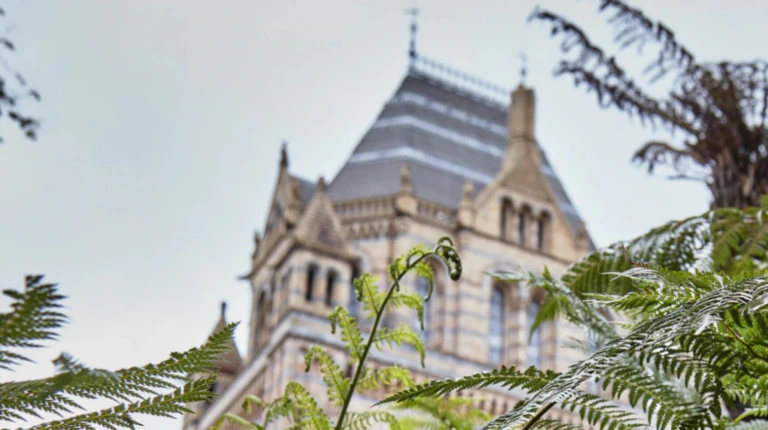
The money will come from the Treasury's Invest to Save Budget. The largest single scheme is the Natural History Museum's project for a masterplan to reduce carbon emissions from South Kensington's museums.
The NHM has been awarded a £2.85m grant for a scheme to monitor energy efficiency in buildings that are part of the South Kensington Cultural and Academic Estate. These include the NHM, Imperial College, the Science Museum, the V&A and the Royal Albert Hall.
Under NHM leadership, the participants have agreed to install comprehensive energy metering across the whole estate, to monitor energy consumption and report it as carbon emissions. The aim is to achieve reductions in carbon emissions of 7-10 per cent across the whole estate, which would be equal to between 4,000 and 5,000 tonnes of CO2.
The plan also calls on the institutions to develop a programme to inform staff and visitors of the implications of climate change 'and engender a cultural change in behaviour towards energy reduction and carbon emissions reduction'. They also agreed to work together to develop a 15-year strategy to make significant reductions in carbon emissions.
Some of the £12m will be spent on a £1.75m online learning project comprising ten museums and galleries led by the V&A. This will encourage better use of museum websites especially by schools and lifelong learners.
The project focuses on material that is already online and is designed to encourage people to engage with online content 'simply, effectively and creatively'.
Tate Modern is also involved in An Eye on the Future - a project that brings together cultural and local government organisations to give people in Lambeth and Southwark between the ages of three and 19 opportunities to take part in cultural activity.
A Tate Modern spokeswoman said the scheme was aimed at improving educational attainment, developing training, skills and employment opportunities and increasing confidence and self-esteem among youngsters.
Culture secretary Tessa Jowell said: 'These innovative projects will test and develop new ways of delivering cultural services and new opportunities for more people to take part in cultural activities.'
Alan Osborn
'Energy efficiency is an issue that's of great concern to all the national museums and will be to all museums across the country and it's certainly something that we'll be looking at going into the next spending review,' said Emily Candler, the secretary of the National Museum Directors' Conference.
'Plant inefficiency is one of the major headaches for many museums,' she said. 'With energy costs having risen so dramatically over the past year, it's become an important issue and with considerable investment there are savings to be made,' she added. Energy is the second highest cost for museums after staff.
The money will come from the Treasury's Invest to Save Budget. The largest single scheme is the Natural History Museum's project for a masterplan to reduce carbon emissions from South Kensington's museums.
The NHM has been awarded a £2.85m grant for a scheme to monitor energy efficiency in buildings that are part of the South Kensington Cultural and Academic Estate. These include the NHM, Imperial College, the Science Museum, the V&A and the Royal Albert Hall.
Under NHM leadership, the participants have agreed to install comprehensive energy metering across the whole estate, to monitor energy consumption and report it as carbon emissions. The aim is to achieve reductions in carbon emissions of 7-10 per cent across the whole estate, which would be equal to between 4,000 and 5,000 tonnes of CO2.
The plan also calls on the institutions to develop a programme to inform staff and visitors of the implications of climate change 'and engender a cultural change in behaviour towards energy reduction and carbon emissions reduction'. They also agreed to work together to develop a 15-year strategy to make significant reductions in carbon emissions.
Some of the £12m will be spent on a £1.75m online learning project comprising ten museums and galleries led by the V&A. This will encourage better use of museum websites especially by schools and lifelong learners.
The project focuses on material that is already online and is designed to encourage people to engage with online content 'simply, effectively and creatively'.
Tate Modern is also involved in An Eye on the Future - a project that brings together cultural and local government organisations to give people in Lambeth and Southwark between the ages of three and 19 opportunities to take part in cultural activity.
A Tate Modern spokeswoman said the scheme was aimed at improving educational attainment, developing training, skills and employment opportunities and increasing confidence and self-esteem among youngsters.
Culture secretary Tessa Jowell said: 'These innovative projects will test and develop new ways of delivering cultural services and new opportunities for more people to take part in cultural activities.'
Alan Osborn