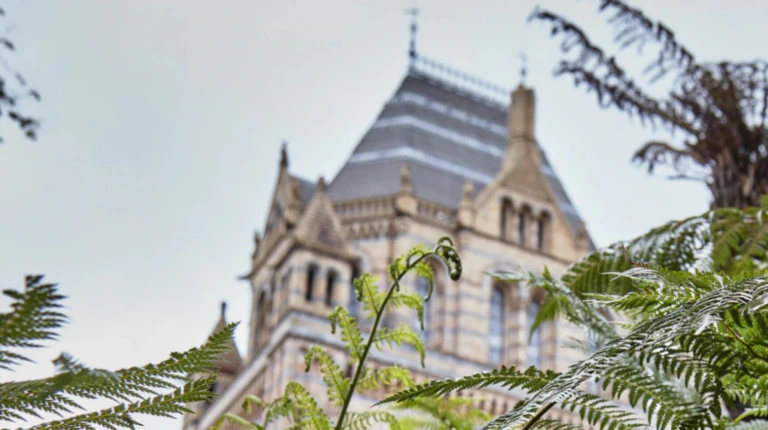
There is growing concern from the archaeological community about the Natural History Museum's (NHM) policy of charging facility fees for research on its collections, Museums Journal has learned.
Andrew Morrison, the curator of archaeology at the Yorkshire Museum, described how he had been approached by Reading University to measure and sample skeletal remains from sites at Catterick and Trent House Drive. Some of these remains are held at the NHM, and the university was told it would have to pay a daily fee to carry out research there.
Morrison said: 'Obviously we let the university research our collections for free. I think it's ludicrous to charge for research. I have never come across it before. Some nationals charge for international loans, but I don't know of any others that charge for research in a British museum context with Arts and Humanities Research Council funding.'
John Jackson, the NHM's science policy coordinator, said that because the museum had not received a formal complaint from the university he would not be able to comment on the case.
Setting out the museum's policy, he added: 'If people are applying for funds to research councils such as the Natural Environment Research Council (NERC) or the Arts and Humanities Research Council and the application allows a funding component for use of collections then they should apply for that and the money should be used to support the facilities associated with the collections. If the research council made no such provision then use is free.
'The basic charge is £69 a day if an organisation is making an application to NERC, going down to £286 a week or £5,200 a year. But discretion is exercised depending on access to resources. For instance, if the researcher was from a developing country we might waive the fee.'
Martin Smith, a spokesman for the British Association for Biological Anthropology and Osteoarchaeology, said: 'There is a great deal of pressure on the NHM in terms of numbers of researchers wanting to do work there. I don't think it's an unreasonable amount to charge, but the question is whether they should be charging at all.'
Andrew Chamberlain, a professor in biological anthropology at the University of Sheffield, said: 'I am aware of several researchers, including members of my own research group at the University of Sheffield, who have been deterred from researching human skeletal remains by the unjustified service charges imposed by the NHM.
'The fees are, in effect, a tax on access to knowledge and the museum's policy very much hinders the free exchange of information and access to study materials, which are essential to further our knowledge of science and the past.'
Responding to Chamberlain's comments, Jackson said: 'We are anxious that this doesn't constitute a barrier. They [the collections] are there for the public benefit. This is not a new policy: the current version [of the policy] was introduced in 2002.'
Andrew Morrison, the curator of archaeology at the Yorkshire Museum, described how he had been approached by Reading University to measure and sample skeletal remains from sites at Catterick and Trent House Drive. Some of these remains are held at the NHM, and the university was told it would have to pay a daily fee to carry out research there.
Morrison said: 'Obviously we let the university research our collections for free. I think it's ludicrous to charge for research. I have never come across it before. Some nationals charge for international loans, but I don't know of any others that charge for research in a British museum context with Arts and Humanities Research Council funding.'
John Jackson, the NHM's science policy coordinator, said that because the museum had not received a formal complaint from the university he would not be able to comment on the case.
Setting out the museum's policy, he added: 'If people are applying for funds to research councils such as the Natural Environment Research Council (NERC) or the Arts and Humanities Research Council and the application allows a funding component for use of collections then they should apply for that and the money should be used to support the facilities associated with the collections. If the research council made no such provision then use is free.
'The basic charge is £69 a day if an organisation is making an application to NERC, going down to £286 a week or £5,200 a year. But discretion is exercised depending on access to resources. For instance, if the researcher was from a developing country we might waive the fee.'
Martin Smith, a spokesman for the British Association for Biological Anthropology and Osteoarchaeology, said: 'There is a great deal of pressure on the NHM in terms of numbers of researchers wanting to do work there. I don't think it's an unreasonable amount to charge, but the question is whether they should be charging at all.'
Andrew Chamberlain, a professor in biological anthropology at the University of Sheffield, said: 'I am aware of several researchers, including members of my own research group at the University of Sheffield, who have been deterred from researching human skeletal remains by the unjustified service charges imposed by the NHM.
'The fees are, in effect, a tax on access to knowledge and the museum's policy very much hinders the free exchange of information and access to study materials, which are essential to further our knowledge of science and the past.'
Responding to Chamberlain's comments, Jackson said: 'We are anxious that this doesn't constitute a barrier. They [the collections] are there for the public benefit. This is not a new policy: the current version [of the policy] was introduced in 2002.'