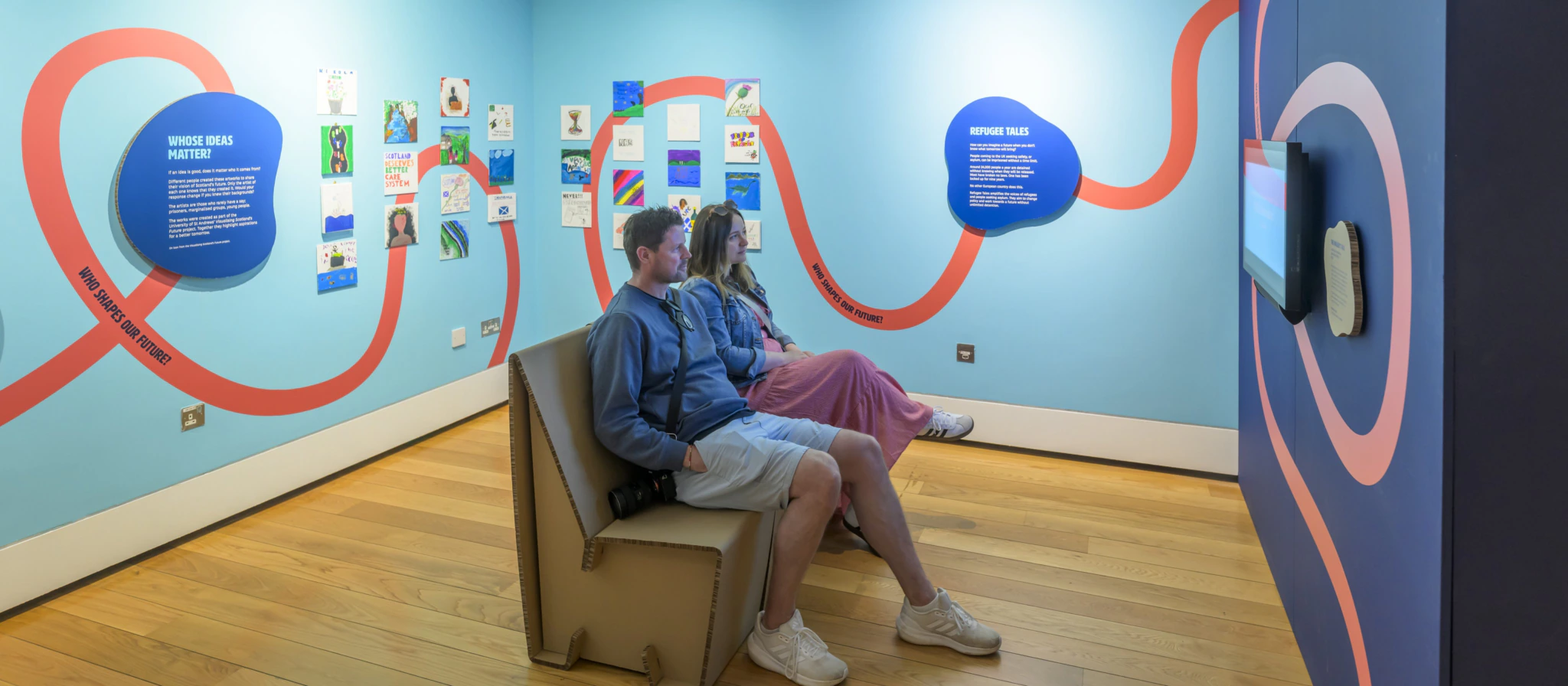
Those of us working in collections and museums at the University of St Andrews have a strategic aim to improve our own sustainability and encourage audiences to do the same. The Rewrite the Future exhibition (31 May-28 September 2025) at the university’s Wardlaw Museum aimed to achieve both these objectives.
The exhibition, which was designed by consultancy Studioarc, sought firstly to encourage visitors to actively make decisions that help build a more sustainable future.
The evaluation of behavioural change is complex and ongoing, but early analysis of the data suggests that about 60% of visitors would do something differently because of visiting. Qualitative data has further supported this initial finding; one visitor stated that “usually, the idea of making meaningful change feels very overwhelming but this exhibition helped me to see options and pathways and have made it feel more manageable”.
Hear more about Rewrite the Future at our free online event on 3 March
Discover more about communicating climate justice at the next Members Together Online
We also aimed to find ways to significantly reduce the waste produced by creating the exhibition, with a target that 80% of the build should be recycled or reused for a specific purpose.
We ended up using a robust, structurally strong cardboard material called Xanita, which is made partly from recycled material and is fully recyclable at the end of its life.
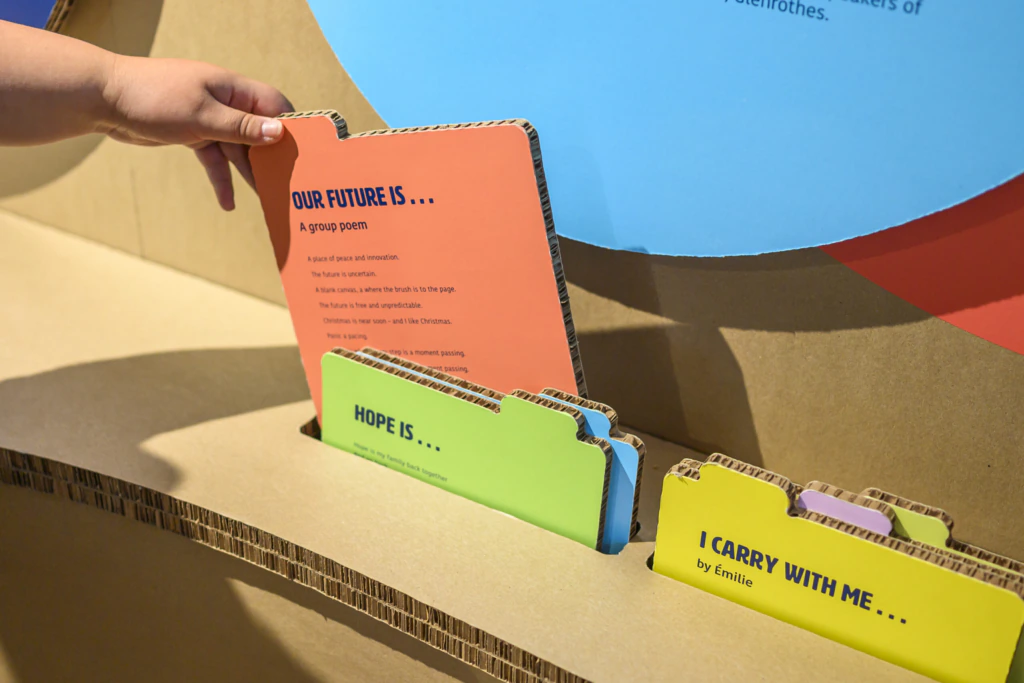
The structurally stable forms included chairs and stools, curved workbenches, case cladding, touchscreen housings and hands-on interactive elements, as well as interpretation panels and object labels.
Advertisement
Xanita’s natural, uncoated craft appearance reinforced the exhibition’s sustainable ethos and became a visible design feature. Supported by a short explanation of the materials used, the installation demonstrated how this low-carbon material offers an alternative design approach for museums.
Using the material so extensively was a risk; we didn’t know whether it would maintain its appearance for the full run of the exhibition, and we had to explore what it could and couldn’t do.
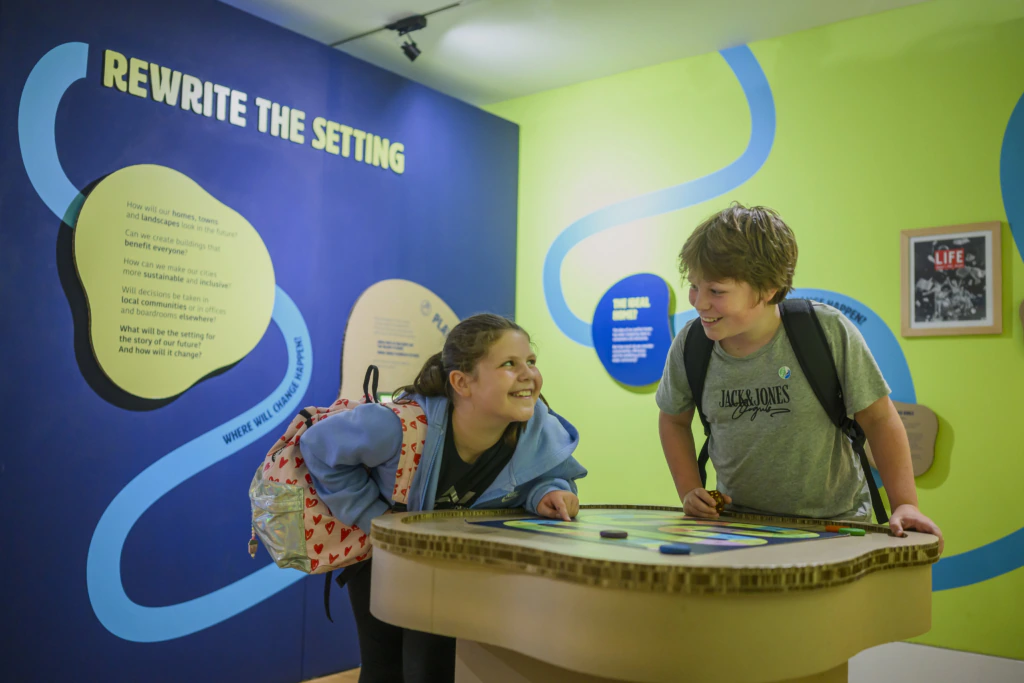
Some adaptations were required after the exhibition opened, but contrary to our fears, the material still looked great at the end of the busy summer period – and the impact on sustainability was better than we had expected.
We saved an estimated three-quarters of the carbon we would have produced for an exhibition of similar build using the materials we would usually have used. Even more astoundingly, at the end of the exhibition, we threw only a single binbag into landfill (the rest has been recycled or earmarked for a specified future purpose).
The cost of Xanita can be off-putting; the material itself is roughly double the price in its raw state compared with MDF. But it requires no extra finishing once purchased, which makes it cheaper overall.
Advertisement
Our contractor Eastern Exhibition and Design believe the same build in MDF would have been around double the cost.
Our next step will be to push the use of this material further, exploring how it can be deployed to produce a very different look and feel in next summer’s exhibition about Mary Queen of Scots’ childhood wars.
Lyndsey Bowditch is the director of Studioarc design consultancy and Matthew Sheard is the head of experience and engagement at University of St Andrews Libraries and Museums