Putting together an exhibition requires a mixture of creative and practical skills. These two things that are not necessarily good bedfellows, and it pays to spend time on design to ensure that even if your exhibition is not a blockbuster, it looks professional, functions properly and speaks to the audience you seek to attract.
Keeping the cost of exhibition design to a minimum will be a key priority for most museums. Exhibition design costs should be treated as an expense that can’t be recouped. It is also important to recognise that any outlay in one financial year may not be recouped until the next.
“A typical project would see 20% of the build cost spent on design fees; that tends to be the model museums work to,” says Alanna Davidson, the touring exhibitions manager at the National Museum of Scotland (NMS).
In a former role with the Crafts Council, Charlotte Dew, now a researcher at the Touring Exhibitions Group (TEG) was careful to avoid flexible fees. “Whenever I was putting together budgets, I would use set fees and invite three companies to respond; I would never have a flexible fee. A lot of organisations don’t do that,” she says.
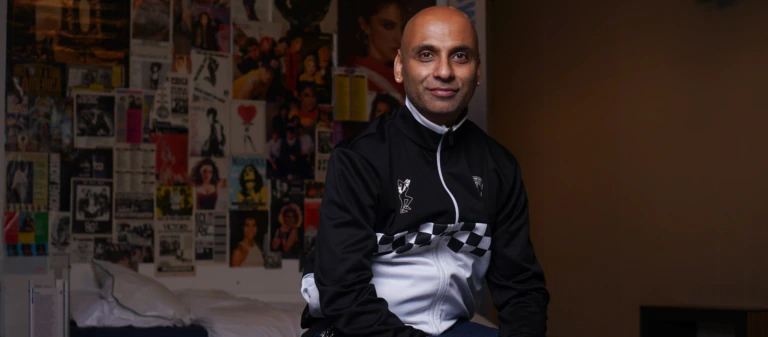
However even small exhibitions have to meet high design standards and audiences have come to expect high-quality audiovisuals (AV). A recent example is the Museum of London’s exhibition Punk London, which includes a specially commissioned film where former punks visit their old haunts.
“There is quite a big shift towards AV and technology even in small exhibitions, even pop ups,” says Jan Dawson, an exhibition designer at NMS.
NMS’s 10 new permanent galleries include a lot of AV, raising the bar for designers who have to call on ever-more sophisticated technology to satisfy a tech-savvy public.
Museums with limited space may find hiring equipment a better option than buying it. For example, Amgueddfa Cymru (National Museum Wales) has its own lighting equipment on site, but will hire AV if an artist has a specific requirement. The museum also uses resources from TEG and has even sold old cases and equipment on eBay.
Katie Hall, the exhibitions officer at Birmingham Museums, says: “You have to take the artist’s spec into consideration and know whether there is any scope for compromise in the type of equipment used (for example, a particularly hi-spec AV unit). In some cases you have to make difficult decisions about whether to show that artwork or not.”
But there are pros and cons to both hiring and buying equipment says Dew.
“It’s nearly always cheaper to buy it and it then becomes an asset,” she says. But museums will have to maintain equipment such as projectors, which need to be tested after a year and properly certified before they can be hired by other venues.
Museums hiring equipment need to make sure there is a maintenance contract in place to avoid any disagreements over broken equipment says Dew.
Once the design brief is finally settled, it is important to keep a relationship going with the designers. “Work in partnership with the designer. See it as a process, rather than saying go away and do the design. Ask questions. There have been times when I think ‘this is a silly question’. There are no silly questions,” says Hall.
“Keep the dialogue going and try to meet people, as often things are difficult to email. And leave enough time for when graphics arrive for any adjustments.”
Getting the practicalities right, satisfying the curatorial side and winning the interest of the public is a skill, but succeed and the gains for a museum or gallery can be considerable.
Keeping the cost of exhibition design to a minimum will be a key priority for most museums. Exhibition design costs should be treated as an expense that can’t be recouped. It is also important to recognise that any outlay in one financial year may not be recouped until the next.
“A typical project would see 20% of the build cost spent on design fees; that tends to be the model museums work to,” says Alanna Davidson, the touring exhibitions manager at the National Museum of Scotland (NMS).
In a former role with the Crafts Council, Charlotte Dew, now a researcher at the Touring Exhibitions Group (TEG) was careful to avoid flexible fees. “Whenever I was putting together budgets, I would use set fees and invite three companies to respond; I would never have a flexible fee. A lot of organisations don’t do that,” she says.
However even small exhibitions have to meet high design standards and audiences have come to expect high-quality audiovisuals (AV). A recent example is the Museum of London’s exhibition Punk London, which includes a specially commissioned film where former punks visit their old haunts.
“There is quite a big shift towards AV and technology even in small exhibitions, even pop ups,” says Jan Dawson, an exhibition designer at NMS.
NMS’s 10 new permanent galleries include a lot of AV, raising the bar for designers who have to call on ever-more sophisticated technology to satisfy a tech-savvy public.
Museums with limited space may find hiring equipment a better option than buying it. For example, Amgueddfa Cymru (National Museum Wales) has its own lighting equipment on site, but will hire AV if an artist has a specific requirement. The museum also uses resources from TEG and has even sold old cases and equipment on eBay.
Katie Hall, the exhibitions officer at Birmingham Museums, says: “You have to take the artist’s spec into consideration and know whether there is any scope for compromise in the type of equipment used (for example, a particularly hi-spec AV unit). In some cases you have to make difficult decisions about whether to show that artwork or not.”
But there are pros and cons to both hiring and buying equipment says Dew.
“It’s nearly always cheaper to buy it and it then becomes an asset,” she says. But museums will have to maintain equipment such as projectors, which need to be tested after a year and properly certified before they can be hired by other venues.
Museums hiring equipment need to make sure there is a maintenance contract in place to avoid any disagreements over broken equipment says Dew.
Once the design brief is finally settled, it is important to keep a relationship going with the designers. “Work in partnership with the designer. See it as a process, rather than saying go away and do the design. Ask questions. There have been times when I think ‘this is a silly question’. There are no silly questions,” says Hall.
“Keep the dialogue going and try to meet people, as often things are difficult to email. And leave enough time for when graphics arrive for any adjustments.”
Getting the practicalities right, satisfying the curatorial side and winning the interest of the public is a skill, but succeed and the gains for a museum or gallery can be considerable.