Opinion
Any fool can make spending cuts, but it takes wisdom to see past them
It has long been a management school truism that organisations that take tough decisions early recover from recession faster than those that wait to be overwhelmed. The same applies to the arts. Do something before others do it to you; be active not passive; take control of your future even when it looks bleak. So, …
There are some reasons to be cheerful despite the gloom
You would have to be Curator of the Hermit’s Cave not to have realised that the forecasts for 2010 have been uniformly gloomy. There is an expectation of public expenditure cuts on a scale that will really hurt. The year will be dominated by this; what else is there to say? Quite a lot hopefully. …
Working in partnership is a necessity not a luxury
‘The suppression of mutual loathing in the pursuit of government funding.’ Whoever thus defined partnership didn’t understand the critical role that collaborative networks can play in shaping the cultural landscape. And they certainly didn’t anticipate how the worst recession in living memory would illuminate the benefits of meaningful collaboration. At a time of political uncertainty, …

Letters: January 2010
Disappointed to find discrimination in a museum… again I was curious what the Ashmolean experience would be like for casual visitors who are blind or deaf or who have a learning difficulty. There, I witnessed blatant exclusion as I did at the Darwin Centre (Museums Journal, December 2009, p18). There is no touch tour for …
Vox pop
Is the decision to move the National Football Museum from Preston to Manchester the right one?
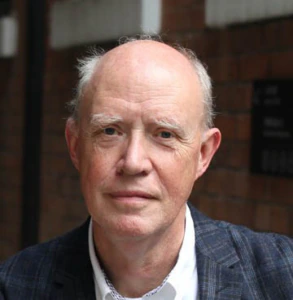
What lies at the heart of creative curatorial practice?
Are museums and galleries palaces of things, or resorts for people? When I was a museum studies student in Leicester in the 1990s, this was the almost endlessly debated question. A satisfactory, if unexciting, conclusion that we often reached held that the two were inseparable – people in museums could best be reached through things. …