Museums are not supposed to be nervous. That is, perhaps, part of their unspoken contract with the public; the institution as a calm, collected keeper of things already resolved. We display what has passed. We interpret what is understood. We offer distance.
But what happens when history refuses to wait for you?
Before 2024, most people outside the Arctic could not have pointed to Greenland on a map with any confidence. It was, to much of the world, a vague enormity. Ice, remoteness, a name that always seemed slightly paradoxical.
Then, suddenly, it became a word in headlines. A bargaining chip in speeches. A place powerful men spoke about as though its people were an inconvenient detail in a real-estate transaction.
The attention was not flattering. It was, and continues to be, alarming.
Because what has been happening is not abstract. There is a version of the current geopolitical pressure from the US that could reshape this country’s future without a single Greenlandic voice at the table. That is not hyperbole. That is the conversation we are having in government, in our living rooms, and yes, in our museums.
Advertisement
Greenlandic museums have traditionally been what one might expect: glass cases, text posters, artefacts speaking quietly across time. History as something finished, framed and safe to look at. There is value in that.
But this way of working was not built for a moment like this one.
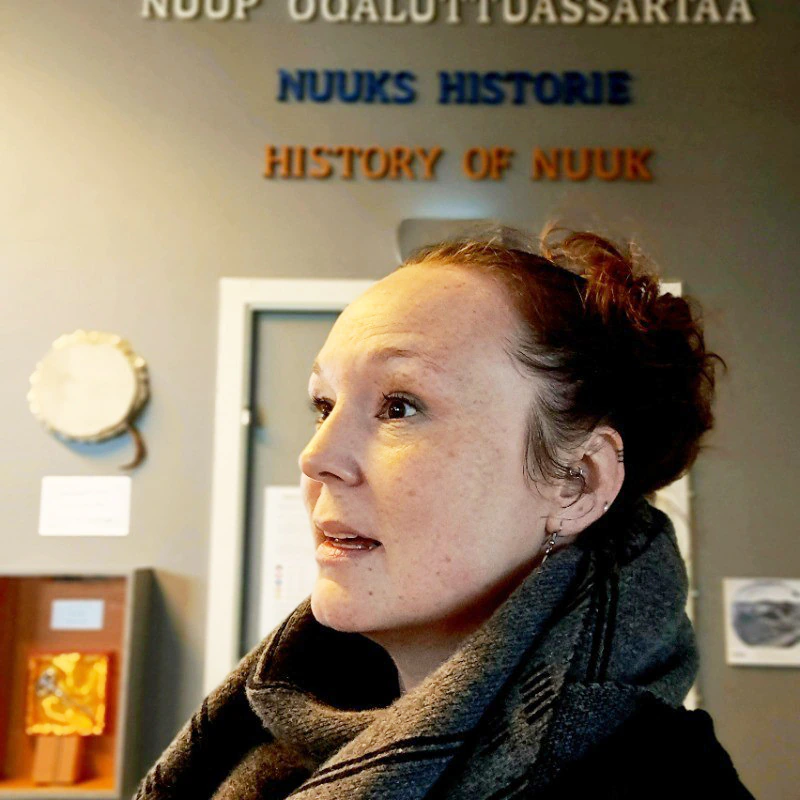
At Nuutoqaq Local Museum, a small museum in Nuuk, we had to make a choice. And we had to be honest about where this choice came from – it was not from a strategic meeting or a curatorial framework, but from us being overwhelmed.
We were drowning in it. The news, the announcements, the shifting ground beneath every conversation. We built the documentation room because we needed it for ourselves.
When the present generates history faster than we can process it, do we wait for the dust to settle or acknowledge that the dust itself is the story? We chose the latter.
We established a documentation and reflection room where news, political announcements and press releases were posted chronologically. Not interpreted. Not curated into a comfortable narrative. Just laid out, visibly, so that people could see the shape of the moment they were living through. We tried to make the fragmentation legible.
This was never only about external pressure. The past year also brought two back-to-back elections, a new government and the ongoing reckoning with the spiralsagen – the case in which thousands of Greenlandic women and girls were subjected to forced IUD contraception under Danish government direction.
Advertisement
This is a wound that is still open, and is still in the courts. These are not separate stories. They share the same root: questions about who holds power over this land and its people, and who gets to decide.
The reactions have been striking. Some visitors find it overwhelming. Many find it a relief: confirmation that their exhaustion is not weakness, but a rational response to an untameable whirlwind of information. Others stand in front of the timeline and, for the first time, see the connections. None of those reactions are wrong.
What we have learned is that a museum’s job is not always to provide calm. Sometimes it is simply to refuse to look away. To say: this is happening, it is complex, and you are not confused because you have failed to understand – you are confused because it is genuinely, legitimately hard.
Greenland is no longer a place the world doesn’t know. That shift carries its own weight. And we have decided that our role is to stand in that weight alongside our visitors. Not behind the glass, but in the room.
Ujammiugaq Engell is the museum leader of Nuutoqaq Local Museum in Greenland