
Why is investing in emerging talent business critical for cultural institutions?
It would be easy to provide a knee-jerk positive answer to this question. Most cultural leaders, cultural institutions and funders would instantly agree that we need to invest in future talent. Why? Answers would vary but there will be key themes.
Emerging talent brings new perspectives and energy. Feeding the talent pipeline supports audience development, so that audiences will continue to see work that they feel is relevant to them. The world is changing and emerging talent is often more equipped to adapt to and shape that change, but only if we advance equity.
If we believe in the future of our sector, then we have to invest in the future talent.
However, not all investment is equal. Worse, talent development can slip into transactional exercises that benefit neither the individual nor the institution.
Investing indiscriminately risks creating an environment where participants feel uncared for, unseen or commodified. Poorly designed programmes can become “tick-box exercises” that are for institutional (or funder) gain, rather than genuinely supporting individual growth.
Advertisement
I believe the really important truths lies below the surface of this question, in a series of key principles that are needed to ensure success.
These principles are formed from an evidence-based answering of questions. Who do we mean by emerging talent? What kind of investment do they need? Why are we doing it? And how do we measure success?
We live in a society where choices about resource allocation have to be made and inequalities remain stark. Consequently, we need to be intentional about who we are targeting and what we are trying to achieve. Often this is defined through a “Theory of Change”.
In the cultural sector there have been discussions for decades about under-representation most notably, but not exclusively, around ethnicity and socioeconomic groups. This won’t be tackled by handwringing and discussion, so using talent development as part of the solution is essential.
Investing in emerging talent has to be about removing barriers, levelling up opportunity. As Pooja Sitpura, Somerset House’s head of inclusive talent says: “Our vision is to advance a dynamic and equitable cultural ecosystem that reflects the richness of society and fosters a creative sector workforce equipped for the future. But to do this it’s crucial to partner or work with those who have relevant real world and lived experience.”
At Somerset House we have developed two streams of connected talent pathways.
Advertisement
Upgrade Yourself, a series of career entry routes for 16–30-year-olds, designed to be a “funnel”, from digital activity and a careers festival where large numbers can engage, down to a deep intensive 12-month paid work placement. This funnel has already propelled young people into exciting creative careers and jobs in leading companies such as Studio Wayne McGregor and the British Fashion Council.
We also offer a series of career support programmes to our resident artists and makers, as well as bursaries to our co-working space and our Black Business Residencies, which is now on its sixth cohort. These residencies have supported nearly 150 Black founder businesses ranging from sustainable fashion to an inclusive fiction studio to the highly successful creative careers platform Run the Check to Cashblack, a payment scheme where you earn points for spending with Black-owned businesses.
After the residency many of these businesses stay on at Somerset House as part of our 3,000-strong creative community.
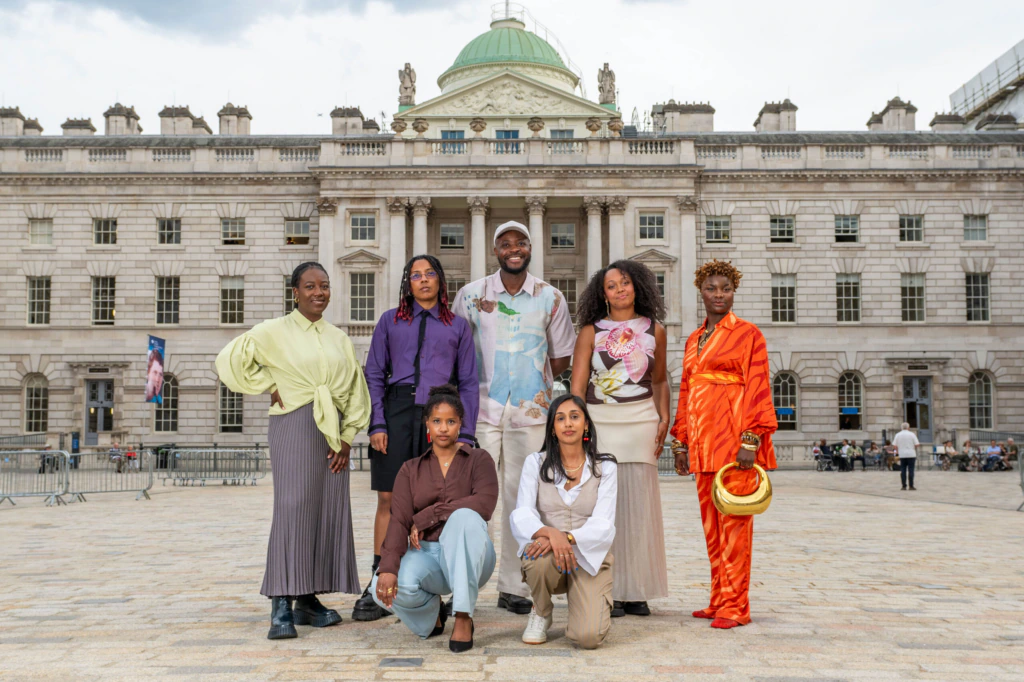
There are always challenges in terms of deciding what investment is needed and it’s necessary to look at it from two points of view. Firstly, what does the individual need? Secondly, what can the institution provide, whether it’s resource, or physical space or networks or experience or a blend of these. .
It’s very easy for institutions not to interrogate participant needs, to over promise or to inadvertently create unrealistic expectations (particularly where there’s a power imbalance).
Advertisement
A frequent pitfall is short-termism, expecting quick results. Nurturing talent needs time and it’s important to allow for mistakes to be made and rectified, so we can ensure long term sustainable success.
Crucially, we need to carefully design an evaluation model and we have to be patient for the results. This isn’t easy, but the Paul Hamlyn Foundation is supporting us to develop an evaluation model, so we will have new insights into the impact of our strategy and programmes and will be able to capture and enhance value and build stronger arguments for support.
Akil Benjamin, a long time Somerset House resident who co-founded the Black Business Residencies, says that “it was how we built in feedback and evaluation from the beginning that secured our funding for six cohorts – otherwise no-one would have believed that Black founders reported that they were earning double the national average, following the programme”.
For cultural institutions, investing in emerging talent is business critical because it ensures relevance, sustainability and sectoral vitality. Institutions are custodians of culture, and good stewardship requires ensuring the sector’s future health.
But the default “yes” is insufficient. The “how” matters. Investment must be intentional, tied to a Theory of Change, tackle inequity, long term and tracked through robust evaluation. Otherwise, initiatives risk becoming hollow performances rather than engines of renewal.
The cost of failure is high. Poorly conceived programmes waste money, frustrate talent, and erode public trust. Done well, however, they renew the sector, expand representation, build long-term resilience and fuel optimism for the future.
Jonathan Reekie is the director of Somerset House, London
Step Inside Weekend
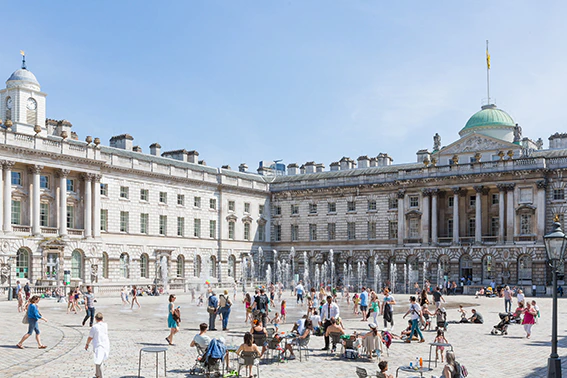
This year marks Somerset House’s 25th anniversary, celebrating its transformation from government offices and a car park into London’s home of cultural innovators. A centrepiece of the celebrations will be Step Inside Weekend, Somerset House’s free birthday weekend on 13 and 14 September, which invites the public to explore the entire building including rarely open spaces like Maker Street and The Deadhouse. The event will feature performances, installations, workshops, tours and family-friendly activities, from an immersive disco and Peanuts-inspired drawing sessions to large-scale works by resident artists. By opening its doors, Somerset House is welcoming everyone to celebrate 25 years of creativity and cultural innovation together in one space.