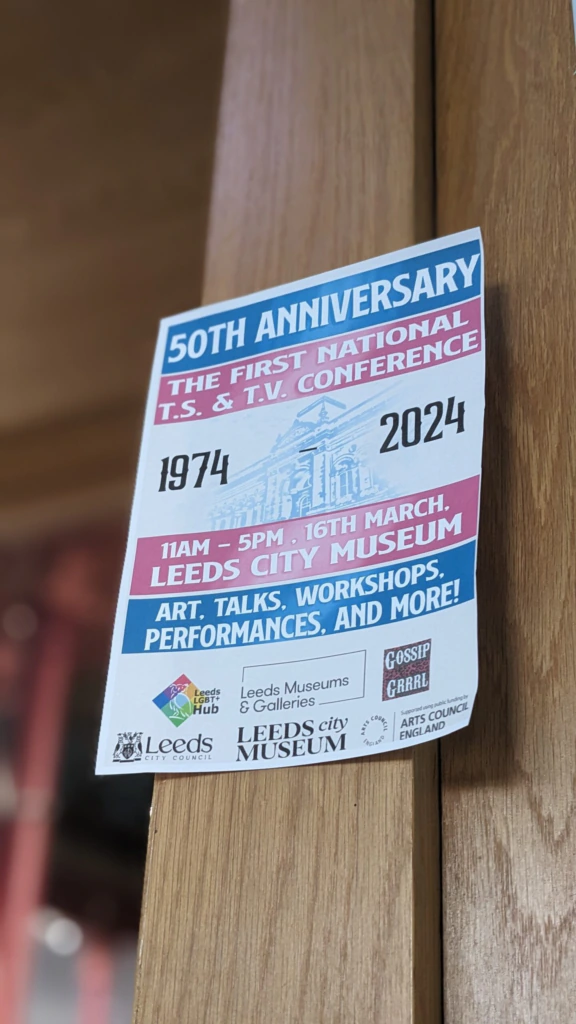
In 1974 on the 16th of March, 102 delegates from across England gathered in Leeds for the Transvestite and Transsexual Conference, the first of its kind in the UK.
Fifty years later to the day, trans people and allies came together to mark the semicentennial anniversary of the event that had become known as the “Leeds Incident”. I was excited to make the journey to Leeds and have the chance to be part of the commemoration.
I had never been in a museum space among so many trans people, and as a nonbinary museum professional I found the experience moving. Conceived of by local organiser and historian Luna Morgana, better known as GossipGrrrl, the 2024 event honoured the legacy of the first conference.
Together with Esther Amis-Hughes, the community engagement manager at Leeds Museums and Galleries, GossipGrrrl hosted delegates at the Leeds City Museum.
"The more I looked at the original 1974 conference, the more I realised it was a landmark event and really needed to be commemorated,” GossipGrrrl told me, “It is especially a big deal for me that the first trans conference in the UK took place right here in Leeds, as we only ever hear of stuff like this happening in the south."
Advertisement
In the lead-up to the conference, a rainbow plaque was unveiled at the University of Leeds in honour of the 50th anniversary of the 1974 event, supported by Leeds Civic Trust and the Centre for Interdisciplinary Gender Studies. Visitors to the Leeds City Museum enjoyed a special LGBT+ Treasure Trail about the queer history of some objects on permanent display at the museum, developed by GossipGrrrl and Kit Heyam.
Heyam, author of Before We Were Trans, also facilitated a workshop on trans parenting at the conference, inspired by the skill-share working groups at the 1974 meeting. Heyam told me: “It felt really meaningful to be able to continue the tradition of trans self-organisation, community-building and skill-sharing in our city.”
Other topics of concurrent sessions included disability, music and history. I spoke about the importance of interpreting queer narratives in museums and shared my zine, Looking for Queer Possibility in the Museum.
Delegates also participated in a Wikimedia-funded Wikipedia editing session led by Lucy Moore and watched 1972 film I Want What I Want, hosted by TGirls on Film and Olivia Thomas from Leeds Queer Film Festival.
The 1974 delegation intended to show the film but had been unable to. The conference concluded with live performances of music by Angela Morely, a trans composer and arranger originally from Leeds who went on to work with John Williams and arrange music for films including Star Wars and Watership Down. If Morely were still alive, she would have turned 100 this year.
Advertisement
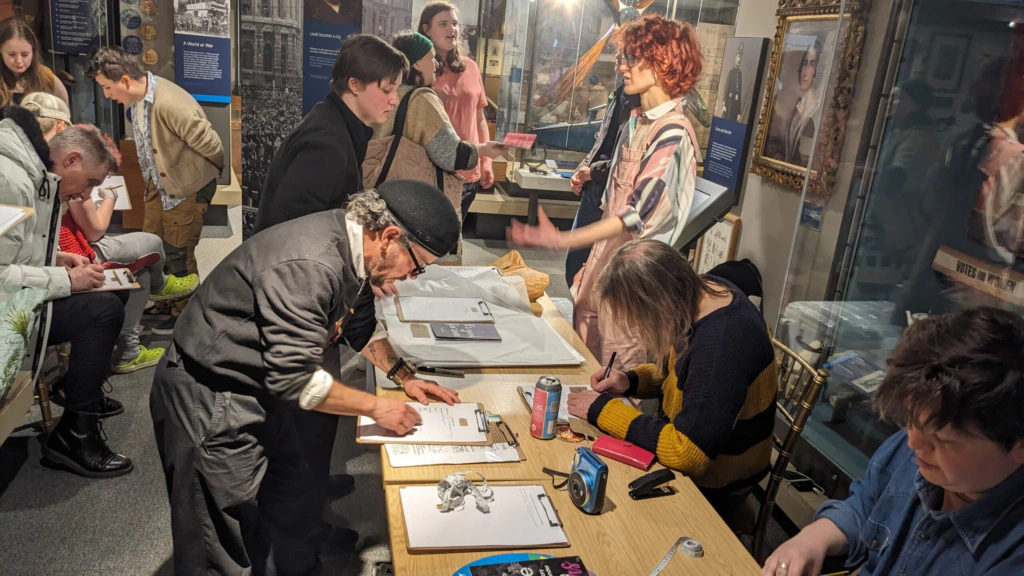
Coinciding with the conference was a collecting effort undertaken by volunteers with the Museum of Transology. They set up their pop-up collection station upstairs in the museum and accepted more than 40 items of trans significance, donated by members of the public.
Museum of Transology founder-director E-J Scott described the gallery location as “add[ing] a great deal of resonance to our collecting event, embedding it in an historical context of 'belonging'”.
As the team built their archive of “trancestry” in the museum, Scott felt the event communicated to “both the participants and visitors passing by that they were active citizens in their communities whose lives and contributions were meaningful and mattered.”
Each object was meticulously described, photographed, wrapped and packed to be sent back to London where the collection will be catalogued and prepared for display at the Lethaby Gallery, Central Saint Martins - University of the Arts London in 2025. The Museum of Transology held collecting dates in 15 cities across the United Kingdom throughout March and April.
Between sessions, delegates were invited to spend time with a trans history display curated by GossipGrrrl. Yorkshire: A Trans History spans from the Roos Carr figures of the Iron Age to the first Trans Pride in Yorkshire in 2018. Objects included music records, pamphlets and photographs.
Post-conference, delegates enjoyed an intimate performance by trans musician The Bleeding Obvious at Flamingos, a queer-friendly coffee shop in Leeds and attended a conference afterparty at Wharf Chambers hosted by Dirt Dykes, featuring drag performances inspired by trans history.
Advertisement
The events reached upward of 500 people, and the plaque, treasure trail, and the trans history of Yorkshire exhibit continue to engage countless more with trans history in Leeds.
Despite claims to the contrary, trans people have existed throughout history. Spaces that help us recognise our history and see ourselves as history-makers are vital. As trusted institutions, museums have an opportunity to support trans visitors and staff alike.
That can mean launching exhibitions and hosting programming, but it can also be as simple as letting us use the museum to revel in trans heritage and camaraderie.
Margaret Middleton is an exhibit design consultant and Museums Association rep for Northern Ireland
Trans+ History Week runs 6–12 May 2024