
Today, only about 10% of Britain’s teenagers have access to the study of the Greeks and Romans at school, and most of these are in the independent sector.
This is a huge shame, as studying ancient Greek and Roman civilisation, history, thought, literature, art and archaeology is not only exciting and instructive, but confers several advantages: it hones analytical and critical skills; trains minds in the comparative use of different types of evidence; enhances cultural literacy; refines consciousness of cultural difference and relativism; fosters awareness of a three-millennia long past, along with models and ideals of democracy; and develops identities founded in citizenship on a national, European and global level.
I have been collaborating with museums around the country on an Arts and Humanities Research Council-funded initiative to widen access to the study of classics and ancient history in schools, particularly in areas of the UK where engagement with the subject is low.
The Advocating Classics Education (ACE) project aims to improve access to the study of classical civilisation and ancient history by working in partnership with National Museums Liverpool’s World Museum, the OCR examination board and Cambridge’s Museum of Classical Archaeology.
The aim is to provide subject knowledge enhancement training for teachers, curriculum-linked support materials, gallery trails and workshops for teachers and students that deepen the impact of studying the ancient world.
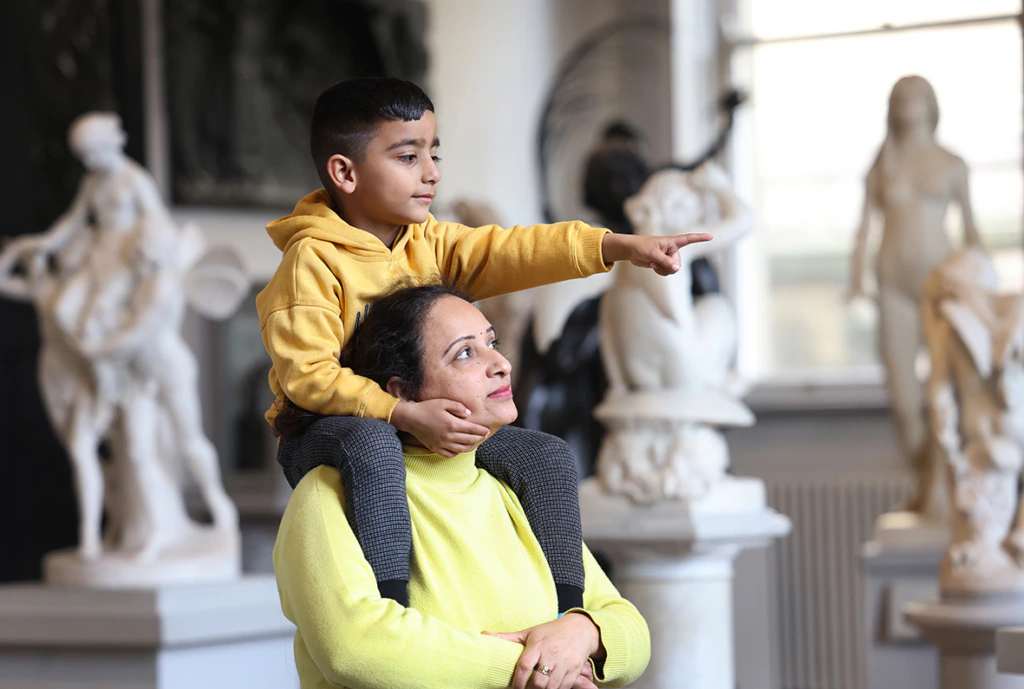
One strand has been developed with the Museum of Classical Archaeology. We have focused on the museum’s collection of casts, working with its curator and education coordinator, as well as a specialist consultant in personal, social, health and economic education.
Advertisement
Through this, we have developed Go Figure!, a project that helps teenagers to explore issues such as body positivity, transphobia, fat shaming and gender identities. The sessions have had rave reviews from teenagers and teachers.
The other strand has involved the co-creation of interactive digital sourcebooks with the World Museum.
We have developed three interactive sourcebooks linked to the OCR’s classical civilisation GCSE and A-Level qualifications. These include Greek and Roman artefacts from the World Museum’s impressive collections.
The sourcebooks include learning activities, videos, simulations, 3D scans and close-ups of objects. They can be used flexibly as revision material of important topics, for teaching beyond the curriculum, or to complement sources prescribed by OCR.
As part of the process of making the sourcebooks, we used National Museums Liverpool’s collections to film a series of short videos. The opportunity to get close to such incredible artefacts was electrifying, underlining the unique power of museums to make the ancient world tangible.
Advertisement
Our hope is that students using the sourcebooks will be inspired to visit the classical collections held in Liverpool. Because they are digital, the sourcebooks will also widen access to the collections for everyone, regardless of where they live in the UK.
The timing of this project has worked well: we started in 2020 and in April, the World Museum opened Return of the Gods (until 25 February 2024), a family-friendly exhibition that showcases many of the classical objects in its collection.
In the past 12 months, entries for the classical civilisation GCSE have jumped by 27%, while A-Level entries have increased by 36%. The number of candidates sitting GCSE and A-Level examinations in ancient history are at the highest level since the qualifications launched.
These are encouraging signs that the status of classics in schools is improving, and an increasing number of young people are engaging with this wonderful subject.
Arlene Holmes-Henderson is an associate professor of classics and ancient history at Durham University
For more information about our collaborations, visit the ACE Classics website. You can also follow us on Twitter at @drarlenehh, @classcivanchist, @chrissypartheni, @world_museum, @ocr_classics and @classarch