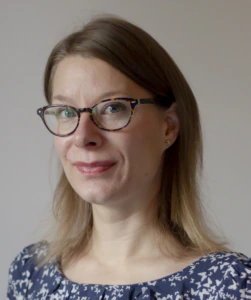
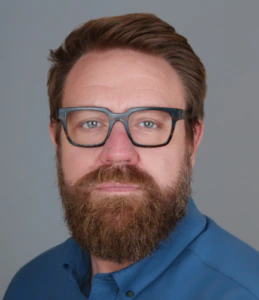
Tehmina Goskar, director, Curatorial Research Centre, Cornwall
Highlight of the decade?
My highlight of the decade has been witnessing immeasurably better conversations between museum people, whether workers or volunteers, helped by the founding of online communities such as #MuseumHour (now with a 13.2k global following), the focus of events, training and conferences being more issues-led, and a Museums Association which has started to notice the huge diversity of museums and museum person across the UK. At the end of the decade I feel more of us are in tune with what really matters, than before, even if we don't always know what to do about it.
Low point?
That diversity has been hijacked as a fashionable trend and that we have only managed to slightly rearrange the furniture. Our structures and systems have not been touched by pressures to diversify. They are still Victorian, hierarchical, and in a sense, colonial. Our power balances in the sector are getting dangerously skewed and polarised, whether towards the metro-centric establishment, or towards generification and short-termism fueled by headline grabbing single-issues. Systemic and more serious issues have been largely ignored, such as the loss of specialist knowledge in the sector, the imbalance of buildings using up more resources than are invested in people, and the true cost of our "free brain drain" sector economy.
Wish for the 2020s?
I wish to see more confidence from more people within and without the sector to challenge what a museum is, and why they should exist. I would like to see a transformation of attitude towards collections, both as living bodies of knowledge that require updating, and an admission that collections are only partial sources that privilege one kind of cultural value over another. In that sense, I want to see decolonisation work, and succeed, and reach those parts of the museum sector that other big issues have failed to.
Nick Merriman, director, Horniman Museum and Gardens, London
Highlight of the decade?
Personal one is to achieve a visitor profile after a decade of work at Manchester Museum, that came close to matching that of the overall population of Greater Manchester. Sector one is the investment that has been made over the last decade in improving the museum experience for a wider range of visitors.
Low point?
Personal one is being woken up in the middle of the night with news of a burst water main at Manchester Museum and going there to find all the collections and galleries under several inches of water. Sector one is the realisation that museums still have a long way to go before we can claim to be truly inclusive.
Wish for the 2020s?
Highlight of the decade?
My highlight of the decade has been witnessing immeasurably better conversations between museum people, whether workers or volunteers, helped by the founding of online communities such as #MuseumHour (now with a 13.2k global following), the focus of events, training and conferences being more issues-led, and a Museums Association which has started to notice the huge diversity of museums and museum person across the UK. At the end of the decade I feel more of us are in tune with what really matters, than before, even if we don't always know what to do about it.
Low point?
That diversity has been hijacked as a fashionable trend and that we have only managed to slightly rearrange the furniture. Our structures and systems have not been touched by pressures to diversify. They are still Victorian, hierarchical, and in a sense, colonial. Our power balances in the sector are getting dangerously skewed and polarised, whether towards the metro-centric establishment, or towards generification and short-termism fueled by headline grabbing single-issues. Systemic and more serious issues have been largely ignored, such as the loss of specialist knowledge in the sector, the imbalance of buildings using up more resources than are invested in people, and the true cost of our "free brain drain" sector economy.
Wish for the 2020s?
I wish to see more confidence from more people within and without the sector to challenge what a museum is, and why they should exist. I would like to see a transformation of attitude towards collections, both as living bodies of knowledge that require updating, and an admission that collections are only partial sources that privilege one kind of cultural value over another. In that sense, I want to see decolonisation work, and succeed, and reach those parts of the museum sector that other big issues have failed to.
Nick Merriman, director, Horniman Museum and Gardens, London
Highlight of the decade?
Personal one is to achieve a visitor profile after a decade of work at Manchester Museum, that came close to matching that of the overall population of Greater Manchester. Sector one is the investment that has been made over the last decade in improving the museum experience for a wider range of visitors.
Low point?
Personal one is being woken up in the middle of the night with news of a burst water main at Manchester Museum and going there to find all the collections and galleries under several inches of water. Sector one is the realisation that museums still have a long way to go before we can claim to be truly inclusive.
Wish for the 2020s?
That over the course of the next decade museums finally break down barriers and attract visitors and a workforce more representative of the population as a whole.
Maggie Appleton, chief executive, RAF Museum, London
Highlight of the decade?
The Museums Association Conference is always a touchstone for me, and moments that have stayed with me have to be Mat Fraser in Cardiff in 2014 with his Cabinet of Curiosities: how Disability was kept in a Box, and Lemn Sissay’s beautiful poetic reflections in Manchester in 2017. Both had conference laughing and weeping in equal measure with their brilliance and humanity.
Low point?
Visiting my mum, who had severe dementia, in a care home and the carer telling me how devastated she was that her local museum in Lancashire was under threat as part of the Lancashire County Council planned closures. It was that combination of a terribly sad personal moment and seeing the impact of museum losses on ordinary people in the community. The carer had no idea I worked in museums.
Wish for the 2020s?
For our four nations’ governments to invest in our museums in a meaningful way that really makes a difference to people’s lives – and gives some much-deserved joy to our fabulous sector that has continued to be positive, often against the odds.
Highlight of the decade?
The Museums Association Conference is always a touchstone for me, and moments that have stayed with me have to be Mat Fraser in Cardiff in 2014 with his Cabinet of Curiosities: how Disability was kept in a Box, and Lemn Sissay’s beautiful poetic reflections in Manchester in 2017. Both had conference laughing and weeping in equal measure with their brilliance and humanity.
Low point?
Visiting my mum, who had severe dementia, in a care home and the carer telling me how devastated she was that her local museum in Lancashire was under threat as part of the Lancashire County Council planned closures. It was that combination of a terribly sad personal moment and seeing the impact of museum losses on ordinary people in the community. The carer had no idea I worked in museums.
Wish for the 2020s?
For our four nations’ governments to invest in our museums in a meaningful way that really makes a difference to people’s lives – and gives some much-deserved joy to our fabulous sector that has continued to be positive, often against the odds.