Dear David: People, stories and activities have always been at the heart of museums. We welcome visitors, tell stories, display collections and stage events. This is what museums do. But are we doing enough? Are we truly putting people at the heart of our museums? Can we offer visitors more than just “a nice day out”? Are we doing enough to share the rich stories from within our collections? I think museums should be taking more risks, adopting more creative approaches towards people, stories and activities. Are there lessons we can learn from arts centres?
Best wishes, Max
Dear Max: I think museums can learn from arts centres – but we also have plenty to learn from museums. Supported by its director, Sue Walker, we’ve just merged with Wandsworth Museum.
A key question has been who are the people we put at the heart of our organisations? How can we connect with people who do not see us as relevant?
We have been guilty of “delivering” stories and activities, and seeing who comes. Rather than delivery, I am interested in building around the creative ideas of people in our community. I want to support them to take creative risks. How could that work in museums?
Best wishes, David
Dear David: We’re now taking more risks at Manchester Jewish Museum, challenging perceptions around “Jewish museums” with more creative programming, ranging from Bollywood concerts to Irish folk nights. We’re learning as we go along, always asking people what they think. But a more creative approach has certainly attracted new audiences. The next step will be co-creating activities, so people are truly at the heart of what we do. We think the rich stories within our collection will play an important role in this. Is this the same at Battersea Arts Centre, now you have a museum?
Best wishes, Max
Dear Max: The BAC Moving Museum is at the beginning of its life and we are using our “Scratch” process for all museum activities.
This means we test ideas in partnership with people, respond to their feedback and redevelop the idea. Scratch is about rooting ourselves in our community. In November, we’re curating a festival of true stories about migration, told by the people who live those stories. I am quickly realising that the way to connect with new audiences is to put them at the heart of every idea, so it is for, by, with and about them. Do you think our buildings and collections can sometimes make that more difficult?
Best wishes, David
Dear David: The very name “museum” makes it difficult. Throw in an intimidating building and a collection of what, on the surface, appears to be random “stuff”, and we’ve a real challenge. Putting people at the heart of everything we do is the solution. At the museum, we’re now asking people for jokes to write outside our “intimidating” synagogue, and our galleries are changing each week in response to visitors’ comments. It’s certainly challenging to do things for, by, with and about people, but it’s a philosophy we’re now experimenting with – and the results are looking good.
Best wishes, Max
Dear Max: Sounds great. Perhaps we need to move away from the idea of a curator that interprets, shapes and manages our collections and buildings? There is an implicit hierarchy in that model. It also tends to work on a deficit model: we have stuff, we have knowledge, come and participate. We want to use our producers to help people shape and tell their own stories, finding ways to get out of our building and explore our collective intelligence. Battersea has a 19th-century motto: “Not for me, not for you, but for us.” That feels like a great starting point for us.
Best wishes, David
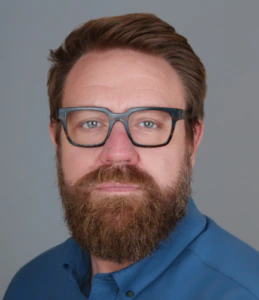
Max Dunbar is the chief executive of Manchester Jewish Museum.
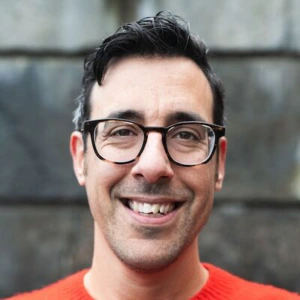
David Jubb is the artistic director and chief executive of Battersea Arts Centre, London.
Manchester Jewish Museum is one of six institutions taking part in Creative Museums, a programme designed to help the participants enrich the experience for visitors, involve their audiences, tackle challenges and generate new business opportunities. The project is run by Battersea Arts Centre and Gaby Porter Partnership, and is funded by Arts Council England.
Best wishes, Max
Dear Max: I think museums can learn from arts centres – but we also have plenty to learn from museums. Supported by its director, Sue Walker, we’ve just merged with Wandsworth Museum.
A key question has been who are the people we put at the heart of our organisations? How can we connect with people who do not see us as relevant?
We have been guilty of “delivering” stories and activities, and seeing who comes. Rather than delivery, I am interested in building around the creative ideas of people in our community. I want to support them to take creative risks. How could that work in museums?
Best wishes, David
Dear David: We’re now taking more risks at Manchester Jewish Museum, challenging perceptions around “Jewish museums” with more creative programming, ranging from Bollywood concerts to Irish folk nights. We’re learning as we go along, always asking people what they think. But a more creative approach has certainly attracted new audiences. The next step will be co-creating activities, so people are truly at the heart of what we do. We think the rich stories within our collection will play an important role in this. Is this the same at Battersea Arts Centre, now you have a museum?
Best wishes, Max
Dear Max: The BAC Moving Museum is at the beginning of its life and we are using our “Scratch” process for all museum activities.
This means we test ideas in partnership with people, respond to their feedback and redevelop the idea. Scratch is about rooting ourselves in our community. In November, we’re curating a festival of true stories about migration, told by the people who live those stories. I am quickly realising that the way to connect with new audiences is to put them at the heart of every idea, so it is for, by, with and about them. Do you think our buildings and collections can sometimes make that more difficult?
Best wishes, David
Dear David: The very name “museum” makes it difficult. Throw in an intimidating building and a collection of what, on the surface, appears to be random “stuff”, and we’ve a real challenge. Putting people at the heart of everything we do is the solution. At the museum, we’re now asking people for jokes to write outside our “intimidating” synagogue, and our galleries are changing each week in response to visitors’ comments. It’s certainly challenging to do things for, by, with and about people, but it’s a philosophy we’re now experimenting with – and the results are looking good.
Best wishes, Max
Dear Max: Sounds great. Perhaps we need to move away from the idea of a curator that interprets, shapes and manages our collections and buildings? There is an implicit hierarchy in that model. It also tends to work on a deficit model: we have stuff, we have knowledge, come and participate. We want to use our producers to help people shape and tell their own stories, finding ways to get out of our building and explore our collective intelligence. Battersea has a 19th-century motto: “Not for me, not for you, but for us.” That feels like a great starting point for us.
Best wishes, David
Max Dunbar is the chief executive of Manchester Jewish Museum.
David Jubb is the artistic director and chief executive of Battersea Arts Centre, London.
Manchester Jewish Museum is one of six institutions taking part in Creative Museums, a programme designed to help the participants enrich the experience for visitors, involve their audiences, tackle challenges and generate new business opportunities. The project is run by Battersea Arts Centre and Gaby Porter Partnership, and is funded by Arts Council England.