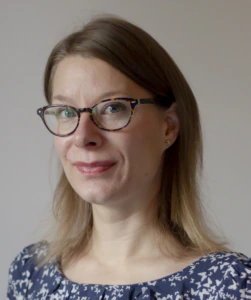
Kate Brindley, director, Arnolfini, Bristol
“The new displays at Tate Modern can’t fail to impress with their ambition and the values they embody. The ground covered by Tate in diversifying its ethos, collections and curatorial approach is admirable and to be welcomed.
The institution is reflecting changes in practice, with the approaches and ideas mapping a possible further evolution that is forward-thinking and much needed in contemporary museums. Is it a paradigm shift? I’m not sure – only time will tell – but it is certainly in the right spirit and to be congratulated.”
Andrew Nairne, director, Kettle’s Yard, Cambridge
“Yes. There is the space and flexibility in the new Tate Modern to reveal to audiences the diversity of modern and contemporary art and the different forms it can take. As exciting is the potential for new juxtapositions between art made in different contexts and different times.
Since opening, Tate Modern has created many enlightened and thrilling visual and sensory connections between works, but the opportunities for this kind of curatorial practice are now hugely enlarged. The audience is inspired and stimulated to engage at every turn.”
Jessica Turtle, co-founder, Museum of Homelessness
“Yes, I think it will. Tate Exchange, on the fifth floor of Switch House will help everyone involved understand how contemporary art is connected to everyday life.
In early 2017, the Museum of Homelessness is participating in this ‘open experiment’ and we’ve already started programming in response to the collection.
Our team includes people from all walks of life, including those who have been homeless, and our curatorial responses are rooted firmly in the wider world. Tate Exchange will shift existing perceptions as well as bringing new people into the gallery space.”
Nicky Wilson, co-founder of Jupiter Artland Foundation, Edinburgh
“As one of the first spaces for contemporary art in Britain, the Tate has always been at the forefront of creating and challenging perceptions of art, and this expansion shows its continuing ambition.
I love that it has not set out to be easy – it participates in the experience, cajoles the curator and prods the viewer. The variety of spaces, coupled with unifying materials, are magnificent. It’s an architectural success, and I know that Frances Morris will take the museum to a new level: championing female artists and non-European artists in particular.”
Alfredo Cramerotti, director, MOSTYN
"Most likely it will. I walked through the new extension and also the re-hang of the “old” spaces. My view is that by focusing on art beyond the Western canons and the contribution by female artists, in actual fact Tate is partially re-writing the history of art as we know it.
This cannot be emphasised enough. Especially in times when “diversity” has became such a topical issue, and not always for the right reason."
Roger Malbert, head, Hayward Touring
"Focussing on works acquired in this century gives the new galleries a decisive identity.
The confident declaration of curatorial intent, the emphasis on installation, video, photography and performance-based work (at the expense of painting), on a global rather than Euro-American perspective, and on a proper gender balance, is both refreshing and challenging.
Of course it allows the curators enormous freedom to invent whatever histories they choose - or can afford; the public will be at their mercy, having little prior knowledge of most of the artists shown."
Andrew Bonacina, chief curator, The Hepworth Wakefield
"When Tate Modern opened the vast underground Tanks spaces for an ambitious live programme in 2012, it felt like a new agenda for presenting and engaging audiences with contemporary art was being set. History was brought into open dialogue with the present and future in invigorating ways.
The real excitement of the new Tate Modern will be seeing how this vision is integrated across the whole of the museum – there are many sparks in the opening hang that bode very well. The real impact on the way in which audiences think about contemporary art will be in how this vision is realised across the building in the coming years."
“The new displays at Tate Modern can’t fail to impress with their ambition and the values they embody. The ground covered by Tate in diversifying its ethos, collections and curatorial approach is admirable and to be welcomed.
The institution is reflecting changes in practice, with the approaches and ideas mapping a possible further evolution that is forward-thinking and much needed in contemporary museums. Is it a paradigm shift? I’m not sure – only time will tell – but it is certainly in the right spirit and to be congratulated.”
Andrew Nairne, director, Kettle’s Yard, Cambridge
“Yes. There is the space and flexibility in the new Tate Modern to reveal to audiences the diversity of modern and contemporary art and the different forms it can take. As exciting is the potential for new juxtapositions between art made in different contexts and different times.
Since opening, Tate Modern has created many enlightened and thrilling visual and sensory connections between works, but the opportunities for this kind of curatorial practice are now hugely enlarged. The audience is inspired and stimulated to engage at every turn.”
Jessica Turtle, co-founder, Museum of Homelessness
“Yes, I think it will. Tate Exchange, on the fifth floor of Switch House will help everyone involved understand how contemporary art is connected to everyday life.
In early 2017, the Museum of Homelessness is participating in this ‘open experiment’ and we’ve already started programming in response to the collection.
Our team includes people from all walks of life, including those who have been homeless, and our curatorial responses are rooted firmly in the wider world. Tate Exchange will shift existing perceptions as well as bringing new people into the gallery space.”
Nicky Wilson, co-founder of Jupiter Artland Foundation, Edinburgh
“As one of the first spaces for contemporary art in Britain, the Tate has always been at the forefront of creating and challenging perceptions of art, and this expansion shows its continuing ambition.
I love that it has not set out to be easy – it participates in the experience, cajoles the curator and prods the viewer. The variety of spaces, coupled with unifying materials, are magnificent. It’s an architectural success, and I know that Frances Morris will take the museum to a new level: championing female artists and non-European artists in particular.”
Alfredo Cramerotti, director, MOSTYN
"Most likely it will. I walked through the new extension and also the re-hang of the “old” spaces. My view is that by focusing on art beyond the Western canons and the contribution by female artists, in actual fact Tate is partially re-writing the history of art as we know it.
This cannot be emphasised enough. Especially in times when “diversity” has became such a topical issue, and not always for the right reason."
Roger Malbert, head, Hayward Touring
"Focussing on works acquired in this century gives the new galleries a decisive identity.
The confident declaration of curatorial intent, the emphasis on installation, video, photography and performance-based work (at the expense of painting), on a global rather than Euro-American perspective, and on a proper gender balance, is both refreshing and challenging.
Of course it allows the curators enormous freedom to invent whatever histories they choose - or can afford; the public will be at their mercy, having little prior knowledge of most of the artists shown."
Andrew Bonacina, chief curator, The Hepworth Wakefield
"When Tate Modern opened the vast underground Tanks spaces for an ambitious live programme in 2012, it felt like a new agenda for presenting and engaging audiences with contemporary art was being set. History was brought into open dialogue with the present and future in invigorating ways.
The real excitement of the new Tate Modern will be seeing how this vision is integrated across the whole of the museum – there are many sparks in the opening hang that bode very well. The real impact on the way in which audiences think about contemporary art will be in how this vision is realised across the building in the coming years."