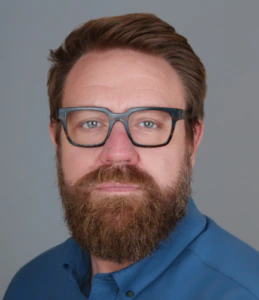
Paul Smith is the director of the Oxford University Museum of Natural History
Kate Arnold-Forster is the head of University Museums and Special Collections Services at Reading University
Dear Paul: We share common preoccupations. Although from different perspectives, both the Oxford University Museum of Natural History and the Museum of English Rural Life (Merl) are seeking new ways to explain the scientific relevance our collections hold for contemporary audiences.
For Merl, a social history museum known mainly for its focus on agricultural heritage, this is arguably a risky approach.
But for university museums, with collections that reflect the intellectual ideas of our founding curators, is there a further danger that we may lose sight of our core identity? Best wishes, Kate
Dear Kate: Some of the lkey challenges facing society are rooted in science in one way or another, whether it is climate change, biodiversity loss, energy balance or global food supply. All museums – art, social history and science – have a responsibility to engage with these issues, using their collections to articulate their stories.
If we don’t, our collections will become irrelevant to modern society, which is not what our founding curators would have wanted. But how can we engage our audiences effectively?
Best wishes, Paul
Dear Paul: Our museums are uniquely placed to forge new understandings of science-based issues. We have unrivalled access to interdisciplinary approaches to help us create new cultural interactions.
But letting go of our often structured views of how to exploit expert knowledge to interpret academic collections can be a challenge. Some exciting approaches include using art to disrupt expectations and engage audiences, and using digital in an intelligent, object-focused way to engage a born-digital generation. But are there others? Best wishes, Kate
Dear Kate: We do need to think of new ways of engaging the public. University museums are ideally placed to combine active research with science communication expertise and audiences – a perfect combination for high-quality public engagement.
Our presentation of science must be object-led, of course, but our experience suggests that presenting contemporary science is a matter not only of curating objects, but also of curating researchers.
In this way, novel combinations of researchers from across the sciences, social sciences and humanities can examine contemporary science and its societal implications. Best wishes, Paul
Dear Paul: I agree about needing to explore new models of collaborative curation, including combining multidisciplinary research approaches to communicate contemporary science.
But I would go further: we should converse with different voices, expertise and perspectives to interpret collections for our audiences. At Merl, for example, we find that farmers and schoolchildren are often the best explainers of the importance of the science that underpins many of our objects. Best wishes, Kate
Dear Kate: A collaborative approach is essential. One aspect is to develop the story between scientific teams and museum staff – the latter think fairly instinctively in terms of narrative threads, but the same is not necessarily true of some areas of science, where incremental steps can represent major breakthroughs in a longer narrative arc.
Collaboration with audiences is also critical, and we work with focus groups to shape exhibitions. In the end, it becomes a three-way collaboration between the museum, the science teams and our visitors. Best wishes, Paul
For more on university museums, see p20