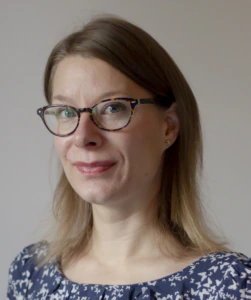
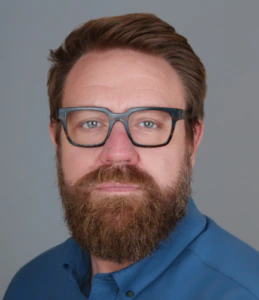
Tim Desmond is the chief executive officer of the Galleries of Justice Museum and National Centre for Citizenship and the Law in Nottingham; Karyn McGee is the national and international partnerships officer at National Museums Scotland
Dear Karyn:
We need to create a movement for museums to represent diversity with collections that mirror society, not just now but in the next 10 years.
Particularly in the case of cultural diversity, I am keen for museums to have a mainstream approach to “multi-heritage topics” and, by doing so, make exhibitions more relevant to our communities. We can start this with influence from the top, laterally through curators or by encouraging more diverse entrants.
Best wishes, Tim
Dear Tim:
That is a great aim. Should we also collect more diversely to achieve this? I wonder if more can be done to ensure museum careers are accessible to a wider variety of people.
Perhaps screening and selection could be a place to start. I have heard of instances where job applications are being filtered for candidates with postgraduate qualifications, despite this not being a requirement of the post. This approach appears to contradict the idea of diversity in the workforce. How do you think attitudes might be changed to make our workforce more diverse?
Best wishes, Karyn
Dear Karyn:
Diversity must transform museums so that they are not monocultural. We must source collections from diverse communities and bring in curators from diverse backgrounds, or with experience of working with diverse communities. How uniformly are we looking at recruitment and staff culture, let alone trustees?
If we are going to be more diverse, there must be a push to opening doors to difference. You almost need to set up a prism to see our sector in an alternative way, so we get a variety of opinion.
Best wishes, Tim
Dear Tim:
A slight change in attitude could make a big difference. A more diverse workforce could benefit the sector as well as individuals, by opening up new connections, providing new ways of thinking and highlighting areas to improve – but also capturing the things that we do get right.
We must also remember what the sector has achieved. Collections in the UK are hugely varied and we should continue to make good use of them through interpretation and programming.
Regarding recruitment, there are already great schemes such as the Heritage Lottery Fund’s Skills for the Future programme, enabling more people to get involved in the heritage sector. We have made a good start, but have further to go. Do you think there is anything else that can be done at leadership level?
Best wishes, Karyn
Dear Karyn:
Small steps can make a world of difference and we want evolution rather than revolution. The great work that Skills for the Future is doing will take a few years to filter up.
As far as I know, the funding has ended, so we will need an additional approach to diversifying leadership. My main focus would be on setting up an incubator programme for trustees, so a new generation can be attracted to take up a strategic role in the sector who will be responsible for the recruitment of leaders.
Best wishes, Tim
Dear Tim:
By encouraging more people to participate, the diversity of governance could be improved. How many people have ever considered becoming a trustee? We should ensure that the fair recruitment process for entry-level positions is mirrored at trustee level.
A specific programme could teach people about the professional development opportunities and skills required to become a trustee. At the very least, communication about trustee positions could be made more widely available, which might encourage more to participate.
Best wishes, Karyn
Tim Desmond and Karyn McGee will be taking part in the forthcoming careers conference, Moving on up: Making an impact with your career, on 24 February at Leicester University
Dear Karyn:
We need to create a movement for museums to represent diversity with collections that mirror society, not just now but in the next 10 years.
Particularly in the case of cultural diversity, I am keen for museums to have a mainstream approach to “multi-heritage topics” and, by doing so, make exhibitions more relevant to our communities. We can start this with influence from the top, laterally through curators or by encouraging more diverse entrants.
Best wishes, Tim
Dear Tim:
That is a great aim. Should we also collect more diversely to achieve this? I wonder if more can be done to ensure museum careers are accessible to a wider variety of people.
Perhaps screening and selection could be a place to start. I have heard of instances where job applications are being filtered for candidates with postgraduate qualifications, despite this not being a requirement of the post. This approach appears to contradict the idea of diversity in the workforce. How do you think attitudes might be changed to make our workforce more diverse?
Best wishes, Karyn
Dear Karyn:
Diversity must transform museums so that they are not monocultural. We must source collections from diverse communities and bring in curators from diverse backgrounds, or with experience of working with diverse communities. How uniformly are we looking at recruitment and staff culture, let alone trustees?
If we are going to be more diverse, there must be a push to opening doors to difference. You almost need to set up a prism to see our sector in an alternative way, so we get a variety of opinion.
Best wishes, Tim
Dear Tim:
A slight change in attitude could make a big difference. A more diverse workforce could benefit the sector as well as individuals, by opening up new connections, providing new ways of thinking and highlighting areas to improve – but also capturing the things that we do get right.
We must also remember what the sector has achieved. Collections in the UK are hugely varied and we should continue to make good use of them through interpretation and programming.
Regarding recruitment, there are already great schemes such as the Heritage Lottery Fund’s Skills for the Future programme, enabling more people to get involved in the heritage sector. We have made a good start, but have further to go. Do you think there is anything else that can be done at leadership level?
Best wishes, Karyn
Dear Karyn:
Small steps can make a world of difference and we want evolution rather than revolution. The great work that Skills for the Future is doing will take a few years to filter up.
As far as I know, the funding has ended, so we will need an additional approach to diversifying leadership. My main focus would be on setting up an incubator programme for trustees, so a new generation can be attracted to take up a strategic role in the sector who will be responsible for the recruitment of leaders.
Best wishes, Tim
Dear Tim:
By encouraging more people to participate, the diversity of governance could be improved. How many people have ever considered becoming a trustee? We should ensure that the fair recruitment process for entry-level positions is mirrored at trustee level.
A specific programme could teach people about the professional development opportunities and skills required to become a trustee. At the very least, communication about trustee positions could be made more widely available, which might encourage more to participate.
Best wishes, Karyn
Tim Desmond and Karyn McGee will be taking part in the forthcoming careers conference, Moving on up: Making an impact with your career, on 24 February at Leicester University