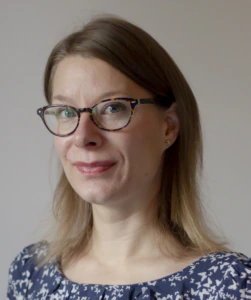
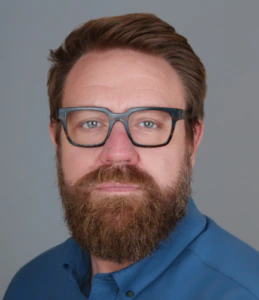
Emma Halford-Forbes is the museum manager at the Black Watch Castle and Museum, Perth; Nat Edwards is the director of the Robert Burns Birthplace Museum, Ayrshire
Dear Nat:
The Scottish museum and galleries sector won’t fall apart without a strategy, so I don’t think I can say that Scotland needs a strategy. But it appears we are going to get one.
In an ideal world it would be excellent to have some sort of cohesive thinking and planning for the sector as a tool to enable us to make better use our resources.
Although one could say that this is already underway, I certainly don’t think we’re thinking outside of our own wee niche within the sector, or that the sector is thinking together enough.
Emma
Dear Emma:
What we need most right now is vision – and the passion to sell it. The referendum offers opportunities to engage people in debate about what Scotland is or could be – and material culture can help shape this.
However, there is also real danger that the referendum becomes a non-debate, distorted by a mixture of short-termist electoralism, crude economics and identity politics.
Do we let the media and politicians lead the debate or help make it something grown-up and meaningful? If a strategy genuinely helps do that, then we need one.
Nat
Dear Nat:
I agree that if we are to have a strategy that it should be something grown up and meaningful. And it should be applicable to all museums across the board – no mean feat! But I hope that a strategy would transcend politics and help shape the sector for the long term.
While I think we could have a part to play in a referendum debate, I think the strategy can give us common ground to work from that won’t bind us to short-term political goals or events.
Emma
Dear Emma:
There’s a Catch-22 danger. If we don’t make museums meaningful within the wider debate we could become marginal – engage too narrowly and we run the risk of becoming another political football. At a fundamental level, the issues are about where museums sit in communities – how they are owned, managed and understood.
They represent a vast cultural evidence locker against which to critically examine the national debate and potentially to expose many of its weaknesses. If we drill right down to these issues, then we can potentially build a robust, long-term and transformative strategy for museums.
Braw thochts, Nat
Dear Nat:
Absolutely – as long as we don’t become beholden to the machinations of the political system, and can remain autonomous and self-directed.
If the sector is to contribute to the wider debate – whatever that may mean now or in the long term – we must remember that we are a diverse bunch, with different needs, priorities and abilities.
We should all be able to contribute to how the sector is shaped and how it moves forward. The strategy must show how every museum can contribute to the strategy, can work with it, and can benefit from it – from volunteer-run independent to national, and everything in between.
Cheers, Em
Dear Emma:
If we get that right, then that might be the most exciting thing about a new strategy – giving power to museums at a grassroots level to find new ways of doing things and new models of ownership and management.
It would be a real tragedy if any strategy set out some sort of monolithic model for the “correct” Scottish museum. I sincerely hope for a strategy that liberates us to be as gloriously incorrect as we possibly can – as brilliantly dissenting, fractious and contrary as the communities we belong to. That would be brave – but worth the trouble.
Love, Nat x
Dear Nat:
The Scottish museum and galleries sector won’t fall apart without a strategy, so I don’t think I can say that Scotland needs a strategy. But it appears we are going to get one.
In an ideal world it would be excellent to have some sort of cohesive thinking and planning for the sector as a tool to enable us to make better use our resources.
Although one could say that this is already underway, I certainly don’t think we’re thinking outside of our own wee niche within the sector, or that the sector is thinking together enough.
Emma
Dear Emma:
What we need most right now is vision – and the passion to sell it. The referendum offers opportunities to engage people in debate about what Scotland is or could be – and material culture can help shape this.
However, there is also real danger that the referendum becomes a non-debate, distorted by a mixture of short-termist electoralism, crude economics and identity politics.
Do we let the media and politicians lead the debate or help make it something grown-up and meaningful? If a strategy genuinely helps do that, then we need one.
Nat
Dear Nat:
I agree that if we are to have a strategy that it should be something grown up and meaningful. And it should be applicable to all museums across the board – no mean feat! But I hope that a strategy would transcend politics and help shape the sector for the long term.
While I think we could have a part to play in a referendum debate, I think the strategy can give us common ground to work from that won’t bind us to short-term political goals or events.
Emma
Dear Emma:
There’s a Catch-22 danger. If we don’t make museums meaningful within the wider debate we could become marginal – engage too narrowly and we run the risk of becoming another political football. At a fundamental level, the issues are about where museums sit in communities – how they are owned, managed and understood.
They represent a vast cultural evidence locker against which to critically examine the national debate and potentially to expose many of its weaknesses. If we drill right down to these issues, then we can potentially build a robust, long-term and transformative strategy for museums.
Braw thochts, Nat
Dear Nat:
Absolutely – as long as we don’t become beholden to the machinations of the political system, and can remain autonomous and self-directed.
If the sector is to contribute to the wider debate – whatever that may mean now or in the long term – we must remember that we are a diverse bunch, with different needs, priorities and abilities.
We should all be able to contribute to how the sector is shaped and how it moves forward. The strategy must show how every museum can contribute to the strategy, can work with it, and can benefit from it – from volunteer-run independent to national, and everything in between.
Cheers, Em
Dear Emma:
If we get that right, then that might be the most exciting thing about a new strategy – giving power to museums at a grassroots level to find new ways of doing things and new models of ownership and management.
It would be a real tragedy if any strategy set out some sort of monolithic model for the “correct” Scottish museum. I sincerely hope for a strategy that liberates us to be as gloriously incorrect as we possibly can – as brilliantly dissenting, fractious and contrary as the communities we belong to. That would be brave – but worth the trouble.
Love, Nat x