Creating a contemporary museum habitat
The recent closure of my local Habitat in Harrogate was a big come down for me, as a once stylish environment was reduced to a bargain basement full of half empty shelves and scrappy handwritten signs.
As a museum curator with a passion for the development of domestic interiors and design it was bound to affect me. It was the passing of an era.
Back in 1984 I wrote a piece on modern interiors for Museums Journal. Trying to find a snappy title I was chatting with my friend and fellow curator Julia Holberry who came up with Heals to Habitat.
It was perfect and summed up the way in which good contemporary design had become available on the British high street. It was when Habitat’s founder, Terence Conran still controlled the company.
So much has changed since then; Ikea arrived with a cut-price flatpack Scandinavian modernism that has almost delivered the Bauhaus dream of well designed mass-produced affordability.
The internet allows us to buy a huge range of original and replica “design classics” at good prices. We British have become converted to the contemporary.
It was so different in the late 60s and early 70s. I remember as a kid growing up in Nottingham that domestic style was still dominated by the three-piece and ghastly “Cromwellian” reproductions.
When Habitat opened in Nottingham in November 1972 it was like entering a different world. You were lured in by windows displaying furniture with clean lines and bright industrial lighting. Habitat had a personality, based on the tastes of Conran and his team. It was that eclectic mix of modernism and tradition.
It offered new choices to people, and educated them about design. You knew that Conran was passionate about design and design education. He proved it through the glorious experiment that was the Boilerhouse at the V&A and the establishment of the Design Museum.
Modern museums understand the need to record modern life through a variety of media, including oral history, photography and the collection of objects. The latter is a challenging exercise given the sheer volume of material available.
There is a real need to exercise judgement and restraint as storing all this domestic detritus is expensive. There is also the need to present a realistic version of the past.
The reconstructed interior has a long tradition in museums dating back to early 20th century. The most common expression of this is the Victorian Parlour, all too often an ill-researched collection of clutter.
The interpretation of country houses like Upton has moved things into the 1930s and museums such as York Castle, St Fagans and the Geffrye have delivered displays of domestic interiors from the 1950s, 1960s and 1980s.
We need to make sure that museum collections record the influence of Habitat. Many have collected the catalogues, but what of the furniture that helped shape the taste of post-war generations?
Seeing the real thing remains a powerful stimulus, especially if accompanied by contextual information about the owners; where and how it was used, how much it cost etc.
Here’s a test; do we collectively have enough to furnish a good retrospective show at either the V&A or the Design Museum? We can do it for Pugin, William Morris, and Christopher Dresser but can we do it for Conran, who is arguably as important as that impressive trio?
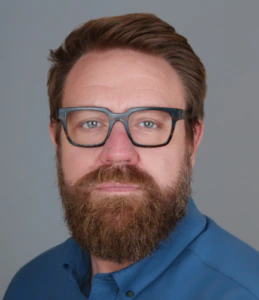
Mark Suggitt, director, Derwent Valley Mills World Heritage Site
The appeal of science
The Science Museum’s appeal lies in its ability to cater to the needs of a wider audience beyond families. It provides an intelligent balance between hands-on science and cultural heritage.
Nearly 3 million visitors of all ages come to the museum each year to learn about the history of science and technology – illustrated through our world-class display collection of more than 17,000 objects, which form an enduring record of scientific, technological and medical invention, discovery and achievement.
While we do seek to engage younger audiences through interactive displays, shows and workshops, at the same time we offer a varied cultural programme aimed at adults including arts exhibitions and space collections, as well as our monthly Lates evening, which attracts on average about 3,000 young adults each month.
Hadrian Ellory-van Dekker, head of collections, Science Museum, London
Museums Association website, 3 October 2011
Wrong direction
Regarding your article about the Once Upon A Wartime exhibition at the Imperial War Museum (IWM) – when designers produce a design, can they please get the details correct. The corrugated iron used in the Anderson shelters ran in a vertical direction (they were horizontal in the exhibition) for strength. This also gives the structure its unique visual signature so, come on IWM, get it right!
Steve Davis, consultant designer, Setout
Museums Journal September 2011, p31
Jobs needed
The news, reported recently on the Museums Association (MA) website, that more than 3,200 graduates have applied for 20 paid internships as part of a programme being run by Museums Galleries Scotland has reactivated the debate over entry to the museums profession and also the use of internships.
Applicants will receive tax-free bursaries of £15,000 to support them through their year-long traineeships at Scottish museums. Here are some comments from the MA website:
I have been running a curatorial internship for English Heritage for the last three years.
It is offered through a local university and paid at a rate slightly above the national minimum wage. The intern is trained in all aspects of collections management and care and in the principles of interpretation, etc. I don’t think it is fair to ask people to undertake this kind of work without pay.
Pam, curator, Fort Brockhurst
As a history and museum studies graduate, I would have relished the opportunity to learn skills only transferable on the premises through a closely-monitored programme.
It would be encouraging if we could make more of those who have done a postgraduate in museum studies and are finding it hard to get into the sector, rather than offer it primarily for recent graduates with little or no experience. It raises the question as to whether a postgraduate in museums/heritage is actually needed?
Anonymous MA member
This internship programme favoured applicants with no or little museum experience.… What about recent museum studies graduates?
Anonymous MA member
Museums Association website, October 2011
Clarification
Patton would like to point out that it was the construction manager for the fit-out of the National Museum of Liverpool.
Museums Journal September 2011, p42
In the December issue of Museums Journal
- Interpreting art, by Sara Selwood
- Baroness Andrews, the chairwoman of English Heritage, talks to Simon Stephens about how the organisation is facing up to new challenges
- Reviews: Roman Frontier Gallery, Tullie House Museum and Art Gallery, Carlisle; Fusilier Museum, London; Firstsite, Colchester; Grayson Perry: The Tomb of the Unknown Craftsman, British Museum, London
- Plus news, comment, letters, jobs and much more
Museum Practice online
What makes a good museum label? The current issue of Museum Practice looks at experiments with digital technology. Plus, the interpretation team at Glasgow’s new Riverside Museum talk about scriptwriting.