The limits of exponential growth have been challenged by the current economic crisis. Before the downturn, by proving museum’s work contributed to the economic potential of a locality, we got more money. With more money, we got to do more stuff for more people.
Climate change and resource scarcity presents further ethical and moral challenges to industrial economies based on high levels of consumption.
The use of the word happiness may appear trite when set alongside other progressive notions such as social justice. Yet a preoccupation with economic growth has made real social justice more elusive.
The Happy Museum Project was launched in March with funding from the Paul Hamlyn Foundation. The Museum of East Anglian Life asked the New Economics Foundation and some museum thinkers to write a paper, The Happy Museum, to challenge the sector to incubate high well-being, sustainable organisations.
The paper proposes that museums are in a great position to use their popularity to encourage the public to face the challenges of climate change, resource scarcity and to increase happiness.
In particular, museum, should find ways to have more mutual relationships with communities and visitors, perhaps considering the possibility of becoming mutual organisations or cooperatives. They should value and protect natural and cultural environments and be sensitive to the impact of the museum and its visitors on them.
It’s also important to measure what matters. Counting visitors tells us nothing about the quality of their experience or the contribution to their well-being. Ask your audience how your work affects them emotionally. Talk to people, understand what makes them feel happier, measure that.
Museum learning is already all the things much orthodox learning is not: it is curiosity driven; non-compulsory; informal. Society needs people who are resilient, creative and empathetic systems-thinkers, exactly the kind of capacities museum learning can support.
Many museums do appreciate their position at the heart of their community. The Happy Museum Project shows that the context is now different.
Climate change, pressures on the planet’s finite resources and awareness that a happy society need not set economic growth as its most meaningful measure, offer us a chance to re-imagine the purpose of the museums.
Museums should realise their role as connectors, viewing people not just as audiences, but as collaborators, not as beneficiaries but stewards who will pass on knowledge to their friends and neighbours.
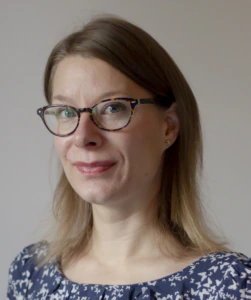
Tony Butler is the director of the Museum of East Anglian Life, Stowmarket, Suffolk.
www.happymuseumproject.org
Climate change and resource scarcity presents further ethical and moral challenges to industrial economies based on high levels of consumption.
The use of the word happiness may appear trite when set alongside other progressive notions such as social justice. Yet a preoccupation with economic growth has made real social justice more elusive.
The Happy Museum Project was launched in March with funding from the Paul Hamlyn Foundation. The Museum of East Anglian Life asked the New Economics Foundation and some museum thinkers to write a paper, The Happy Museum, to challenge the sector to incubate high well-being, sustainable organisations.
The paper proposes that museums are in a great position to use their popularity to encourage the public to face the challenges of climate change, resource scarcity and to increase happiness.
In particular, museum, should find ways to have more mutual relationships with communities and visitors, perhaps considering the possibility of becoming mutual organisations or cooperatives. They should value and protect natural and cultural environments and be sensitive to the impact of the museum and its visitors on them.
It’s also important to measure what matters. Counting visitors tells us nothing about the quality of their experience or the contribution to their well-being. Ask your audience how your work affects them emotionally. Talk to people, understand what makes them feel happier, measure that.
Museum learning is already all the things much orthodox learning is not: it is curiosity driven; non-compulsory; informal. Society needs people who are resilient, creative and empathetic systems-thinkers, exactly the kind of capacities museum learning can support.
Many museums do appreciate their position at the heart of their community. The Happy Museum Project shows that the context is now different.
Climate change, pressures on the planet’s finite resources and awareness that a happy society need not set economic growth as its most meaningful measure, offer us a chance to re-imagine the purpose of the museums.
Museums should realise their role as connectors, viewing people not just as audiences, but as collaborators, not as beneficiaries but stewards who will pass on knowledge to their friends and neighbours.
Tony Butler is the director of the Museum of East Anglian Life, Stowmarket, Suffolk.
www.happymuseumproject.org