Small and medium-sized local museums make up the majority of the museum sector. They survive on small budgets with small multi-tasking staff teams. They are always vulnerable to local budget cuts but are strongly supported by their volunteers and communities.
Are they represented by the Museums Association (MA)? You will not see these staff at the annual conference – attendance is the equivalent of three or four years of their entire training budget. Are they able to attend training? Maybe one course a year, as the prices and transport costs go up. Do they write articles or contribute to the journal?
The journal seems more concerned with large projects and senior staff. Through a combination of budget pressures, access and time constraints, staff at local museums can feel disillusioned by the MA.
While we enjoy reading about best practice, large exhibitions and charismatic senior staff, these things are no longer relevant to our services and offer few clues for how we improve on much smaller budgets.
Local museums are committed to engaging local people with history and maintaining their collections. But we need support. We want advice on writing five-year forward plans in a challenging economic climate.
We want ideas about marketing with limited budgets. We want support about how we manage staff, sites, retail and finance while still wanting to be skilled and effective museum professionals.
With the imminent demise of the Museums, Libraries and Archives Council, we need an MA that supports local museums, one that helps us share good practice and ideas; consults our views through web chats, regional members’ groups and online forums; offers support through good value training; and recognises the huge challenges facing local museums. At the moment, we do not feel the MA gives us the support we would like.
We would be very interested in hearing from colleagues from local museums in a similar situation.
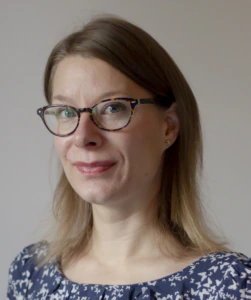
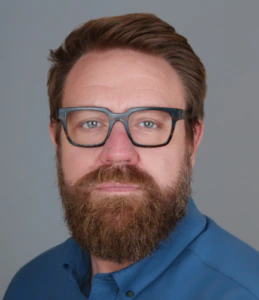
Sophie Cummings, collections manager, Swindon, and Tove Bellingham, heritage assistant – display, Kingston
scummings@swindon.gov.uk
Small and medium-sized local museums make up a significant proportion of MA membership and we actively seek to represent them.
The MA often speaks out about issues affecting smaller museums. For example:
Small museums at the heart of the community
Blog: Pity the homeless
And in your own area our director has recently commented in the Swindon Advertiser about the opening hours at Swindon Museum & Art Gallery.
We have awarded grants through our Effective Collections programme, with many of the recipients being smaller local museums and on our lowest grades of membership. This will continue with new collections funding in the next few years.
Effective Collections funding for collections development
But your letter rightly encourages the MA to do more. Please be assured that we are endeavouring to do so and that many of your suggestions feature in our planning.
We are conducting a radical review of membership, which will offer cheaper services to smaller institutional members. And while we do see staff from smaller museums at the MA conference, we recognise that the cost can be prohibitive. To address this, the 2011 conference in Brighton will be run at a cheaper price.
We have run free events on sustainability, advocacy, collections and professional development. From April 2011 we will focus on cheaper and more accessible advice, including free members’ meetings around the country.
We have recently made significant changes to our website. Members can now comment and discuss issues. Museum Practice is a large online source of practical advice for members with more than 1,300 articles in its archive, many about working with limited budgets. I’d encourage all members to visit it and see the depth of information there.
We recognise that small and medium-sized museums face many important and challenging issues. Supporting and representing them is at the heart of our thinking. We also need members help, and the more feedback and suggestions we receive, the more we can do.
Will Adams, head of marketing, Museums Association
I agree with the remarks by David Sinclair in the article Age Concern about older people being excluded from museums. I have also observed that it’s the attitude of museum staff and management who do not want to get out of their comfort zone.
For the past year I have worked with hard-to-reach older people for the WRVS Heritage Plus oral history project in Sussex. I have been surprised and frustrated by that the fact that local museums and galleries have not been engaging enough with older people, especially those from black and ethnic minority groups.
Politicians are only too aware of the power of the grey vote. I would hope in the present climate, when all museums and galleries are under pressure to attract a wider audience, that management and staff try to involve more older people on sustainable projects.
Hamish MacGillivray, freelance museum project manager and community researcher
For some suggestions see www.heritageplus.org.uk
Age concern, Museums Journal November 2010, p28
I was delighted to be given the opportunity to take part in the MA conference session on the Big Society. In particular, it was useful to be able to dispel the hackneyed old canard that unions were opposed, in principle, to the use of volunteers.
Prospect has always recognised the value of volunteers and it is a plain fact that some museums could just not function without them.
Prospect has been reaching agreements with organisations on the use of volunteers for very many years and a key component of such agreements has been that the involvement of volunteers should complement and supplement the work of paid staff and should not be used to replace them or undercut their pay and conditions of service. This principle is reflected in the TUC Charter on volunteering.
At the conference I was asked whether Prospect would be happy to represent volunteers and indeed we would. It is vital that all those in the workplace are treated fairly and are not subject to exploitation, bullying and abuse. If any volunteer would like to know more about Prospect please contact me on the email address below.
As the public expenditure cuts hit, it is going to be vital that museum professionals explain the importance of their roles and the impact of cutting their jobs. Prospect stands ready to support members in this endeavour.
Alan Leighton, national secretary, Prospect
alan.leighton@prospect.org.uk
Write to: the editor, Museums Journal, 24 Calvin Street, London E1 6NW
email: journal@museumsassociation.org
Museums Journal reserves the right to edit letters
- Museums in the Middle East
- The increasingly important role that federations are playing
- Interview with Ann Sumner, director, Barber Institute of Fine Arts, Birmingham
- Reviews: Havering Museum, Romford; Yorkshire Museum, York; Strawberry Hill House, Twickenham; Future Beauty, Barbican, London
- Plus news, comment, letters, jobs and much more
The latest issue of Museum Practice explores the important role of volunteers. It looks at best practice for recruiting and managing volunteers, and explains what museums’ legal obligations are. There are also case studies.