Thanks to programmes such as the Museums Association’s (MA) Renaissance-funded Diversify scheme, the museum workforce is getting more diverse.
Since the 1990s the proportion of people from minority-ethnic backgrounds working in UK museums has almost trebled from around 2.5 per cent in 1993 to around 7 per cent in 2008 (the most recent figures available). That’s the good news.
For an article coming up in the next issue of Cultural Trends, we crunched all the numbers we could find on the ethnicity of the museum workforce. The current level of 7 per cent minority ethnic doesn’t look good against the overall UK population, which is over 12 per cent minority ethnic. To match the wider population, UK museums need about twice as many minority-ethnic staff as they have now.
Things are a bit better in larger museums in England, where around 9 per cent of staff are minority ethnic. That doesn’t sound too bad until you realise that most larger museums are in cities where the minority-ethnic population is higher than the national average.
In London around 30 per cent of people are minority ethnic – yet in 2006 they held only around 8 per cent of education and interpretation jobs in London national museums. For collections jobs, things are worse still, with even now only about 4 per cent of posts held by people who aren’t white. And as for senior management posts…
There’s a risk that things will get worse with less money available for workforce diversification. Cuts could have another impact too – minority-ethnic staff are more likely to be in junior learning and community posts, which are more likely to be fixed term and so possibly more vulnerable to cuts.
But it’s not all doom and gloom. The hub museums are all working to increase the diversity of their staff, funded by the Museums, Libraries and Archives Council and supported by the MA. The Heritage Lottery Fund’s Skills for the Future is about to deliver hundreds of new training places.
That could make a real difference as long as organisations recruiting trainees work hard enough and are committed enough to ensure they recruit a diverse range of people.
As more museums take their own action to improve workforce diversity, the MA’s Diversify scheme is coming to an end. It has helped well over 120 people from minority-ethnic backgrounds prepare for a career in museums and many of them are now working in the sector (see link below).
There’s still a long way to go to match the wider population. In the cuts to come, it’s critical that museums, the government and sector bodies don’t neglect diversity.
Maurice Davies is head of policy and communication at the Museums Association.
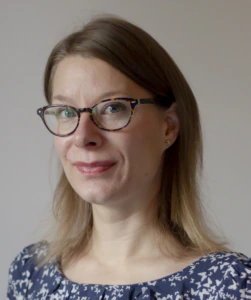
Lucy Shaw (pictured above) is Diversify coordinator.
Since the 1990s the proportion of people from minority-ethnic backgrounds working in UK museums has almost trebled from around 2.5 per cent in 1993 to around 7 per cent in 2008 (the most recent figures available). That’s the good news.
For an article coming up in the next issue of Cultural Trends, we crunched all the numbers we could find on the ethnicity of the museum workforce. The current level of 7 per cent minority ethnic doesn’t look good against the overall UK population, which is over 12 per cent minority ethnic. To match the wider population, UK museums need about twice as many minority-ethnic staff as they have now.
Things are a bit better in larger museums in England, where around 9 per cent of staff are minority ethnic. That doesn’t sound too bad until you realise that most larger museums are in cities where the minority-ethnic population is higher than the national average.
In London around 30 per cent of people are minority ethnic – yet in 2006 they held only around 8 per cent of education and interpretation jobs in London national museums. For collections jobs, things are worse still, with even now only about 4 per cent of posts held by people who aren’t white. And as for senior management posts…
There’s a risk that things will get worse with less money available for workforce diversification. Cuts could have another impact too – minority-ethnic staff are more likely to be in junior learning and community posts, which are more likely to be fixed term and so possibly more vulnerable to cuts.
But it’s not all doom and gloom. The hub museums are all working to increase the diversity of their staff, funded by the Museums, Libraries and Archives Council and supported by the MA. The Heritage Lottery Fund’s Skills for the Future is about to deliver hundreds of new training places.
That could make a real difference as long as organisations recruiting trainees work hard enough and are committed enough to ensure they recruit a diverse range of people.
As more museums take their own action to improve workforce diversity, the MA’s Diversify scheme is coming to an end. It has helped well over 120 people from minority-ethnic backgrounds prepare for a career in museums and many of them are now working in the sector (see link below).
There’s still a long way to go to match the wider population. In the cuts to come, it’s critical that museums, the government and sector bodies don’t neglect diversity.
Maurice Davies is head of policy and communication at the Museums Association.
Lucy Shaw (pictured above) is Diversify coordinator.