A challenging financial crisis is upon us. There will be closures, redundancies and serious retrenchment. The case for museums needs to be made locally and inside larger institutions.
The case for Renaissance is a national one too. Renaissance was designed to raise the quality of regional museums for existing and new audiences.
The review of Renaissance made a large number of recommendations to improve the governance and management of the scheme. What it did not do was challenge the continuing validity and power of the original vision.
A detailed impact assessment of what Renaissance has achieved is now needed. This is the time for us all to stand up and show politicians and stakeholders what difference Renaissance has made to the lives of ordinary people, to the educational experiences of our children and to the cultural opportunities for our most disadvantaged communities. Evidence now needs to be marshalled to illustrate what our museums can do if adequately funded and dynamically led.
We believe that the Department for Culture, Media and Sport (DCMS) working with the Hubs is best placed to do that and I challenge them to tell us what they plan to do.
We know that Renaissance works. But it needs to be run properly. DCMS and the Museums, Libraries and Archives Council (MLA) need to bring forward a clear vision and programme for how Renaissance will be run in the next five years.
Meanwhile, a review of the Higher Education Funding Council for England's funding for university museums is threatening their excellent work. For nearly ten years the principal criteria for allocating funding has been the care of and access to collections. The rules appear to be about to change radically with the emphasis now being on the value of the collections as research material for academics.
The MLA has published Leading Museums, a 10-point Action Plan. But a national strategy would move beyond this by, for example, prioritising, identifying resources, articulating the future direction of Renaissance and, hopefully, showing how the support for local museums will be maintained now that there are no regional agencies. On the latter, I think we must rebuild the support structures for local and community museums everywhere.
The MLA faces an uncertain future without something we would all wish to give it - our unqualified support. We must return to thinking about and talking about museums as places of curiosity, imagination, and above all, authenticity. What is it that we stand for that is unique in the cultural heritage world?
We must build on our strengths. The public want us to be there.
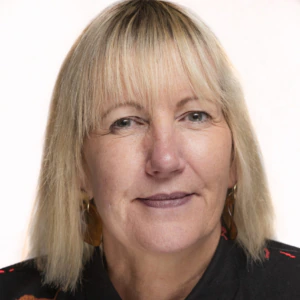
Stuart Davies is the president of the Museums Association (MA). This is an abridged version of his address to the MA conference last month
The case for Renaissance is a national one too. Renaissance was designed to raise the quality of regional museums for existing and new audiences.
The review of Renaissance made a large number of recommendations to improve the governance and management of the scheme. What it did not do was challenge the continuing validity and power of the original vision.
A detailed impact assessment of what Renaissance has achieved is now needed. This is the time for us all to stand up and show politicians and stakeholders what difference Renaissance has made to the lives of ordinary people, to the educational experiences of our children and to the cultural opportunities for our most disadvantaged communities. Evidence now needs to be marshalled to illustrate what our museums can do if adequately funded and dynamically led.
We believe that the Department for Culture, Media and Sport (DCMS) working with the Hubs is best placed to do that and I challenge them to tell us what they plan to do.
We know that Renaissance works. But it needs to be run properly. DCMS and the Museums, Libraries and Archives Council (MLA) need to bring forward a clear vision and programme for how Renaissance will be run in the next five years.
Meanwhile, a review of the Higher Education Funding Council for England's funding for university museums is threatening their excellent work. For nearly ten years the principal criteria for allocating funding has been the care of and access to collections. The rules appear to be about to change radically with the emphasis now being on the value of the collections as research material for academics.
The MLA has published Leading Museums, a 10-point Action Plan. But a national strategy would move beyond this by, for example, prioritising, identifying resources, articulating the future direction of Renaissance and, hopefully, showing how the support for local museums will be maintained now that there are no regional agencies. On the latter, I think we must rebuild the support structures for local and community museums everywhere.
The MLA faces an uncertain future without something we would all wish to give it - our unqualified support. We must return to thinking about and talking about museums as places of curiosity, imagination, and above all, authenticity. What is it that we stand for that is unique in the cultural heritage world?
We must build on our strengths. The public want us to be there.
Stuart Davies is the president of the Museums Association (MA). This is an abridged version of his address to the MA conference last month