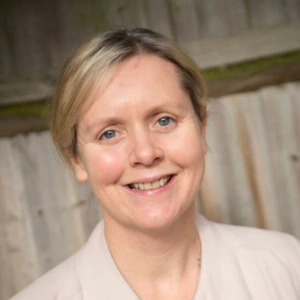
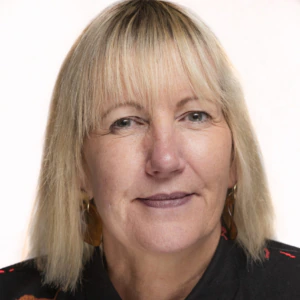
Andrew Forrest visiting fellow, Cass Buisness School
"There are three main reasons. You have to make time for sharing. It never seems urgent, so you never get around to taking action on it. An expert is by definition familiar in depth with their specialist subject, and carries most of their knowledge in their head (tacit knowledge).
To share it, you have to convert it into explicit knowledge, which can be reproduced. Storytelling is a great way of doing this - for example recording an expert describing their experiences.
"Knowledge is power" and if I am an expert, I need some form of incentive to share my expertise: such as being recognised and thanked for leaving a legacy in the shape of my donated knowledge."
Len Pole Museums Association Monument Fellow
"In my experience museum staff are in general more knowledgeable about their collections and in many cases their subject specialisms, than they think; this may lead to their being backward in coming forward.
Of course lack of time, absence of commitment or encouragement from senior management to get to grips with under-researched aspects of their collections may also be factors.
Enthusiastic staff should and do take it on themselves to gain confidence in developing new exhibition ideas, making presentations, writing papers and articles, but there is often a lack of outlets. Snappy web pages on their museum site, showcasing previously unconsidered treasures, could be one way forward - just like the old "object of the month" in the local paper."
Julie Harvey New Perspectives project coordinator, Natural History Museum, London
"Most curators I know are only too pleased to share their knowledge and understanding of the collections. It is certainly the case that sophisticated collection management software will enable more collections based information to be harvested in the future.
Technology will enable museums to increase the depth and breadth of collections information they record and make more of this available via the web. What is most exciting for me is how this data might be used by a range of different researchers."
Camilla Hampshire manager, Royal Albert Memorial Museum, Exeter
"That there exists somewhere a single database of the country's collections and therefore a mechanism for sharing information is a common public assumption.
The sector's diversity has led to widely differing organisational priorities, attitudes to scholarship, resource levels, uneven documentation, incompatible collections management systems and (fortunately diminishing) professional protectionism. These factors all raise barriers to the free exchange of information.
Effective Collections, Renaissance, and Designation are all helping to improve collaboration but the pace of change is still slow. As awareness is raised and access to collections improved, it can only be a matter of time before the public too asks why museums aren't better at sharing information."
"There are three main reasons. You have to make time for sharing. It never seems urgent, so you never get around to taking action on it. An expert is by definition familiar in depth with their specialist subject, and carries most of their knowledge in their head (tacit knowledge).
To share it, you have to convert it into explicit knowledge, which can be reproduced. Storytelling is a great way of doing this - for example recording an expert describing their experiences.
"Knowledge is power" and if I am an expert, I need some form of incentive to share my expertise: such as being recognised and thanked for leaving a legacy in the shape of my donated knowledge."
Len Pole Museums Association Monument Fellow
"In my experience museum staff are in general more knowledgeable about their collections and in many cases their subject specialisms, than they think; this may lead to their being backward in coming forward.
Of course lack of time, absence of commitment or encouragement from senior management to get to grips with under-researched aspects of their collections may also be factors.
Enthusiastic staff should and do take it on themselves to gain confidence in developing new exhibition ideas, making presentations, writing papers and articles, but there is often a lack of outlets. Snappy web pages on their museum site, showcasing previously unconsidered treasures, could be one way forward - just like the old "object of the month" in the local paper."
Julie Harvey New Perspectives project coordinator, Natural History Museum, London
"Most curators I know are only too pleased to share their knowledge and understanding of the collections. It is certainly the case that sophisticated collection management software will enable more collections based information to be harvested in the future.
Technology will enable museums to increase the depth and breadth of collections information they record and make more of this available via the web. What is most exciting for me is how this data might be used by a range of different researchers."
Camilla Hampshire manager, Royal Albert Memorial Museum, Exeter
"That there exists somewhere a single database of the country's collections and therefore a mechanism for sharing information is a common public assumption.
The sector's diversity has led to widely differing organisational priorities, attitudes to scholarship, resource levels, uneven documentation, incompatible collections management systems and (fortunately diminishing) professional protectionism. These factors all raise barriers to the free exchange of information.
Effective Collections, Renaissance, and Designation are all helping to improve collaboration but the pace of change is still slow. As awareness is raised and access to collections improved, it can only be a matter of time before the public too asks why museums aren't better at sharing information."