The 3 Series is an initiative between Modern Art Oxford, the Camden Arts Centre and the Arnolfini Gallery in Bristol entailing the joint commissioning of new work from three artists over three years, which will be shown at each venue.
It is something of a flagship "co-commissioning" project in the UK, and is reminiscent of the Three M Project in the US, a collaborative commissioning initiative generated by the Museum of Contemporary Art Chicago, Hammer Museum in Los Angeles and the New Museum of Contemporary Art in New York.
What is particularly innovative about the Three M Project is its "commission-accession" principle. With the first three commissions - all video installations - each of the partners had the right to own a version of the resulting works.
With two of the works there was no additional cost, above the artist's agreed commission fee, and where one of the works exceeded its initial budget, the three institutions shared the added cost.
The 3 Series is a partnership between three non-collecting institutions, but they have, informally at least, moved quickly to engage collections-based organisations in conversation about where and how elements of 3 Series works might fit with relevant collections.
For instance, Modern Art Oxford is working with the Contemporary Art Society to potentially gift one of the elements of Mircea Cantor's The Need for Uncertainty to the Towner Art Gallery, Eastbourne.
Perhaps the closest parallel to Three M in the UK has been the joint commission of Tatham and O'Sullivan's Rhetoric Works & Vanity Works & Other Works by the original six museum partners of the National Collecting Scheme Scotland.
The resulting work was formally accessioned into the collection of the Hunterian Museum and Art Gallery, but is shared by all the partner collections. So far, however, it is a one-off - there are no similar projects anywhere in the UK.
The 3 Series has been principally funded through Arts Council England and its partners have paid special attention to the issue of collections-based legacies for publicly funded commissions.
This is even more important in view of the considerable public subsidy that enables artists to create new work through the commissioning process, and the continued embargo that the Heritage Lottery Fund operates on supporting the acquisition of items less than ten years old.
In light of the financial constraints that many local authority institutions work within, it is critical to realise the potential of such initiatives and to consider the value of commission-accession models. It is also vital that schemes which support the production of new work should be drawn more directly into wider debates about the representation of contemporary art in UK public collections.
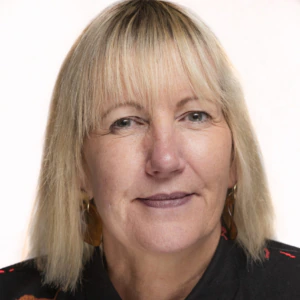
Tina Fiske is a research assistant at the National Collecting Scheme Scotland, History of Art department, University of Glasgow
It is something of a flagship "co-commissioning" project in the UK, and is reminiscent of the Three M Project in the US, a collaborative commissioning initiative generated by the Museum of Contemporary Art Chicago, Hammer Museum in Los Angeles and the New Museum of Contemporary Art in New York.
What is particularly innovative about the Three M Project is its "commission-accession" principle. With the first three commissions - all video installations - each of the partners had the right to own a version of the resulting works.
With two of the works there was no additional cost, above the artist's agreed commission fee, and where one of the works exceeded its initial budget, the three institutions shared the added cost.
The 3 Series is a partnership between three non-collecting institutions, but they have, informally at least, moved quickly to engage collections-based organisations in conversation about where and how elements of 3 Series works might fit with relevant collections.
For instance, Modern Art Oxford is working with the Contemporary Art Society to potentially gift one of the elements of Mircea Cantor's The Need for Uncertainty to the Towner Art Gallery, Eastbourne.
Perhaps the closest parallel to Three M in the UK has been the joint commission of Tatham and O'Sullivan's Rhetoric Works & Vanity Works & Other Works by the original six museum partners of the National Collecting Scheme Scotland.
The resulting work was formally accessioned into the collection of the Hunterian Museum and Art Gallery, but is shared by all the partner collections. So far, however, it is a one-off - there are no similar projects anywhere in the UK.
The 3 Series has been principally funded through Arts Council England and its partners have paid special attention to the issue of collections-based legacies for publicly funded commissions.
This is even more important in view of the considerable public subsidy that enables artists to create new work through the commissioning process, and the continued embargo that the Heritage Lottery Fund operates on supporting the acquisition of items less than ten years old.
In light of the financial constraints that many local authority institutions work within, it is critical to realise the potential of such initiatives and to consider the value of commission-accession models. It is also vital that schemes which support the production of new work should be drawn more directly into wider debates about the representation of contemporary art in UK public collections.
Tina Fiske is a research assistant at the National Collecting Scheme Scotland, History of Art department, University of Glasgow