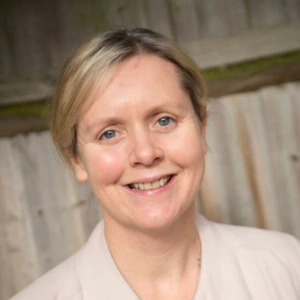
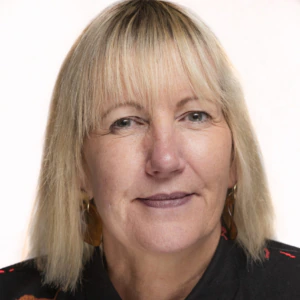
Nicola Jennings director, Cultural Leadership Programme, City University, London
"A recent survey by City University's Cultural Leadership Programme and Demos showed that women only make up about 30 per cent of museum board members and 20 per cent of chairs. This is unacceptable, particularly in a sector in which the workforce is highly feminised.
Tessa Jowell has pointed to the success of women-only shortlists in getting more women into government. But quotas meet strong resistance, from men and women.
Surely the job can be done equally effectively by the Department for Culture, Media and Sport more actively encouraging boards to cast the net wider? There are plenty of competent women professionals: it is just a matter of letting a few new faces into the club."
Caroline Ellis head of special collections (including The Women's Library), London Metropolitan University
"At this year's Women's Library Lecture Shirley Williams brilliantly showed the difference that women in ministerial positions make in the global political world.
Like governments, cultural institutions fail to maximise their potential when they sideline the contribution of women. They need to better reflect and answer the needs of the majority of their users, and ultimately a high proportion of the people who help to fund them. And the necessity to move forward at something other than the current glacial advance suggests that quotas would be the best way to tackle this."
Joanne Orr chief executive officer, Museums Galleries Scotland
"A quota could perhaps be a starting point as it would encourage cultural organisations to consider how they would attract and retain women at board-level positions.
The enforcement of a quota is open to criticism that women are being selected because of gender and not skills but perhaps a quota is required initially to kick-start a shift in the make up of cultural organisations. However, a quota alone is not the answer and support mechanisms need to be established along with measures to develop confidence and skills.
And this does throw open wider issues such as whether disability and racial equality should be receiving the same attention."
Rebecca Jacobs museum development officer, Museums Association
"Quotas may be slightly clumsy, but maybe it is time to introduce some incentives to overhaul our boards. Museums are shaped, driven and occasionally dragged along by their trustees. They should bring leadership, knowledge, skills and experience from diverse walks of life. But often new recruits appear to be carbon copies of existing board members.
It isn't about a simplistic ratio of men to women but one of representation and leadership. We are making bold attempts to adapt our workforce to the evolving needs of the sector and to become more democratic in the way we work with the public. To embed these changes we must apply the same aims and principles to every tier of our leadership."
"A recent survey by City University's Cultural Leadership Programme and Demos showed that women only make up about 30 per cent of museum board members and 20 per cent of chairs. This is unacceptable, particularly in a sector in which the workforce is highly feminised.
Tessa Jowell has pointed to the success of women-only shortlists in getting more women into government. But quotas meet strong resistance, from men and women.
Surely the job can be done equally effectively by the Department for Culture, Media and Sport more actively encouraging boards to cast the net wider? There are plenty of competent women professionals: it is just a matter of letting a few new faces into the club."
Caroline Ellis head of special collections (including The Women's Library), London Metropolitan University
"At this year's Women's Library Lecture Shirley Williams brilliantly showed the difference that women in ministerial positions make in the global political world.
Like governments, cultural institutions fail to maximise their potential when they sideline the contribution of women. They need to better reflect and answer the needs of the majority of their users, and ultimately a high proportion of the people who help to fund them. And the necessity to move forward at something other than the current glacial advance suggests that quotas would be the best way to tackle this."
Joanne Orr chief executive officer, Museums Galleries Scotland
"A quota could perhaps be a starting point as it would encourage cultural organisations to consider how they would attract and retain women at board-level positions.
The enforcement of a quota is open to criticism that women are being selected because of gender and not skills but perhaps a quota is required initially to kick-start a shift in the make up of cultural organisations. However, a quota alone is not the answer and support mechanisms need to be established along with measures to develop confidence and skills.
And this does throw open wider issues such as whether disability and racial equality should be receiving the same attention."
Rebecca Jacobs museum development officer, Museums Association
"Quotas may be slightly clumsy, but maybe it is time to introduce some incentives to overhaul our boards. Museums are shaped, driven and occasionally dragged along by their trustees. They should bring leadership, knowledge, skills and experience from diverse walks of life. But often new recruits appear to be carbon copies of existing board members.
It isn't about a simplistic ratio of men to women but one of representation and leadership. We are making bold attempts to adapt our workforce to the evolving needs of the sector and to become more democratic in the way we work with the public. To embed these changes we must apply the same aims and principles to every tier of our leadership."