William Cuffay, the Chartist leader transported to Tasmania for his political beliefs, was born in Chatham, Kent, in 1788. His father was in the Royal Navy - one of its many black seamen.
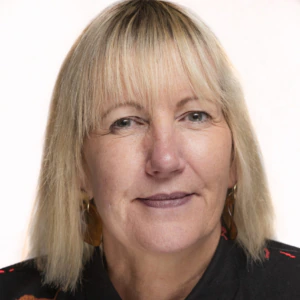
Three years ago, I asked the Chatham Historic Dockyard Trust for information on these black seamen and on Cuffay (pictured). Our correspondence revealed that the trust's knowledge and interest were non-existent and that I was unlikely to be able to arouse its curiosity.
Sadly, this experience is not unusual. While some museums have recognised that Britain has always been a multicultural, multi-ethnic, multi-faith society and that their exhibitions should reflect this, for others such an approach remains unacceptable.
Alternatively, some museums have acknowledged the black faces in the street outside and put on exhibitions on contemporary hairstyles or fashions.
Why are some aspects of UK history such a problem for museums? Is the miseducation of curators partly to blame? They are, after all, the products of our schools and universities, where it is hard to find any instruction on the 2000-year history of Africans in Britain, or even on the Empire. Are courses for curators remedying this ignorance?
This lack of awareness was shown in the British Empire and Commonwealth Museum (BECM) exhibition about the merchant navy in the second world war, Cruel Sea, which closed last month.
When I asked for some explanation, I was told that the focus was on British merchant seamen who travelled to other countries... rather than on Commonwealth merchant seamen.
This indicates that the museum is unaware of the innumerable seamen of Indian, Asian, African and Caribbean descent who shipped out of British ports and were domiciled there. They were British seamen.
Perhaps by now the National Maritime Museum (NMM) in London should have tried to research the involvement of black and Asian seamen in the British merchant navy as well as the Royal Navy and include this in its exhibitions.
To be fair, some years ago the museum did commission research on its picture collection, but this has not been followed up. (Nor could I find the results on the NMM's website.)
So I asked if the exhibition on Nelson and Napoleon (opening in July), which 'offers us the opportunity to deconstruct national myths', would include the deconstruction of the myth that the Royal Navy was crewed [solely] by Englishmen.
Roy Clare, the director of the NMM, assured me that 'everything we do has the most robust foundations possible'. This didn't answer the question.
These same two museums are funded by the Department for Culture, Media and Sport (DCMS) to work on a project entitled Understanding Slavery. The booklet produced by the NMM for schools tells the pupils nothing about Africa before the arrival of European slavers.
The current ignorance of Africa's history is therefore reinforced. Worse than that, both black and white children now 'know' that Africans were never anything but slaves.
When I asked the BECM how it dealt with this issue, I was told 'we deliver to students and teachers in a variety of ways'. This appears to imply that including information about Africa is optional at best.
When I queried the DCMS about its duty to monitor the projects it funds to make sure that they comply with the spirit and/or the letter of the Race Relations Amendment Act, I was told they had no such duty. Why not, may I ask?
It is patently very difficult for the museums and 'great houses' to recognise that Britain's wealth is most intricately bound up with Empire. A couple of years ago there was an exhibition of the works of art amassed by the Beckford family at the Dulwich Picture Gallery.
I asked the gallery whether there would be any information on the sources of the Beckford's fortune - slave-grown sugar in the West Indies. I was told that this was irrelevant.
It was therefore a joy to read that the Viscount Lascelles is discussing new interpretations of Harewood House, also funded by wealth derived from slave-worked enterprise. Are English Heritage and the National Trust going to follow this lead?
Home Front Recall is a second world war oral history project. When I spoke to someone who works on the project they did not know whether the home fronts in India were included, or if special attention was being paid to the racial discrimination experienced by black Britons during the war.
This project is funded by the Heritage Lottery Fund - which should surely have a responsibility to make sure the programme is all-inclusive.
Museums plead lack of funds. Or at least some do. Clare at the NMM told me that if I really wanted to know about the ethnicity of the seamen in Nelson's fleet, I should 'commission a researcher to look into this question'.
But may I suggest that the government might just have more funds available than this retired historian, and ought to commission such research. And not only into the Royal Navy!
Marika Sherwood is the former secretary of the Black and Asian Studies Association and an honorary senior research fellow at the Institute of Commonwealth Studies
Three years ago, I asked the Chatham Historic Dockyard Trust for information on these black seamen and on Cuffay (pictured). Our correspondence revealed that the trust's knowledge and interest were non-existent and that I was unlikely to be able to arouse its curiosity.
Sadly, this experience is not unusual. While some museums have recognised that Britain has always been a multicultural, multi-ethnic, multi-faith society and that their exhibitions should reflect this, for others such an approach remains unacceptable.
Alternatively, some museums have acknowledged the black faces in the street outside and put on exhibitions on contemporary hairstyles or fashions.
Why are some aspects of UK history such a problem for museums? Is the miseducation of curators partly to blame? They are, after all, the products of our schools and universities, where it is hard to find any instruction on the 2000-year history of Africans in Britain, or even on the Empire. Are courses for curators remedying this ignorance?
This lack of awareness was shown in the British Empire and Commonwealth Museum (BECM) exhibition about the merchant navy in the second world war, Cruel Sea, which closed last month.
When I asked for some explanation, I was told that the focus was on British merchant seamen who travelled to other countries... rather than on Commonwealth merchant seamen.
This indicates that the museum is unaware of the innumerable seamen of Indian, Asian, African and Caribbean descent who shipped out of British ports and were domiciled there. They were British seamen.
Perhaps by now the National Maritime Museum (NMM) in London should have tried to research the involvement of black and Asian seamen in the British merchant navy as well as the Royal Navy and include this in its exhibitions.
To be fair, some years ago the museum did commission research on its picture collection, but this has not been followed up. (Nor could I find the results on the NMM's website.)
So I asked if the exhibition on Nelson and Napoleon (opening in July), which 'offers us the opportunity to deconstruct national myths', would include the deconstruction of the myth that the Royal Navy was crewed [solely] by Englishmen.
Roy Clare, the director of the NMM, assured me that 'everything we do has the most robust foundations possible'. This didn't answer the question.
These same two museums are funded by the Department for Culture, Media and Sport (DCMS) to work on a project entitled Understanding Slavery. The booklet produced by the NMM for schools tells the pupils nothing about Africa before the arrival of European slavers.
The current ignorance of Africa's history is therefore reinforced. Worse than that, both black and white children now 'know' that Africans were never anything but slaves.
When I asked the BECM how it dealt with this issue, I was told 'we deliver to students and teachers in a variety of ways'. This appears to imply that including information about Africa is optional at best.
When I queried the DCMS about its duty to monitor the projects it funds to make sure that they comply with the spirit and/or the letter of the Race Relations Amendment Act, I was told they had no such duty. Why not, may I ask?
It is patently very difficult for the museums and 'great houses' to recognise that Britain's wealth is most intricately bound up with Empire. A couple of years ago there was an exhibition of the works of art amassed by the Beckford family at the Dulwich Picture Gallery.
I asked the gallery whether there would be any information on the sources of the Beckford's fortune - slave-grown sugar in the West Indies. I was told that this was irrelevant.
It was therefore a joy to read that the Viscount Lascelles is discussing new interpretations of Harewood House, also funded by wealth derived from slave-worked enterprise. Are English Heritage and the National Trust going to follow this lead?
Home Front Recall is a second world war oral history project. When I spoke to someone who works on the project they did not know whether the home fronts in India were included, or if special attention was being paid to the racial discrimination experienced by black Britons during the war.
This project is funded by the Heritage Lottery Fund - which should surely have a responsibility to make sure the programme is all-inclusive.
Museums plead lack of funds. Or at least some do. Clare at the NMM told me that if I really wanted to know about the ethnicity of the seamen in Nelson's fleet, I should 'commission a researcher to look into this question'.
But may I suggest that the government might just have more funds available than this retired historian, and ought to commission such research. And not only into the Royal Navy!
Marika Sherwood is the former secretary of the Black and Asian Studies Association and an honorary senior research fellow at the Institute of Commonwealth Studies