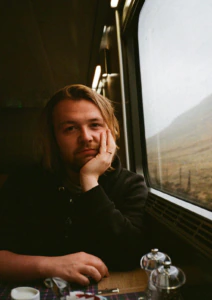
Michael Dixon
director, Natural History Museum, London
"There has yet been no detail on capital grant-in-aid, so the overall value of the settlement cannot be fully assessed, but I believe this is a positive outcome for the arts. James Purnell and Margaret Hodge have successfully argued the case and they deserve great credit for this.
However, the Natural History Museum is a scientific institution, and our collections are part of the nation's scientific infrastructure, so it is disappointing that the settlement does not match the 2 per cent real growth in expenditure on science, even though the importance of funding the additional running costs of the NHM's second phase of Darwin Centre has been recognised in the settlement."
Louise de Winter
director, National Campaign for the Arts
"Only a year ago the Arts Council and Museums, Libraries and Archives Council (MLA) were modelling 5-7 per cent cuts, so this CSR is excellent news.
We ran a united campaign, proving that accentuating the positive works, and as a sector we should feel very proud of the result. We made a strong case for sustained investment and the government listened.
Of course, we will have to deliver the Cultural Olympiad and an excellence agenda with this money, and the national museums have been asked to make 3 per cent efficiency gains, so the devil will be in the detail. We are still waiting on MLA's settlement and Renaissance, but overall? But overall, yes, this is a good deal."
Alan Leighton
national secretary, Prospect
"The CSR settlement is certainly better for national museums and galleries than had been expected.
It appears to provide increases to them of 2.7 per cent per year in line with Consumer Prices Index Inflation. Retail Price Index inflation is considerably higher, however, and major pay problems persist, with recruitment and retention problems growing.
The requirement to find 3 per cent efficiency savings per year and a government pay policy seeking to restrict pay increases to 2 per cent per year will cause severe tension and possibly industrial action. The funding arrangements for bodies such as English Heritage seem to be more unfavourable."
Mark Taylor
director, Museums Association
"It is a tribute to the dark arts of politics and spin that the museum world seems so happy at the first signals on the CSR settlement.
It seems that by taking heed of the government's early predictions of doom and gloom we should now be turning cartwheels at the fact that we seem to be getting the same money for the next three years.
The English secretary of state mentioned that the arts world had impressed with its emphasis on achievement. If so, why can't we increase some of the core funding for the national museums and complete Renaissance in the Regions?
I am relieved and credit to the department for culture and the MLA in England, but standstill funding is not a reason to hang out the bunting."
director, Natural History Museum, London
"There has yet been no detail on capital grant-in-aid, so the overall value of the settlement cannot be fully assessed, but I believe this is a positive outcome for the arts. James Purnell and Margaret Hodge have successfully argued the case and they deserve great credit for this.
However, the Natural History Museum is a scientific institution, and our collections are part of the nation's scientific infrastructure, so it is disappointing that the settlement does not match the 2 per cent real growth in expenditure on science, even though the importance of funding the additional running costs of the NHM's second phase of Darwin Centre has been recognised in the settlement."
Louise de Winter
director, National Campaign for the Arts
"Only a year ago the Arts Council and Museums, Libraries and Archives Council (MLA) were modelling 5-7 per cent cuts, so this CSR is excellent news.
We ran a united campaign, proving that accentuating the positive works, and as a sector we should feel very proud of the result. We made a strong case for sustained investment and the government listened.
Of course, we will have to deliver the Cultural Olympiad and an excellence agenda with this money, and the national museums have been asked to make 3 per cent efficiency gains, so the devil will be in the detail. We are still waiting on MLA's settlement and Renaissance, but overall? But overall, yes, this is a good deal."
Alan Leighton
national secretary, Prospect
"The CSR settlement is certainly better for national museums and galleries than had been expected.
It appears to provide increases to them of 2.7 per cent per year in line with Consumer Prices Index Inflation. Retail Price Index inflation is considerably higher, however, and major pay problems persist, with recruitment and retention problems growing.
The requirement to find 3 per cent efficiency savings per year and a government pay policy seeking to restrict pay increases to 2 per cent per year will cause severe tension and possibly industrial action. The funding arrangements for bodies such as English Heritage seem to be more unfavourable."
Mark Taylor
director, Museums Association
"It is a tribute to the dark arts of politics and spin that the museum world seems so happy at the first signals on the CSR settlement.
It seems that by taking heed of the government's early predictions of doom and gloom we should now be turning cartwheels at the fact that we seem to be getting the same money for the next three years.
The English secretary of state mentioned that the arts world had impressed with its emphasis on achievement. If so, why can't we increase some of the core funding for the national museums and complete Renaissance in the Regions?
I am relieved and credit to the department for culture and the MLA in England, but standstill funding is not a reason to hang out the bunting."