Despite the warmth of the Tasmanian sun high overhead, the wide, windswept valley has a desolate air. There are rows of unmarked graves at Wybalenna, Flinders Island, but this is no Srebrenica.
The Tasmanians interred here suffered no deliberate, arbitrary execution, but died a despairing, disease-ridden death at the hands of a misguided and incompetent British administration.
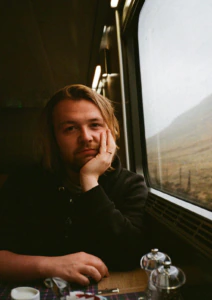
With me is Adam Thompson. He is descended from remnants of the Aboriginal community that survived the purging in Tasmania of most of its indigenous population in the 19th century. He is one of an estimated 2,000 people of Tasmanian Aboriginal descent alive today.
In September last year he travelled to London to receive the remains of his forebears from the British Museum, which is where our paths initially crossed.
A year earlier, I had been invited to write an independent report for the British Museum's trustees on the 'public benefit' of two items in the museum's collections, which they had been asked repeatedly to return to Tasmania.
The objects were two small bundles of kangaroo hide, containing cremation ash that had been given to the museum in 1882. They were collected by George Augustus Robinson, a name largely forgotten in England, but one that is terribly familiar to most Tasmanian Aborigines.
In 1829 Robinson was appointed as 'conciliator' of the Tasmanian Aborigines, in a last-ditch attempt by the colonial authorities to 'rescue' the last few hundred Aborigines who survived in Tasmania. In the space of the first three decades of the 19th century, violent clashes with European settlers and the diseases they brought reduced the Aboriginal population from an estimated 5,000 to the point of extinction.
A settlement was established at Wybalenna ('Black Men's Houses') to 'civilise' all the remaining indigenous Tasmanians whom Robinson rounded up. By 1833 there were about 220 Aborigines at Wybalenna.
Despite, or because of, the administration of liberal doses of Christianising education, agricultural practice, medical care and western food, the population steadily declined and by 1847 only 46 Tasmanians survived.
This was the man who collected the cremation bundles that found their way to the British Museum through two intermediaries. By his own account the Tasmanian women who wore such bundles did not give them up willingly.
Indeed, there was a thriving market at the time in such relics. Museums in Europe and Australia were keen to get their hands on specimens from a race they consigned to a place somewhere between apes and humans. There are authentic contemporary accounts of grave-robbing and corpse mutilation.
Indisputably, not one bone of an Aboriginal was taken from Tasmania with the consent of the individual or their community. Without exception, every one of these anatomical specimens - as western scientists regard them - held in British institutions is stolen.
The circumstances under which such material was collected and entered UK museums is recognised by an increasing number of museums as making its retention unethical. Consequently, museums in London, Manchester and Edinburgh have repatriated such ancestral remains unconditionally to indigenous communities.
Parliament has changed the law to make it possible for national museums in England and Wales to dispossess themselves of human remains; this has paved the way for the British Museum to return the Tasmanian bundles and for London's Natural History Museum to think the unthinkable: the possibility of repatriating items whose status in its collections had previously not been up for discussion.
But a dwindling number of UK institutions still struggle with the moral arguments for and utilitarian arguments against return. Some scientists are exercised by the implications of losing material evidence that deepens our understanding of human diversity, origins and patterns of disease.
This point should be conceded without demur: return of a relatively small number of these human remains to claimant communities will assuredly involve loss to science (though for material that has remained in store unexamined for more than a century, one wonders whether the case is occasionally overstated).
The decision made in mid-November last year by the trustees of the Natural History Museum to repatriate 17 ancestors to Tasmania is a watershed. Underlying this decision is the tacit admission that the 'loss to science' argument can no longer be allowed to override the moral issue: that these remains are not legitimately ours to keep, however much we might argue about their usefulness to science.
Nonetheless, the Natural History Museum finds itself between a scientific rock and a cultural hard place. In an effort to mitigate the scientific impact of dispossession before the remains are returned, the museum unilaterally decided on a programme of 'data collection' without the agreement of the indigenous community. This is seen in Tasmania as a final act of wilful violation of the principle of consent.
These are growing pains, as scientific institutions come to terms with their wider cultural connections in a complex and challenging world of competing obligations.
Ethical science proceeds from the principle of avoiding harm to others. Anthropologists and archaeologists who design their programmes of study with the consent of originating communities find that their research is not only untainted ethically, but strengthened academically.
There are few opportunities for us to redress the wrongs of our forebears: this is one that will cost museums little and do a great deal of good. At Wybalenna there is a small memorial to Aunty Ida West, a Tasmanian who died in 1995. The inscription ends with her words: 'Where the bad was, we can always make it good.'
Tristram Besterman is a UK-based freelance adviser and writer on museums and culture
The Tasmanians interred here suffered no deliberate, arbitrary execution, but died a despairing, disease-ridden death at the hands of a misguided and incompetent British administration.
With me is Adam Thompson. He is descended from remnants of the Aboriginal community that survived the purging in Tasmania of most of its indigenous population in the 19th century. He is one of an estimated 2,000 people of Tasmanian Aboriginal descent alive today.
In September last year he travelled to London to receive the remains of his forebears from the British Museum, which is where our paths initially crossed.
A year earlier, I had been invited to write an independent report for the British Museum's trustees on the 'public benefit' of two items in the museum's collections, which they had been asked repeatedly to return to Tasmania.
The objects were two small bundles of kangaroo hide, containing cremation ash that had been given to the museum in 1882. They were collected by George Augustus Robinson, a name largely forgotten in England, but one that is terribly familiar to most Tasmanian Aborigines.
In 1829 Robinson was appointed as 'conciliator' of the Tasmanian Aborigines, in a last-ditch attempt by the colonial authorities to 'rescue' the last few hundred Aborigines who survived in Tasmania. In the space of the first three decades of the 19th century, violent clashes with European settlers and the diseases they brought reduced the Aboriginal population from an estimated 5,000 to the point of extinction.
A settlement was established at Wybalenna ('Black Men's Houses') to 'civilise' all the remaining indigenous Tasmanians whom Robinson rounded up. By 1833 there were about 220 Aborigines at Wybalenna.
Despite, or because of, the administration of liberal doses of Christianising education, agricultural practice, medical care and western food, the population steadily declined and by 1847 only 46 Tasmanians survived.
This was the man who collected the cremation bundles that found their way to the British Museum through two intermediaries. By his own account the Tasmanian women who wore such bundles did not give them up willingly.
Indeed, there was a thriving market at the time in such relics. Museums in Europe and Australia were keen to get their hands on specimens from a race they consigned to a place somewhere between apes and humans. There are authentic contemporary accounts of grave-robbing and corpse mutilation.
Indisputably, not one bone of an Aboriginal was taken from Tasmania with the consent of the individual or their community. Without exception, every one of these anatomical specimens - as western scientists regard them - held in British institutions is stolen.
The circumstances under which such material was collected and entered UK museums is recognised by an increasing number of museums as making its retention unethical. Consequently, museums in London, Manchester and Edinburgh have repatriated such ancestral remains unconditionally to indigenous communities.
Parliament has changed the law to make it possible for national museums in England and Wales to dispossess themselves of human remains; this has paved the way for the British Museum to return the Tasmanian bundles and for London's Natural History Museum to think the unthinkable: the possibility of repatriating items whose status in its collections had previously not been up for discussion.
But a dwindling number of UK institutions still struggle with the moral arguments for and utilitarian arguments against return. Some scientists are exercised by the implications of losing material evidence that deepens our understanding of human diversity, origins and patterns of disease.
This point should be conceded without demur: return of a relatively small number of these human remains to claimant communities will assuredly involve loss to science (though for material that has remained in store unexamined for more than a century, one wonders whether the case is occasionally overstated).
The decision made in mid-November last year by the trustees of the Natural History Museum to repatriate 17 ancestors to Tasmania is a watershed. Underlying this decision is the tacit admission that the 'loss to science' argument can no longer be allowed to override the moral issue: that these remains are not legitimately ours to keep, however much we might argue about their usefulness to science.
Nonetheless, the Natural History Museum finds itself between a scientific rock and a cultural hard place. In an effort to mitigate the scientific impact of dispossession before the remains are returned, the museum unilaterally decided on a programme of 'data collection' without the agreement of the indigenous community. This is seen in Tasmania as a final act of wilful violation of the principle of consent.
These are growing pains, as scientific institutions come to terms with their wider cultural connections in a complex and challenging world of competing obligations.
Ethical science proceeds from the principle of avoiding harm to others. Anthropologists and archaeologists who design their programmes of study with the consent of originating communities find that their research is not only untainted ethically, but strengthened academically.
There are few opportunities for us to redress the wrongs of our forebears: this is one that will cost museums little and do a great deal of good. At Wybalenna there is a small memorial to Aunty Ida West, a Tasmanian who died in 1995. The inscription ends with her words: 'Where the bad was, we can always make it good.'
Tristram Besterman is a UK-based freelance adviser and writer on museums and culture