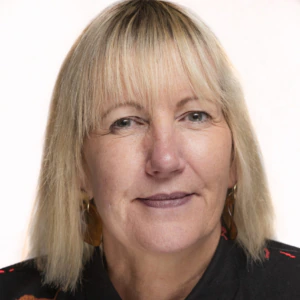
Matthew Tanner is the director of the ss Great Britain Trust
YES: It's good news that a sponsor has been found for a prize that has become the most coveted and respected in the museum and gallery world. When trustees first pulled together to create one single prize, they knew they needed to make a real impact.
They secured generous funding from the Calouste Gulbenkian Foundation to make the UK's biggest arts award. It attracts media attention, and is the prize that everyone wants to win. Job done.
For me it was not the money, welcome though it was, but rather the huge impact winning the prize has had on Brunel's ss Great Britain. It brought new visitors, but also motivated and galvanised staff and volunteers, and opened new doors for an aspiring mid-sized independent museum.
But is the job done? Why are we asking questions of the new sponsor? Is it perhaps a fear the Art Fund has a different agenda that may skew the prize towards the gallery sector? I can't see it. The Art Fund has declared its interest in supporting a broad sector in which access to art can flourish in all places.
It is to be applauded for its commitment to the prize and to retaining the same criteria. For this is really important. The prize trustees remain independent, and each judging panel in turn is independent of the trustees - it is genuinely universal, and the continuity enhances its status and impact. Perhaps the only issue is whether the prize's name should also deliver continuity, as well as sponsor acknowledgement? Any suggestions?
Stuart Burch is a lecturer in heritage studies at the school of arts and humanities at Nottingham Trent University
NO: 'What's in a name?' Well, quite a lot actually. And for this reason it is not a good idea for the Art Fund to sponsor what has until now been known as The Gulbenkian Prize.
Its new title - the Art Fund Prize for Museums and Galleries - is a bit of a mouthful and will surely be shortened to just the Art Fund Prize. It will therefore stand accused of favouring art galleries over museums or heritage sites.
Imagine if the Art Fund had presided over this year's prize awarded to Pallant House Gallery in West Sussex. Some would surely have shaken their heads, smiled wryly and whispered, 'the Art Fund chose "one of the UK's finest collections of modern British art" - now that is a surprise!'
Indeed, perhaps if the Art Fund had sponsored the 2007 award the result might have been different? In a desperate attempt to avoid any accusation of bias they might have opted for a less explicitly art-focused institution. This could have serious repercussions for future decisions if the jurors are forced to think twice before ever awarding the prize to an art gallery.
Few people are likely to accuse the Art Fund of discriminating in this way - but perception is a large part of reality. So, when Romeo's Juliet stood on her balcony and asked 'What's in a name?', she might have come to a slightly different conclusion if she'd been told that the new sponsor of the Gulbenkian Prize is the Art Fund.
YES: It's good news that a sponsor has been found for a prize that has become the most coveted and respected in the museum and gallery world. When trustees first pulled together to create one single prize, they knew they needed to make a real impact.
They secured generous funding from the Calouste Gulbenkian Foundation to make the UK's biggest arts award. It attracts media attention, and is the prize that everyone wants to win. Job done.
For me it was not the money, welcome though it was, but rather the huge impact winning the prize has had on Brunel's ss Great Britain. It brought new visitors, but also motivated and galvanised staff and volunteers, and opened new doors for an aspiring mid-sized independent museum.
But is the job done? Why are we asking questions of the new sponsor? Is it perhaps a fear the Art Fund has a different agenda that may skew the prize towards the gallery sector? I can't see it. The Art Fund has declared its interest in supporting a broad sector in which access to art can flourish in all places.
It is to be applauded for its commitment to the prize and to retaining the same criteria. For this is really important. The prize trustees remain independent, and each judging panel in turn is independent of the trustees - it is genuinely universal, and the continuity enhances its status and impact. Perhaps the only issue is whether the prize's name should also deliver continuity, as well as sponsor acknowledgement? Any suggestions?
Stuart Burch is a lecturer in heritage studies at the school of arts and humanities at Nottingham Trent University
NO: 'What's in a name?' Well, quite a lot actually. And for this reason it is not a good idea for the Art Fund to sponsor what has until now been known as The Gulbenkian Prize.
Its new title - the Art Fund Prize for Museums and Galleries - is a bit of a mouthful and will surely be shortened to just the Art Fund Prize. It will therefore stand accused of favouring art galleries over museums or heritage sites.
Imagine if the Art Fund had presided over this year's prize awarded to Pallant House Gallery in West Sussex. Some would surely have shaken their heads, smiled wryly and whispered, 'the Art Fund chose "one of the UK's finest collections of modern British art" - now that is a surprise!'
Indeed, perhaps if the Art Fund had sponsored the 2007 award the result might have been different? In a desperate attempt to avoid any accusation of bias they might have opted for a less explicitly art-focused institution. This could have serious repercussions for future decisions if the jurors are forced to think twice before ever awarding the prize to an art gallery.
Few people are likely to accuse the Art Fund of discriminating in this way - but perception is a large part of reality. So, when Romeo's Juliet stood on her balcony and asked 'What's in a name?', she might have come to a slightly different conclusion if she'd been told that the new sponsor of the Gulbenkian Prize is the Art Fund.