As cultural institutions across the US celebrated the nation’s 250th Independence Day on Saturday, the Trump administration set off some fireworks of its own – releasing a highly critical report slamming the leadership of the Smithsonian Institution, America’s flagship museum body.
Entitled Saving America’s Story, the 4th of July report comes after president Trump ordered an investigation into the Smithsonian last year for propagating “improper, divisive or anti-American ideology”.
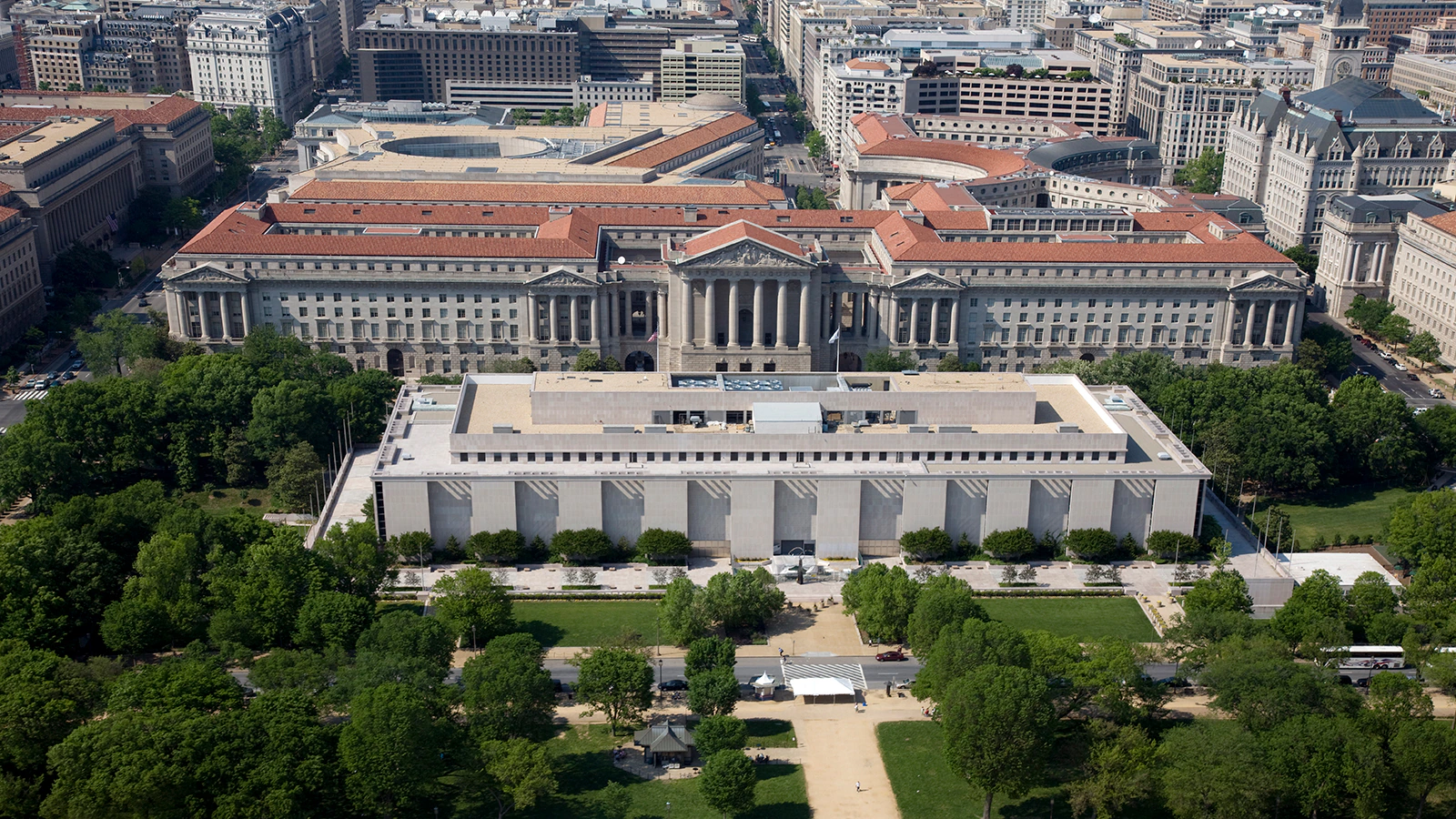
The new report focuses in particular on the National Museum of American History in Washington, one of 22 sites within the Smithsonian complex.
It accuses the museum of “ideological capture”, stating: “Our central finding is not that the museum has simply added overlooked stories, corrected perceived errors, or broadened its historical scope.
“Rather, it is that museum leadership has explicitly adopted an ideological framework that no longer treats the American story as a shared national inheritance to be taught or celebrated, but as a political instrument to divide, dispirit, and discourage our citizens.”
The report documents what it describes as a “shift from history to activism” at the museum, singling out its director Anthea Hartig’s statements about social justice and reframing the “traditional celebratory narrative of US history for visitors”, and previously stated plans to “problematize” this year's 250th anniversary of the signing of the US Declaration of Independence.
Advertisement
“These are not the words of an objective historian, but rather those of an activist advancing an ideological agenda contradictory to the museum’s founding purpose of fostering patriotism,” the report states.
It goes on to say that the museum “purposely presents America as a problematic country irredeemably conceived, founded by deeply flawed men, and still operating today as an instrument of systemic racism and oppression”.
And it accuses the museum of overlooking the story of America's founding fathers and instead depicting it as a county of "white supremacy, slavery, conquest, exclusion, hierarchy, racism, xenophobia, misogyny, and systemic injustice”.
The report criticises the museum’s interpretive plan, which it says shoehorns the museum’s core issues of “race/identity, gender/sexuality, climate change, immigration/migrations, economic inequality, technological change, and nationalism/globalism” into all displays.
The report goes on to accuse the museum of “anti-white activitism”, “illegal alien activism” and “transgender activism”, and says the museum introduces children to “inappropriate sexual and ideological content under the guise of civic education”.
“The public has a right to expect that it will operate as a faithful steward of the nation’s historic and cultural heritage, not as a vehicle for ideological campaigns,” it states.
Advertisement
“The museum can broaden the story without dissolving the story,” continues the report. “It can and should acknowledge slavery, injustice, mistreatment of Native peoples, and other grave wrongs without encouraging citizens to view their country mainly through suspicion, resentment, and division.”
The report concludes that “the Smithsonian Institution, and the National Museum of American History in particular, under its current leadership and current interpretive ideology, cannot be trusted to tell America’s story honestly and in a way that is inspiring, unifying, and worthy of our great republic”.
Smithsonian response
In response to the report, a spokesperson for the Smithsonian said: “For more than 180 years, the Smithsonian has served the American public with nonpartisan and independent scholarship, and we remain committed to doing so.”
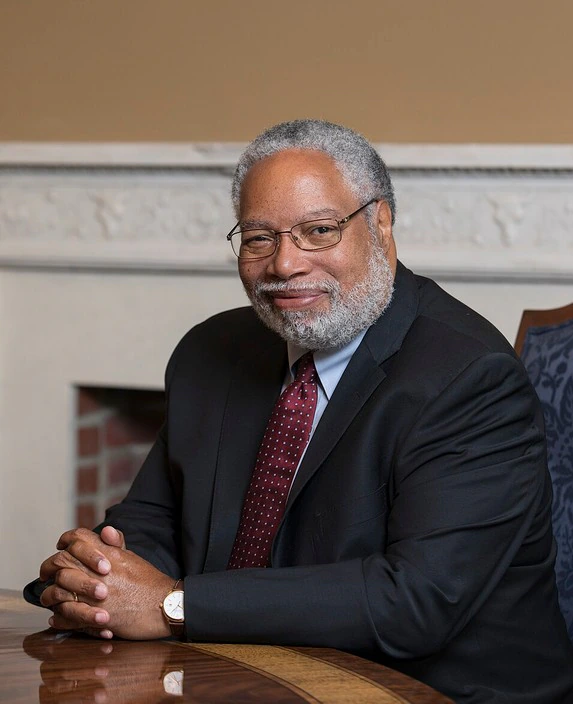
The criticism comes at an tumultuous time for the Smithsonian. An article last month in the New York Times exposed the “intense pressure” placed on the Smithsonian’s secretary, Lonnie Bunch, by the US administration and the “difficult relationship” between Bunch and Trump.
Advertisement
The Smithsonian has previously made clear that the Trump administration does not have the legal authority to fire its employees.
Although Bunch, the first Black secretary of the Smithsonian, has not engaged publicly with the president’s criticisms [see update below], he has appeared to indirectly reference the situation on a number of occasions, telling CNN last week that “it scares me when people aren’t brave enough to face their history”.
In another interview with NBC last week, Bunch said that the “notion of being a more perfect union, not ‘the’ perfect union, is what really motivates me”.
“I want people to understand is that there is a responsibility to continue to make those aspirations available, accessible, meaningful to a whole range of people and that, in essence, America’s greatest strength is not running away from its history but it’s understanding how that history shaped us and continues to shape us,” he added.
Bunch also told NBC that he felt the “weight of history” in his role as the Smithsonian’s first Black secretary.
“I’m the 14th secretary so there are 13 other people that have had this role – that’s it, in 180 years. So you feel that weight, but candidly you also feel the weight as an African American, to say you want to make sure that people celebrate you being the first [and] you want to make sure you’re not the last.”
Sector professionals have defended the Smithsonian and raised alarm about censorship and interference in the sector under the Trump administration.
The well-known museum consultant Elaine Heumann Gurian, who has been outspoken in raising alarm about the actions of the administration, said in a social media post: “I believe that the members of the Smithsonian, led by their secretary, have worked carefully and thoughtfully to enable our citizens to consider the complexity of our nation's history, find their own way, and support our desire to build a country that respects and includes all.”
Update
13.07.2026
Since this article was published, the Washington Post has reported an internal memo sent by Bunch to Smithsonian staff, which said: “While there will always be room for improvement, this report is not a fair characterisation of the work and totality of the National Museum of American History.”
The memo added: “At the Smithsonian, our work is driven by scholarship, accuracy, and an uncompromising commitment to tell the fullness of America’s story.”
The memo said that the Smithsonian will continue to carefully review the report and will comment as needed.
A ‘new normal’
At a Museums Association Members Together Online event last month, Elaine Heumann Gurian gave an overview of the situation facing many museums amid a growing sense of authoritarianism in the US.
“For most of the citizens in the US, everything is unrecognisable and unfamiliar,” she said.
“Most of us feel at sea, and that’s because none of us understood how guardrails work and none of us understood that they were not law and not protected. And so if you have a rogue government that takes away guardrails, there is nothing that you are equipped to do until you reorganise your head… My sense overall is we don’t know what to do next.”
US museums “are mostly keeping their head down” in this atmosphere, she said. “The consequence of putting up your head in a museum context now is, in fact, some loss of funding or some loss of your board trust – there are consequences.. it may be that it’s a form of bravery to keep your head down and protect your staff.”
Heumann Gurian said hope that there might be a “return to normal” at some point is waning among many of her peers. “We in the United States are constantly now worrying about maybe there is no return – in that case, we will need to create a new normal and new bravery,” she said.
She advised museums to use the tools at their disposal, including exhibitions, organisational structure, and relationships with community and staff, to help towards “holding your system together in terms of your values and your direction”.
If you’re a member of the MA, you can watch the recording online