
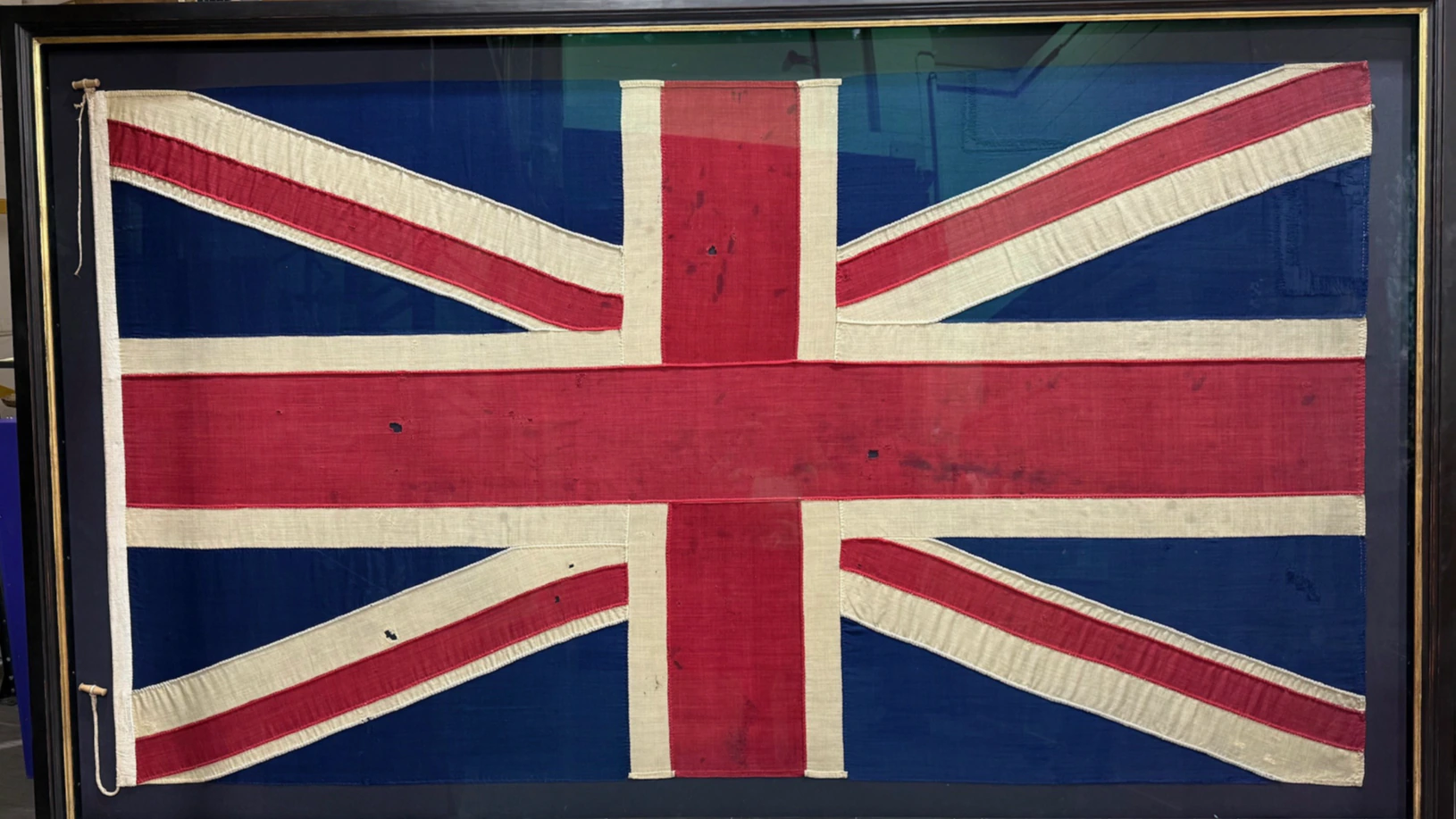
A union jack flag damaged during the Battle of Trafalgar has been prevented from sale abroad in the hope that a UK buyer can be found by March next year.
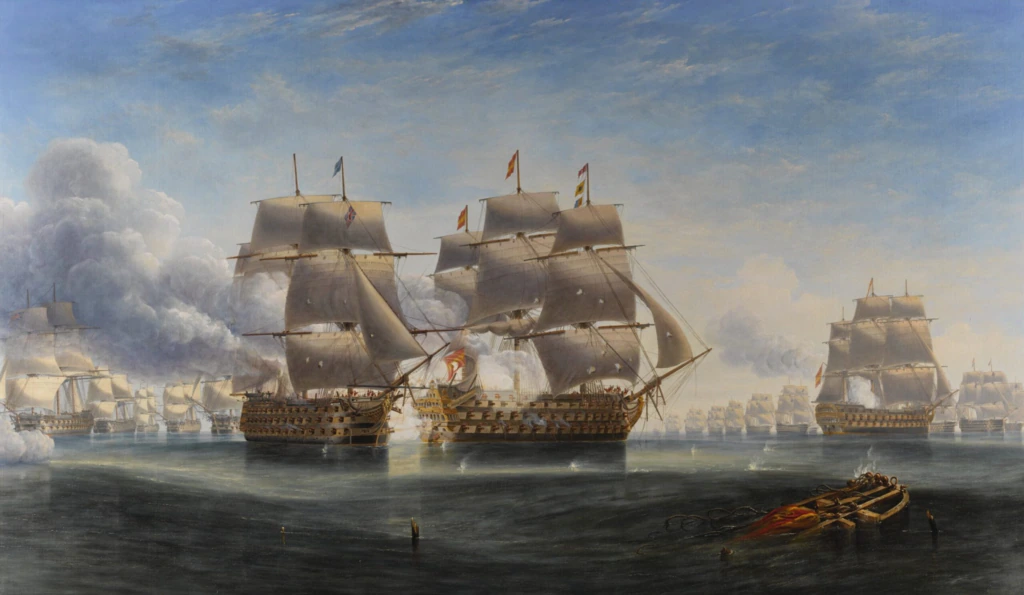
The flag, which is currently in private ownership, flew from the Royal Sovereign ship that led the Lord Nelson’s charge in 1805, and still features burn marks and splinters inflicted during the subsequent battle with Napoleon’s French and Spanish fleets.
It is one of only three flags known to have survived the battle, and is believed to have been made and maintained by sailors aboard the ship.
The Reviewing Committee on the Export of Works of Art and Objects of Cultural Interest – the independent body serviced by Arts Council England that advises the culture secretary on whether a cultural object intended for export is of national importance under specified criteria – has issued a temporary bar to prevent its sale overseas.
The committee made its recommendation on the basis that the flag met the first and third Waverley criteria for its outstanding connection with history and national life, and its outstanding significance to the study of historical commemorative practices, innovative naval tactics, and processes of flag-making.
The decision on an export licence application for the flag will be deferred until 16 March 2026. After this deadline, the owners of the flag will have 15 business days to consider any offers to purchase the flag at the recommended price of £450,000 (plus VAT of £90,000).
Advertisement
The flag is currently in a private collection having last been sold in 2004 at Christies for £298. At the time of the sale, it was describe as: “A rare early 19th-century naval union flag, hand stitched in callico with small lead weight stitched in lower corner (patched, upper blue quadrant frayed at edge, some small holes, original tack loosely recovered) -- 108 x 60in (274.5 x 152.5cm).”
Its first known owner was Charles Aubrey Antram (1785–1831), the master’s mate in Royal Sovereign at the Battle of Trafalgar, and from him it passed on death to his sister, Rachel Nelson Lloyd (1803–1884), then her great-nephew Owen John Dunn (1846–1925), and his son, Captain William Henry Dunn (1889–1986).
It then passed to William Ames (1919–2003) and upon his death it was sold at auction to the current owner.
Pippa Shirley, a member of the Reviewing Committee on the Export of Works of Art and Objects of Cultural Interest, said: “The flag’s evocative connection to our national life and the establishment of the long period of British naval dominance runs so deep that its departure would be a great loss.”
Organisations or individuals interested in purchasing the item should contact the committee on 02072680534 or rcewa@artscouncil.org.uk.