The Pitt Rivers Museum at the University of Oxford is among several UK museums considering the future of “tsantsas” – also known as shrunken heads – in their collections following a visit by representatives of Shuar people from Ecuador, from whom the items originated.
Tsantsas are formed of human, monkey and sloth heads, although some held in museum collections are thought to be forgeries.
They are considered sacred by the Shuar and Achuar peoples, who say their ancestors sold them to Western collectors without fully realising the implications.
Once among the most-visited exhibits at the Pitt Rivers, the tsantsas were removed from public display in 2020 after an ethical review found that their display perpetuated racist stereotypes of the Shuar and other cultures as “savage” and “primitive”.
The museum has since introduced a policy of obtaining consent from descendant communities for the display of human remains.
A 2021 survey by the Pitt Rivers found that while there are at least 170 tsantsas held in museums worldwide, there are only 11 in the national collections of Ecuador and nine in Shuar territory, which were returned by the Smithsonian Institute in 1999.
Advertisement
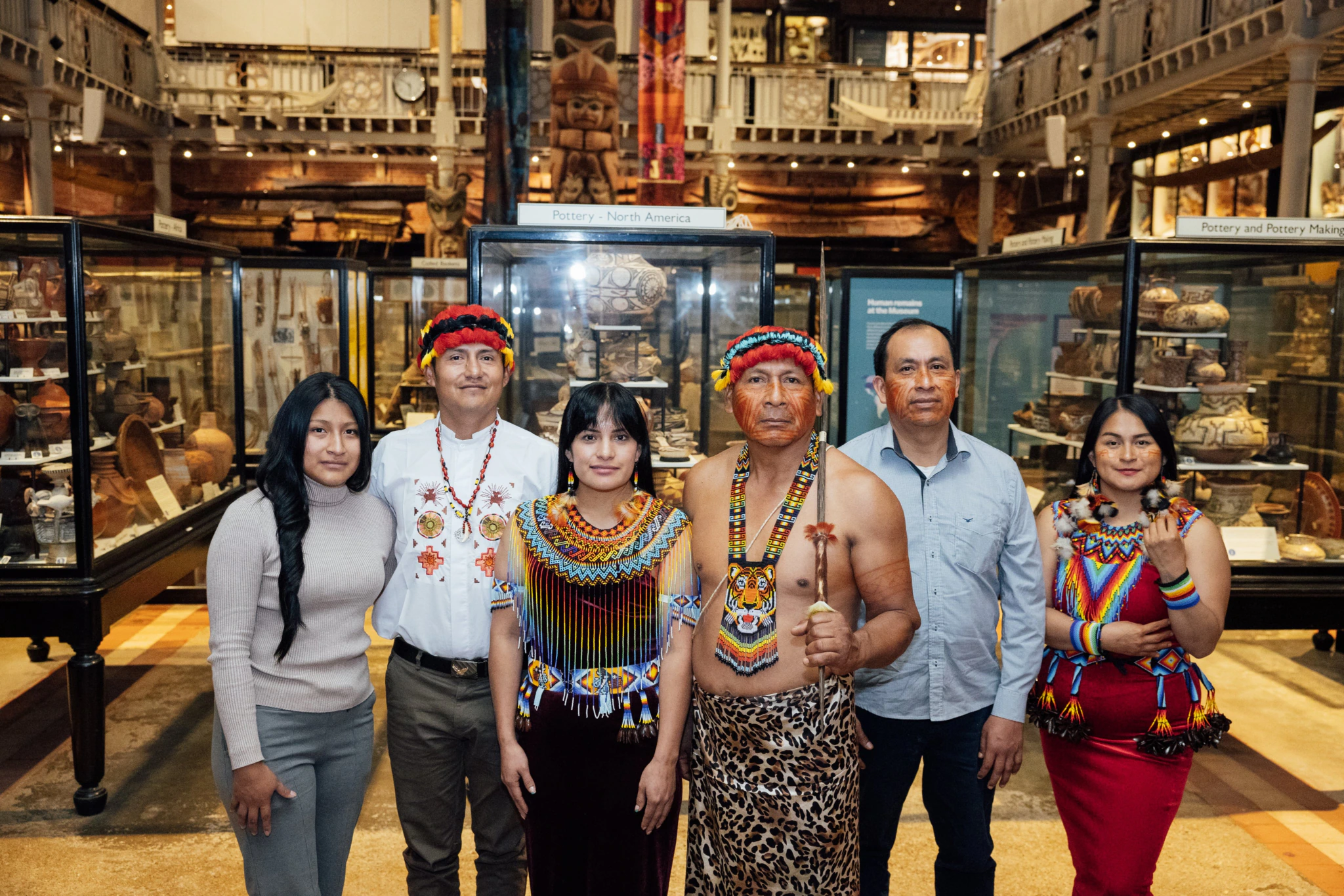
The delegation of Shuar leaders, elders, students and professors spent a week in the UK earlier this month as part of Proyecto Tsantsa, a multi-year project to bring Shuar representatives into direct dialogue with UK curatorial teams.
The project is a partnership between the Pitt Rivers, the Universidad San Francisco de Quito in Ecuador and Shuar federations.
It aims to enable the Shuar people to see and discuss the future of around 120 Shuar objects – including more than 80 tsantsas – identified in UK institutions. In addition to the Pitt Rivers, the delegation visited the British Museum, Wellcome Collection and Science Museum Group.
The delegates engaged with 68 human and seven animal tsantsas during their visit, along with other Shuar cultural objects.
It was discovered that all of the museums currently use incorrect terminology and misidentified collections in their representations of Shuar culture due to lack of local expertise.
The delegation has expressed a wish for the ceremonial tsantsas to be repatriated and has asked for Shuar culture in UK museums to be displayed through the lens of self-representation and Shuar co-curation “to ensure their cultural knowledge and lived experience is reflected correctly”.
Advertisement
The visit allowed delegates to collect and provide information about the collections they saw and promote a better understanding of Shuar culture.
They participated in discussions about potential future projects benefiting the Shuar people in relation to the shrunken heads and cultural objects in UK museums.
The delegation also called for Shuar-led research on the histories related to the tsantsas and discussed the “need, possibilities and limitations of repatriation of all or some of the tsantsas currently in UK collections”.
A public discussion about the future of the objects was held at the Pitt Rivers on 11 October.
The parties involved agreed that further research and analysis would be undertaken as part of the next phase of the project.
Laura Van Broekhoven, director of the Pitt Rivers Museum, said of the visit: “The Shuar delegation expressed a wish for the repatriation of the ceremonial tsantsas to their territory and the wish for display of Shuar culture in UK museums through the lens of self-representation and Shuar co-curation of exhibitions.
“The different UK institutions exchanged information on respective processes and procedures in regard to respective approaches to repatriation of human remains.
“Given the particular cultural contexts of tsantsas (both making and taking), the need for further research and analysis have been agreed, including local cultural contextual research and procedural requirements at a regional, national and international level.”