The Yorkshire Museum in York is close to raising £30,000 through a crowdfunding campaign to acquire a major iron age hoard recently discovered in the local area by a metal detectorist.
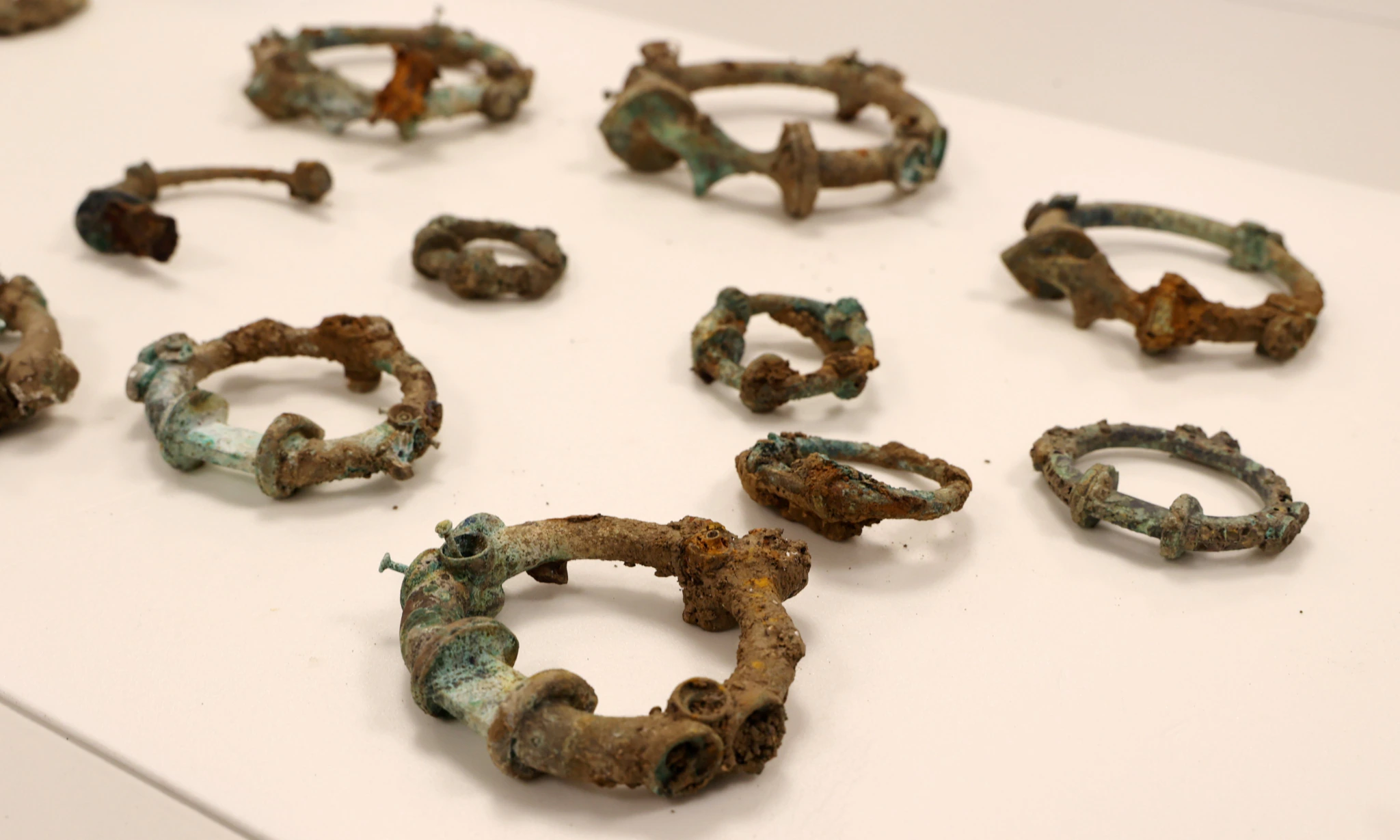
Featuring more than 900 objects, including chariot wheels and horse harness fittings, the Melsonby Hoard has been described as a “game-changing discovery” that could transform understanding of wealth, status, travel and trade in iron-age Britain.
Some objects feature imported materials, particularly coral, and Mediterranean-style designs that hint at the international connections that existed at the time. The hoard is believed to have been buried in the first century CE, around the time of the Roman conquest of southern Britain.
The hoard was discovered in December 2021 by metal detectorist Peter Head and excavated in 2022 by a team of archaeologists from Durham University, with advice from the British Museum and support of more than £120,000 in grant funding from Historic England.
Using X-ray CT scanning technology at the University of Southampton’s μ-VIS X-Ray Imaging Centre, the team was able to identify the objects and how they were positioned so they could be excavated without causing damage.
Unveiled to the public last week, the hoard features vehicle components, for which it is hard to find parallels in Britain, including the partial remains of more than seven four-wheeled wagons and/or two-wheeled chariots.
Advertisement
The hoard also features elaborate harnesses for at least 14 ponies, three ceremonial spears and two ornate cauldrons or vessels, one lidded and likely used as a wine mixing bowl, which had been buried at the bottom of a large ditch. Some harness pieces are adorned with red, Mediterranean coral and coloured glass.
A large amount of the material in the hoard was either burnt or broken, which researchers believe was due to a symbolic process by people to show how wealthy and powerful they were. The artefacts may have been burnt on a funerary pyre before being buried, but no human remains were found.
In a statement on its crowdfunding page, Yorkshire Museum said: “The Melsonby Hoard is a game-changing discovery, shedding new light on Iron Age Britain’s technological skill, artistry, and society. But without urgent action, this treasure could be lost to private collections or dispersed beyond the UK.”
The museum added: “This is more than just a collection of objects - it’s a glimpse into a lost world of chariots, power, prestige and tribal loyalty.”
Research on the material is currently in its early stages but the hoard is thought to have been owned by an iron age leader, warrior, or elite household.
The artefacts were discovered near Stanwick, the royal capital of the Brigantes tribe. Their significance “points to a possible connection to Queen Cartimandua, one of the most powerful and controversial rulers in Britain at the time of the Roman invasion”, said the museum.
Advertisement
Andrew Woods, senior curator at the Yorkshire Museum, said: “This iron age hoard is an unprecedented find in the north, which will help us to understand more about this remarkable period in our history. We have the exciting opportunity to save the hoard for the nation and the people of Yorkshire.
“By acquiring the hoard we will be able to make it accessible to everyone and, working in partnership with others, we can learn more about this fascinating period, why the hoard was buried, how the objects may have been used and to cast light on to whom it may have belonged.”
The hoard is valued at £254,000. The museum's crowdfunding campaign closes on 25 May and has already raised more than £28,000 towards its target of £30,000.