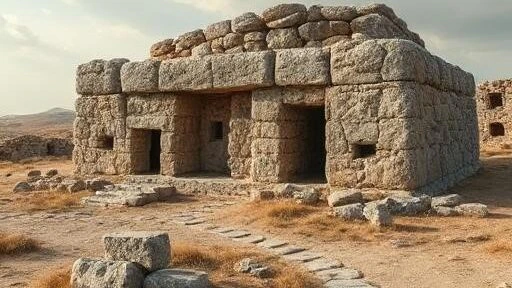
Archaeologists believe they have unearthed the ruins of an ancient prototype museum at an undisclosed location in the UK.
The site, which has not yet been dated, holds a range of objects from various historical eras and geographical locations with rudimentary labels alongside them.
Some of the objects in the collection appear to have been brought together at random, for no apparent purpose whatsoever, while others, possibly from a different stage of the site’s development, seem to have been collected more strategically according to the taste or obsession of a single person.
The displays are arranged at times thematically and at times chronologically according to what appears to have been trendy in each era.
It is not always clear which labels correspond to which objects. What may be an early example of a catalogue index was found nearby, but this unfortunately provides no further contextual information.
Advertisement
An adjacent space is thought to have been used as a storeroom for the museum. Evidence shows that it may have eventually run out of space for the ever-expanding collection due to a strong cultural taboo against throwing anything away.
Attempts were clearly made to bring order to the storeroom and document the objects, but graffiti discovered at the site, some of which is too rude to repeat, shows that those who worked there felt their efforts were hampered by a lack of time and resources, as well as disinterest from the site's overseers.
Several layers of pottery fragments, thought to have been mugs, as well as the organic remains of what may have been cake, have been discovered in the space, indicating that while some trends changed over the years, common cultural practices persisted across several generations of ancient workers.
The site appears to have operated for a number of centuries before being disbanded. A stone tablet has been unearthed showing evidence that a powerful local chieftain, confused by arguments about both the intrinsic and economic value of the site, may have decided to just shut it down to fund the construction of a large statue of himself.
“We’re almost certain that this could be the earliest example yet discovered of a museum in Britain, transforming our understanding of the development of this unique and, frankly, rather strange discipline,” said archaeologist Floria Lop, who is leading the dig.
“Either that or it was the home of several generations of individuals with enthusiastic hoarding, cataloguing and cake-eating tendencies.”
It is hoped that the discovery of the site may lead to the revival of lost ancient skills, added Lop: “Our ancestors had an incredible ability to value both specialist expertise and generalist knowledge equally without arguing over which was better. There is much we could learn from them.”
While the location of the fragile site is being kept secret, it may eventually become a place of pilgrimage, replacing Leicester as the spiritual home for museum disciples in the UK.