Ageing populations are a global phenomenon. Many European and east Asian countries are already on an unstoppable trajectory towards “hyper- ageing”.
Reductions in fertility and rising life expectancies have been driving this process for decades. In particular, there has been a rapid rise in the number of people living into their 80s and beyond. This is a major success for human health and societies generally, but it represents a challenge to assumptions that the future will look a lot like the past. The key issue is how prepared are our institutions and societies for living in not just an ageing, but an aged, world?
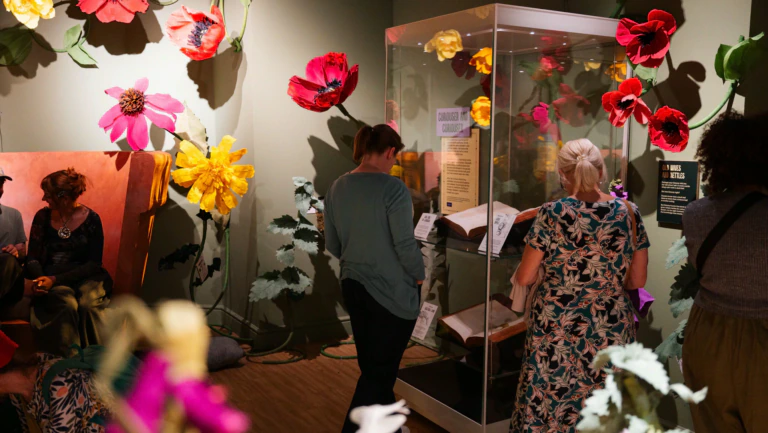
In recent years, a variety of museums have begun implementing programmes aimed at outreach and visitor groups who have a range of age-related health and disability conditions. A central focus has been dementia, a progressive and often disabling condition that can lead to a variety of diseases, including Alzheimer’s. These are all closely related to the ageing of the human brain because it is not just our bodies that age, but our internal organs, including the brain. Ageing brains are linked to changes in memory, cognition and behaviour. But ageing brains can also have an impact on our vision, hearing, speech, nervous system, movement, mobility and even our physical stability.
In an ageing world, many more people will have problems with the faculties and abilities in which our brains have a direct role. So when you design technology-driven exhibits, for example, the question arises as to who can manage to use this technology. Does their tremor or confusion help or hinder in this context? Can they actually read the signage or the labels on the displays and exhibits? Can they follow complex, simple or any instructions? Are there other options for those who cannot? Does our strategy include or exclude by its focus on particular engagement techniques and technologies? And to what extent are we checking with outreach participants, museum visitors and their supports to see whether some degree of satisfying engagement is achieved?
It is also important to note that the ageing of the brain does not exist in isolation from the ageing body. Every other kind of health problem or disability (consider pain syndromes – largely invisible but often disabling) can readily coexist with a neurological condition. A major issue for age-related disability, therefore, is rising complexity. For museum professionals, it is important to recognise that these issues will grow in importance as population ageing progresses. Older people obviously enjoy museums and their programmes. The challenge will be in expanding the knowledge and skills of the sector as population ageing progresses, disabling conditions diversify and more older people seek the acceptance and engagement that museums offer – two conditions that are often missing in other parts of their lives.
Reductions in fertility and rising life expectancies have been driving this process for decades. In particular, there has been a rapid rise in the number of people living into their 80s and beyond. This is a major success for human health and societies generally, but it represents a challenge to assumptions that the future will look a lot like the past. The key issue is how prepared are our institutions and societies for living in not just an ageing, but an aged, world?
In recent years, a variety of museums have begun implementing programmes aimed at outreach and visitor groups who have a range of age-related health and disability conditions. A central focus has been dementia, a progressive and often disabling condition that can lead to a variety of diseases, including Alzheimer’s. These are all closely related to the ageing of the human brain because it is not just our bodies that age, but our internal organs, including the brain. Ageing brains are linked to changes in memory, cognition and behaviour. But ageing brains can also have an impact on our vision, hearing, speech, nervous system, movement, mobility and even our physical stability.
In an ageing world, many more people will have problems with the faculties and abilities in which our brains have a direct role. So when you design technology-driven exhibits, for example, the question arises as to who can manage to use this technology. Does their tremor or confusion help or hinder in this context? Can they actually read the signage or the labels on the displays and exhibits? Can they follow complex, simple or any instructions? Are there other options for those who cannot? Does our strategy include or exclude by its focus on particular engagement techniques and technologies? And to what extent are we checking with outreach participants, museum visitors and their supports to see whether some degree of satisfying engagement is achieved?
It is also important to note that the ageing of the brain does not exist in isolation from the ageing body. Every other kind of health problem or disability (consider pain syndromes – largely invisible but often disabling) can readily coexist with a neurological condition. A major issue for age-related disability, therefore, is rising complexity. For museum professionals, it is important to recognise that these issues will grow in importance as population ageing progresses. Older people obviously enjoy museums and their programmes. The challenge will be in expanding the knowledge and skills of the sector as population ageing progresses, disabling conditions diversify and more older people seek the acceptance and engagement that museums offer – two conditions that are often missing in other parts of their lives.