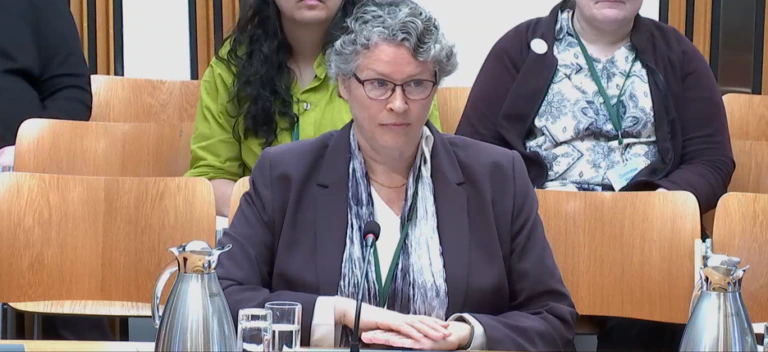
Members of the Scottish parliament heard the case for and against allowing loans from the Burrell Collection at a meeting held in Glasgow yesterday.
The Burrell Collection (Lending and Borrowing) (Scotland) Bill Committee, heard oral and written evidence from Glasgow Life, Museums Galleries Scotland, Arts Council England, Glasgow Council and other witnesses.
The collection was bequeathed to Glasgow by William Burrell in 1944 on the condition that the art should not travel overseas.
Glasgow Life, which runs the city's museums and galleries, has asked the Scottish parliament to put forward a bill to allow the collections to tour. The building that houses the Burrell Collection is due to undergo a £45m redevelopment and will be closed from 2016 to 2020.
But according to the Herald newspaper a confidential submission by Nicholas Penny, director of the National Gallery in London, questioned the safety of transporting art overseas.
The Herald reported Penny as saying that moving works of art had led to major accidents and damage to works.
Bridget McConnell, the chief executive of Glasgow Life, said she was surprised by Penny’s evidence.
“Not least of all because we loan items from our museums’ collection to him. Indeed, he has asked for a Rembrandt from Kelvingrove — probably our most valuable item — for a major exhibition in London next year, which will be held in partnership with a museum in Amsterdam and a range of other collections.”
Angus Grossart, who is on the board of Glasgow Life, said he found it difficult to understand what Penny’s point was.
“At one extreme, he seems to be suggesting that all loans create a risk and that it is therefore unwise to engage in the practice. However, that is inconsistent with his own practice.
"For example, the great Vermeer exhibition that the National Gallery held last year was substantially dependent on borrowing, as is the case with the upcoming Vienna 1900 exhibition. It would be ironic if you borrowed from others but were not prepared to lend.”
He added that some curators suffered from “squirrelitis” and “extreme possessiveness”.
But Selby Whittingham of Donor Watch argued that donors' wishes should be respected and that they were “far too often dishonoured”.
Whittingham said the bill was a consequence of the “vogue for loan exhibitions and for using outward loans as barter for inward loans”, and added it would deprive visitors of works that they may expect to see.
The bill is supported by Museums Galleries Scotland (MGS) among others. In its submission it said: “The international loans would develop the image and profile of Scotland, Glasgow and the collection itself.”
However Michael Daley, director ArtWatch UK, warned that loaning fragile, irreplaceable works of art, was “inescapably dangerous and invariably harmful”.
He said that “institutional denial of the vulnerability of works of art” and “a systemic disinclination to heed the moral obligation to respect donors wishes” was not responsible.
The Bill will be put before parliament in January next year.
The Burrell Collection (Lending and Borrowing) (Scotland) Bill Committee, heard oral and written evidence from Glasgow Life, Museums Galleries Scotland, Arts Council England, Glasgow Council and other witnesses.
The collection was bequeathed to Glasgow by William Burrell in 1944 on the condition that the art should not travel overseas.
Glasgow Life, which runs the city's museums and galleries, has asked the Scottish parliament to put forward a bill to allow the collections to tour. The building that houses the Burrell Collection is due to undergo a £45m redevelopment and will be closed from 2016 to 2020.
But according to the Herald newspaper a confidential submission by Nicholas Penny, director of the National Gallery in London, questioned the safety of transporting art overseas.
The Herald reported Penny as saying that moving works of art had led to major accidents and damage to works.
Bridget McConnell, the chief executive of Glasgow Life, said she was surprised by Penny’s evidence.
“Not least of all because we loan items from our museums’ collection to him. Indeed, he has asked for a Rembrandt from Kelvingrove — probably our most valuable item — for a major exhibition in London next year, which will be held in partnership with a museum in Amsterdam and a range of other collections.”
Angus Grossart, who is on the board of Glasgow Life, said he found it difficult to understand what Penny’s point was.
“At one extreme, he seems to be suggesting that all loans create a risk and that it is therefore unwise to engage in the practice. However, that is inconsistent with his own practice.
"For example, the great Vermeer exhibition that the National Gallery held last year was substantially dependent on borrowing, as is the case with the upcoming Vienna 1900 exhibition. It would be ironic if you borrowed from others but were not prepared to lend.”
He added that some curators suffered from “squirrelitis” and “extreme possessiveness”.
But Selby Whittingham of Donor Watch argued that donors' wishes should be respected and that they were “far too often dishonoured”.
Whittingham said the bill was a consequence of the “vogue for loan exhibitions and for using outward loans as barter for inward loans”, and added it would deprive visitors of works that they may expect to see.
The bill is supported by Museums Galleries Scotland (MGS) among others. In its submission it said: “The international loans would develop the image and profile of Scotland, Glasgow and the collection itself.”
However Michael Daley, director ArtWatch UK, warned that loaning fragile, irreplaceable works of art, was “inescapably dangerous and invariably harmful”.
He said that “institutional denial of the vulnerability of works of art” and “a systemic disinclination to heed the moral obligation to respect donors wishes” was not responsible.
The Bill will be put before parliament in January next year.