
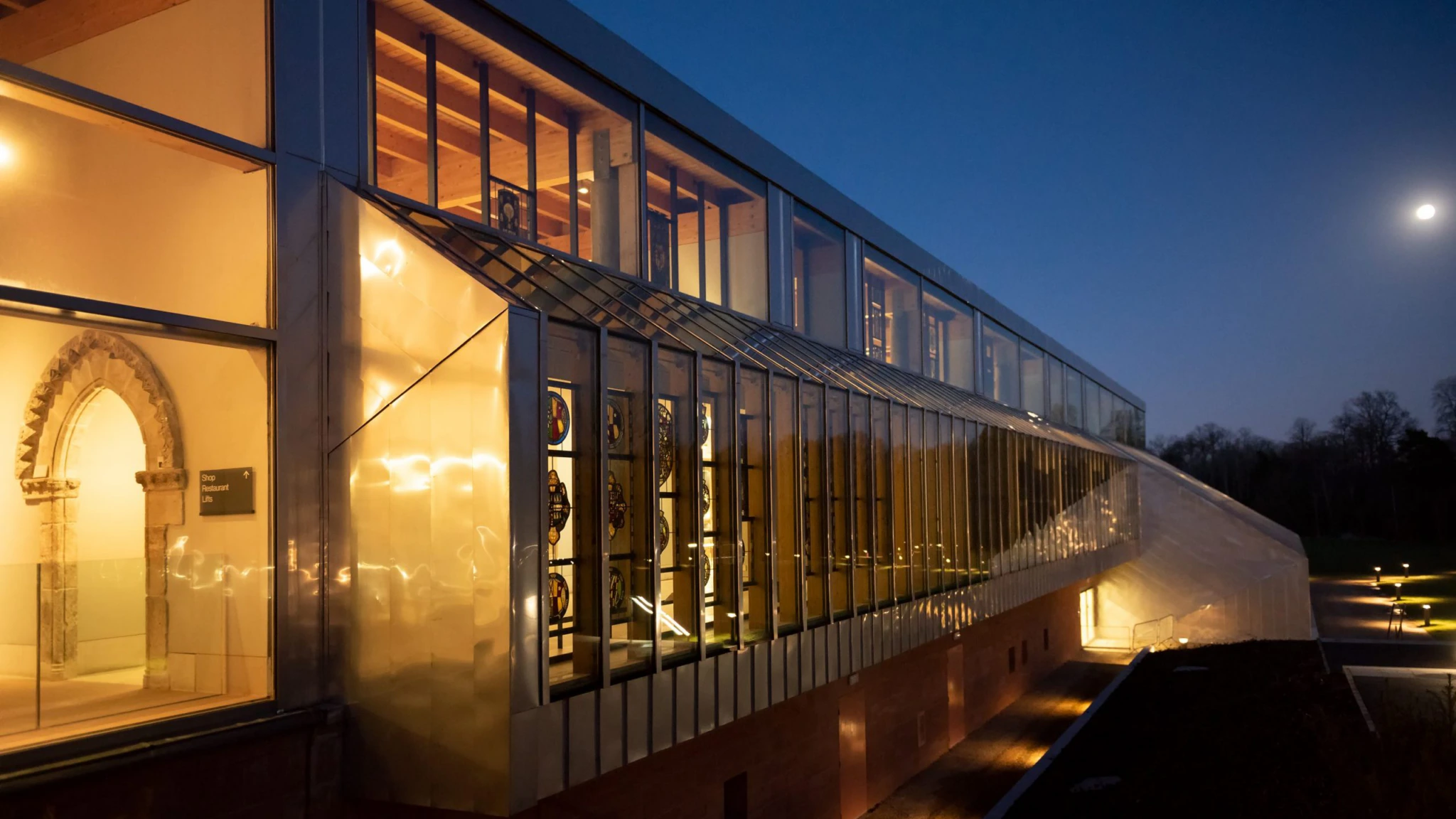
Glasgow Life has defended the Burrell Collection’s approach to labelling after criticism that the museum had “politicised” exhibits by linking them to the contemporary discourse on transgender rights.
The museum, which reopened in March after a £68.25m refurbishment, made the news this week after the feminist campaign group For Women Scotland accused it of appropriating Buddhist art to “prop up an ideology”.
The group criticised a number of labels accompanying two 17th-century porcelain figures of the Buddhist goddess Guanyin, which describe the deity as a “transgender icon”. One of the labels reads “trans people have always existed and are rooted in history. Figures like Guanyin reflect this, showing that gender and identity are not always fixed”, while another says “trans rights are human rights. Be more Guanyin”.
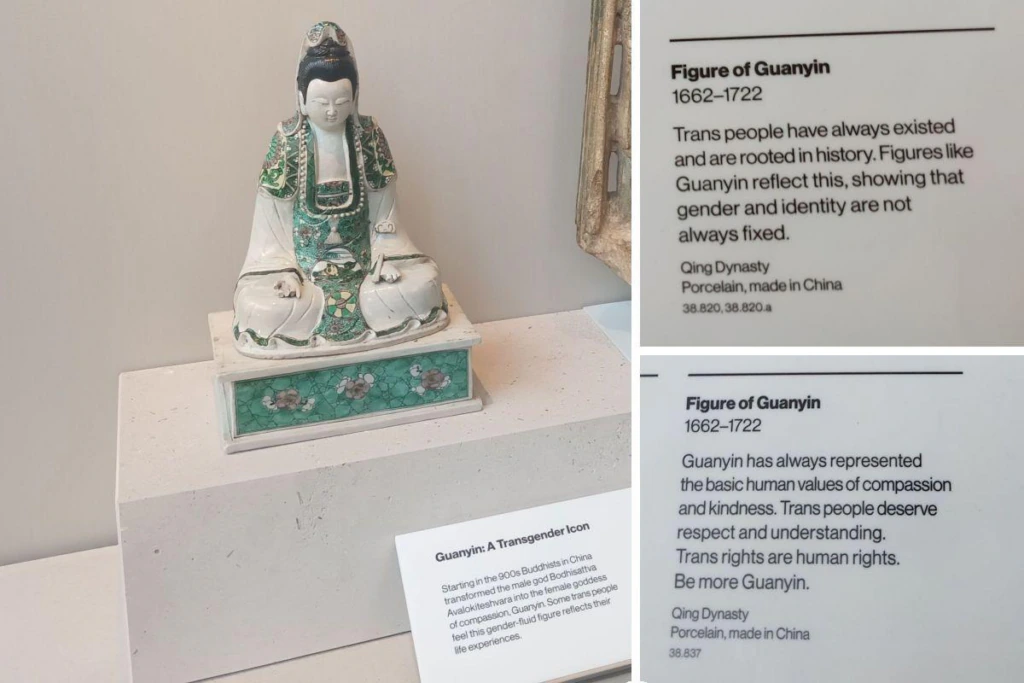
Guanyin is the Chinese iteration of a Buddhist deity that embodies divine compassion. Originally depicted as male or gender neutral, over the centuries the figure increasingly appeared in Chinese art as female and came to be venerated as a maternal goddess in Confucian China.
For Women Scotland said: “We understand that in the current climate curators have to walk a fine line and be careful that they do not politicise or impose contemporary Western viewpoints onto other cultures. This exhibit was highlighted to us by visitors who felt this was an example of ethnocentrism and were angered that the interpretation of these objects had a root in ideology, not history.”
Advertisement
The group added: “The labelling of Guanyin provides no other additional information about the goddess but does indulge in a pretty heavy-handed intervention in a current political debate. If the Burrell were providing a depth of information on this or any other exhibit, it might not be such an issue.”
The row comes amid an increasingly bitter political battle as the Scottish Government prepares to pass the Gender Recognition Reform (Scotland) Bill, which is designed to make it easier for transgender people to obtain a gender recognition certificate. Some women’s groups are opposed to the bill, arguing that it risks undermining the protected characteristic of sex in policymaking and safeguarding.
Glasgow Life, the charitable trust that oversees the city's museums, said academic studies have recognised the deity’s status as an “icon for some transgender people”.
A spokesperson for the trust said: “Analysis of changes to the depiction of Guanyin as a male deity in the 12th century to female during the Yuan dynasty (14th century) has been the subject of academic study for some years. Many of these studies referenced Guanyin’s status as an icon for some transgender people years before the Burrell Collection reopened to the public.
“Given this fascinating history we consulted trans and non-binary people from charity organisations and community groups as part of the Burrell Collection refurbishment who regard this transitioning as similar to some of their experiences. One of the aims of the refurbishment of the Burrell Collection was to work with community groups to reflect often previously under-represented histories as part of the re-display, including LGBT histories, because Glasgow Life museums are places for everyone.”
A 2021 blog describes how the Burrell project team took a proactive approach to making LGBT history more visible in the redeveloped museum, inviting LGBT groups to co-curate displays and identify around 300 objects related to same-sex love and gender diversity in its collections.
For all those that are saying this is ethnocentric, when I entered the Chinese Buddhist Temple, (where I took my vows of refuge) for the first time after transitioning, The Venerable, a native Chinese nun, asked me to sit down with her. She had a long talk with me about Guan Yin and how we are the same. She then gave me a copy of the 25th Chapter of the Lotus Sutra, which is all about Guan Yin and her powers. She told me I was accepted and that I should pray even more to this amazing Transgender Bodhisattva. Also she is not the only devine being in Chinese culture to be gender expensive. I really hope that this war over gender will find an end and we can all sit together peacefully, we are not so different from each other as it may seem. We all suffer and we all deserve compassion.
I am a retired teacher and lecturer with a lifelong interest in museums as a source of education and enlightenment. My approach to education has always been to provide information and ask questions, on the basis of which those on the receiving end can make up their own minds, thus turning information into knowledge and wisdom. The first of the labels shown above would fulfill that aim. While admittedly not viewing it within the context of the gallery display, as I have not visited it yet, nor indeed disagreeing with its sentiment, I consider the second of the labels to be inappropriately didactic.