Sound of Biodiversity
The project’s aims were to:
- Improve nature connectedness and science engagement for young children from an identified, currently underserved community
- Develop and continually evaluate a new public engagement methodology and science communication tools for audiences who have not traditionally engaged
- Explore ways of working together and establish practices for long-term relationships/learning
Wonderseekers, in partnership with Year 5 pupils at Winnall Primary School and Sarah Payne, senior lecturer in environmental psychology at the Institute for Sustainability, University of Surrey, developed Sound of Biodiversity to explore new ways of engaging children from underserved communities with environmental science research.
The project aimed to explore how children, scientists and science communicators could form an equitable partnership and learn together in authentic and meaningful ways.
Each partner brought distinct perspectives and strengths. The children contributed lived experiences, curiosity and creativity. Sarah Payne brought research expertise and a deep understanding of soundscape science. Wonderseekers coordinated the project, bringing science communication skills and engaging experiences. By valuing each contribution equally, the group formed a community where all were both teachers and learners.
In addition to the project aims, the team also recognised the outcomes each partner had hoped to achieve and a bursary was set aside for the children to put their experiences and learning into action.
Activities
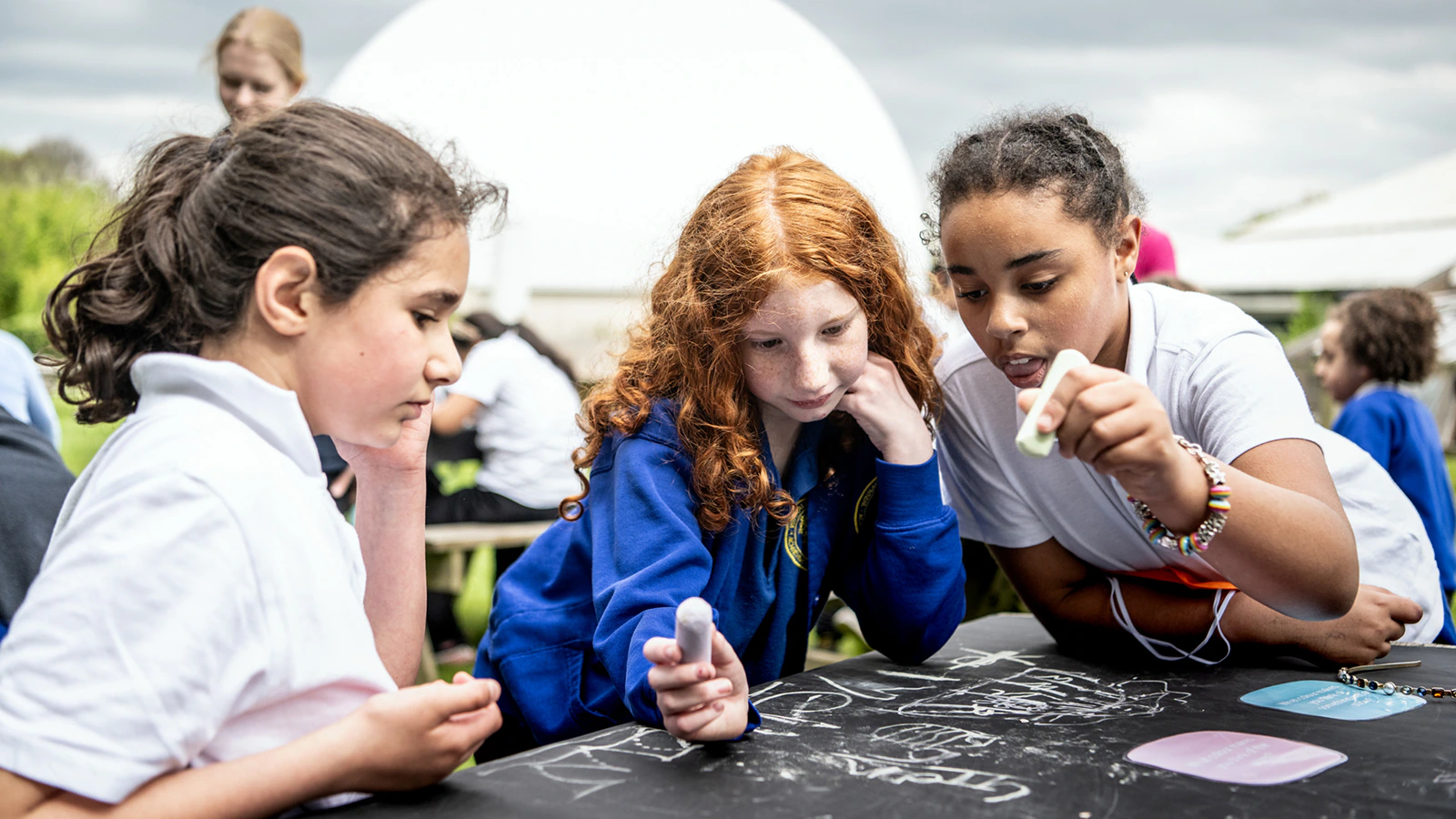
Over the 2023/24 academic year, 30 children aged 9-10 took part in a series of 10 interactive workshops designed to explore their local soundscapes through a scientific and sensory lens. Activities included:
- Sound mapping and sensory card-sorting
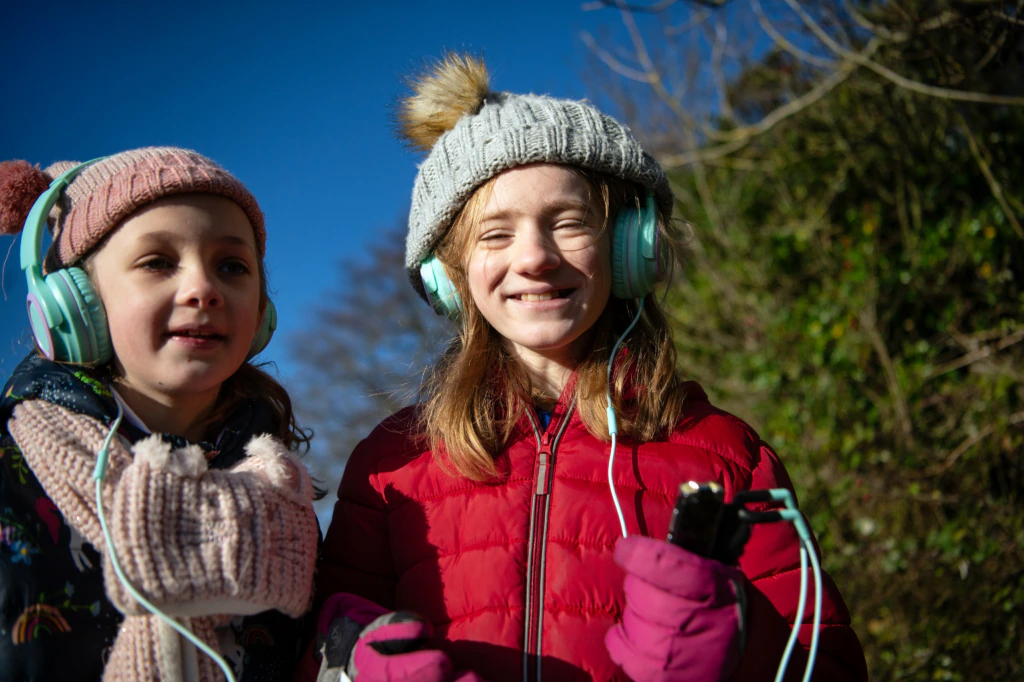
- Bi-weekly rhythm and soundscape logging
- Active listening and mindful exploration
- Designing miniature wildlife gardens
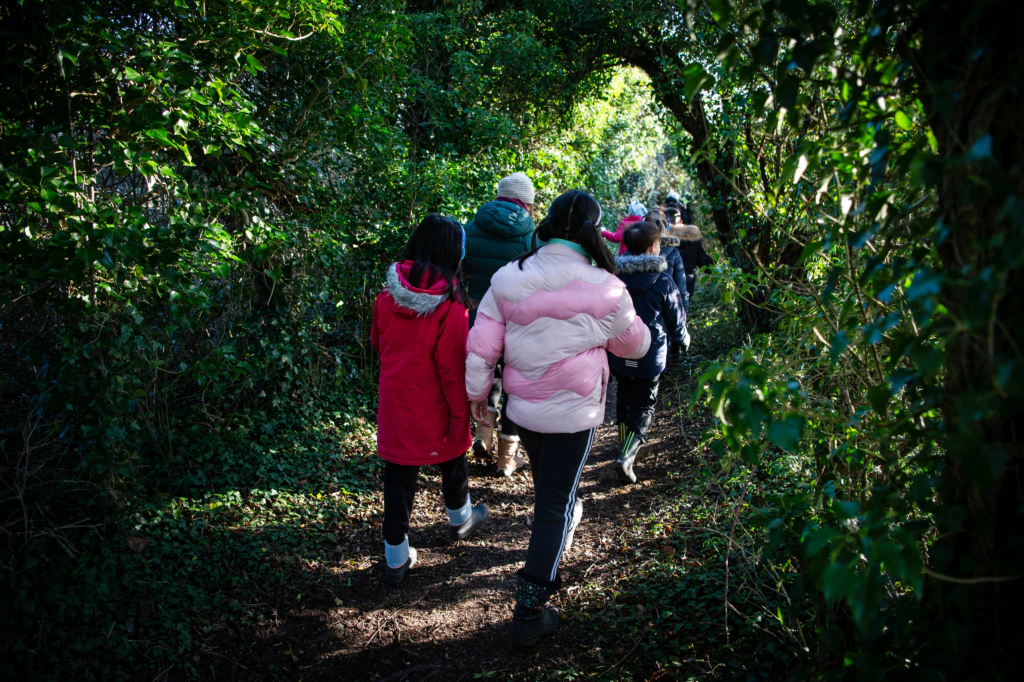
Children explored local environments such as Butterfly Conservation’s flagship reserve, Magdalen Hill Down, practised sound-based mindfulness at Winchester Science Centre, and applied their learning to co-create two lasting public engagement outcomes:
- A new interactive exhibit at Winchester Science Centre focused on soundscape awareness.
- Woodland Walk at Winnall Primary School – the children designed a new space and bench for children and nature utilising an inaccessible area of overgrown land within the school grounds.
The project culminated in a celebratory event at Winchester Science Centre and an opening ceremony once the Woodland Walk was completed.
Learning outcomes
The project offered powerful insights into how multi-sensory, place-based science engagement can nurture environmental awareness in young learners. Participants demonstrated:
- Increased understanding of the relationship between sound and wellbeing
- Confidence in using scientific enquiry to address real-world challenges
- A stronger sense of connection and responsibility toward their local environment
For Wonderseekers, the project tested new ways of working with researchers and children in an equitable partnership – something that Wonderseekers has now put into practice for other projects. For Sarah Payne, the project offered new insights into providing inclusive and participatory methods of working with young people.