Future/Power
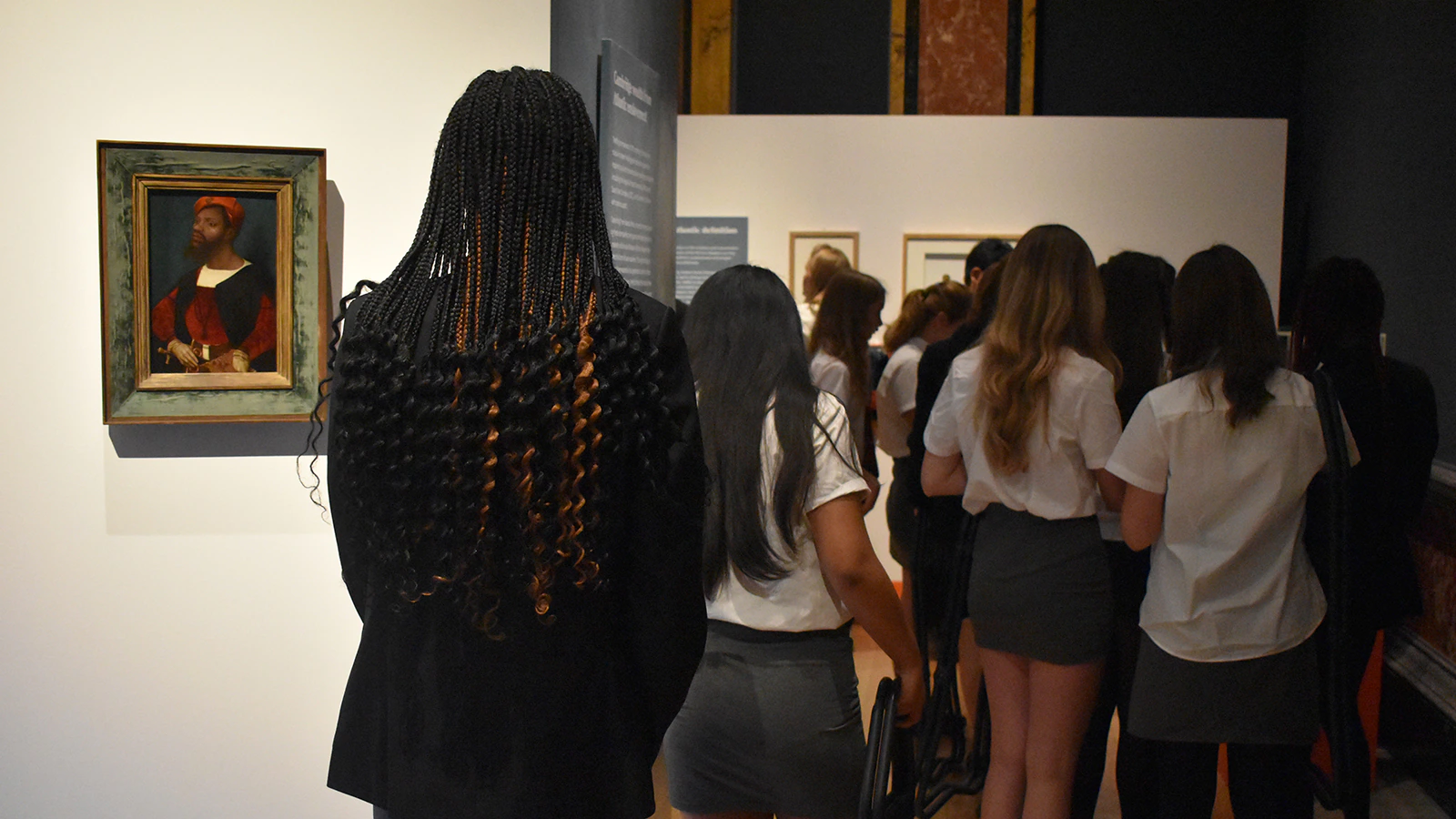
Future/Power was a collaboration between the Fitzwilliam Museum, Soham Village College and Museum X, in response to the museum’s Black Atlantic: Power, People, Resistance exhibition. The project sought to centre youth voice by setting up an in-school youth collective, the @tlantic Xplorers, to actively address the town’s links to colonialism through creative research processes.
The @tlantic Xplorers collective comprised 12 young people in school years 9 and 10, who worked with museum researchers and creative practitioners to co-design research questions triangulating place, identity and our colonial history.
The collective visited the exhibition and took part in diverse weekly artist-led workshops at school to explore the region’s colonial legacies. The outputs were a physical theatre performance and public display at the museum, a short film and an e-publication.
Students experienced stronger social connections, increased understanding of Black British history and a sense of ‘the bigger picture’, alongside enhanced emotional intelligence and empathy. Teachers reported pedagogical development, increased motivation to be ‘braver’, and developed new contexts for promoting youth agency.
The museum worked with the school in new ways and identified the limitations and opportunities of the model, which has informed how they are progressing their work with young people.
Several @tlantic Xplorer members joined a subsequent project at the museum to co-design the current Rise Up: Abolition, Revolution, Resistance exhibition’s reflection space. Working with a professional design studio, they considered the exhibition themes to inform the look and feel of this public space. Summer 2025 will see the museum’s first takeover event, which will be co-curated by young people for other young people.
Takeaways
When working on projects like this, be sure to:
- Define clear racial literacy learning goals to actively measure progress for teachers and museum teams.
- Introduce self-reflection and discussion for project teams to interrogate the role of white identities in enabling and sustaining racism.
- Formalise access to culturally sensitive mentorship and resources to ensure emotional and psychological needs are properly considered.