Milton Keynes Museum (MKM) is dedicated to the history of Milton Keynes, telling the story of the people who lived there. The museum has strong social history collections and is the repository for all archaeology excavated in the borough of Milton Keynes.
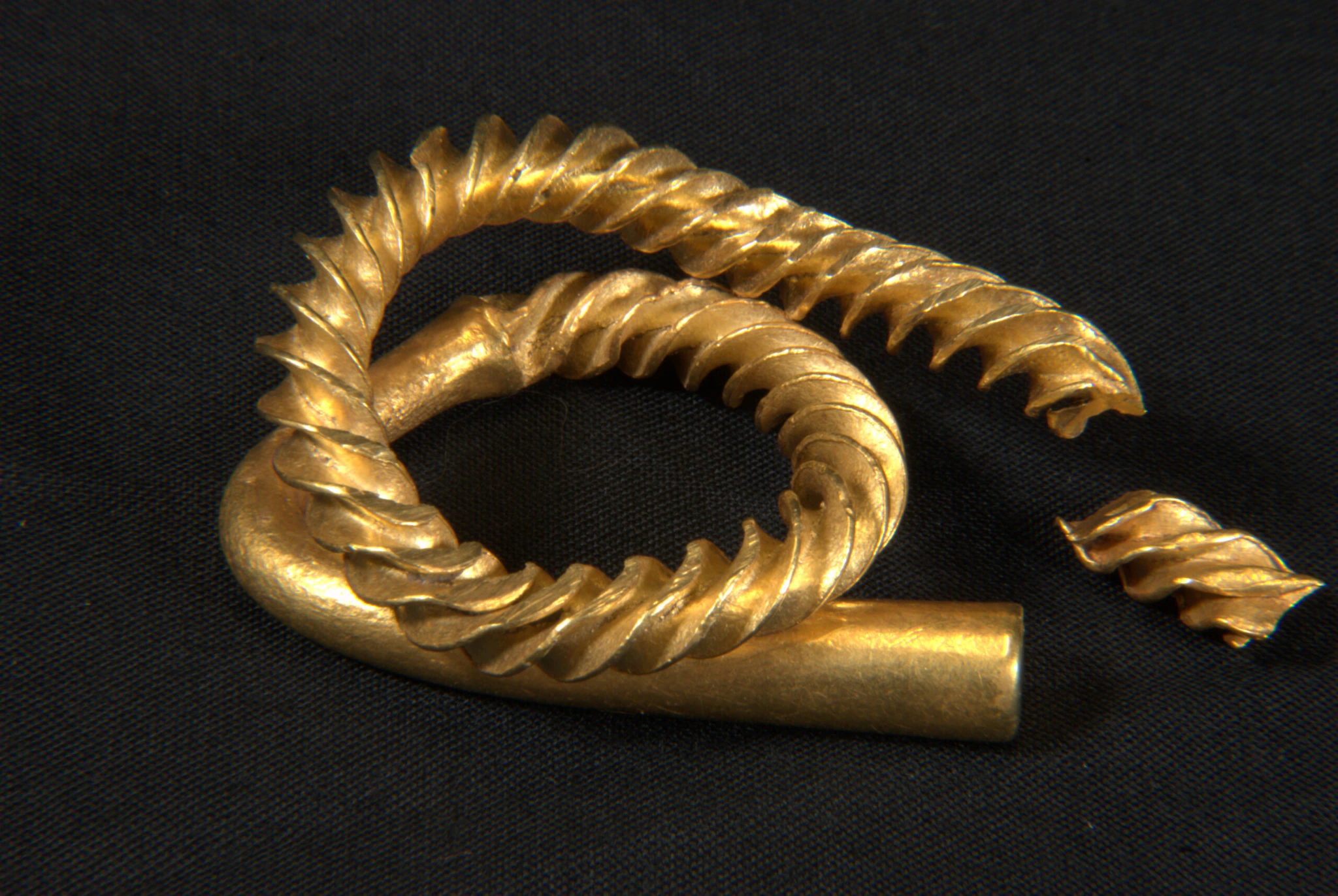
In 2025 the Beecroft Bequest supported the acquisition of two fragments of a middle Bronze Age gold twisted torc found by a metal detectorist and reported through the Portable Antiquities Scheme. The Bequest supports a wide range of fine and decorative art, furniture, textiles and archaeological museum acquisitions that have ‘aesthetic merit’ and are earlier than 1800 in date.
A torc is a neck ring, typically open-ended and sometimes twisted by skilled goldsmiths, like the Milton Keynes example. They are, however, more than just jewellery. Gold itself was exceptionally rare in the middle Bronze Age and torcs were high-status objects signaling great wealth and power.
Often found in hordes, perhaps as a ritual burial, fewer than 100 are in museum collections across the UK. This torc is a single find rather than from a hoard, but it, and other single torc finds across Milton Keynes, indicate a wealthy community inhabiting this area in the Bronze Age.
Now part of the MKM collection and available to view on guided behind-the-scenes tours of the museum stores, the gold torc helps illustrate Milton Keynes’ rich history during the Bronze Age, which includes permanent farmsteads, megalithic structures (the Wolverton cursus), costly burials (Gayhurst), and the largest Bronze Age roundhouse in the country (Blue Bridge). These sites paint a picture of a vibrant agricultural community.
The torc will eventually go on display in the Bronze Age section of the Ancient Gallery for all visitors to enjoy. For the time being, burglary concerns for Bronze Age gold across museums in the UK have meant that further security is needed before the installation can begin.
It will join a number of finds in the MKM collections from the late and early Bronze Age including the New Bradwell bronze hoard (palstaves and spear heads), a sword from the River Ouse, an almost complete loom weight from Magna Park, and a gold bracelet from Monkston.
Tabatha Barton, MKM archaeology curator and collections conservator, said: “A lot of people don’t know about the rich history that Milton Keynes has, and by showing objects like this in our galleries and on tours, we are able to give residents a real sense of pride and interest. Gold objects like torcs capture the imagination. Everyone can relate to jewellery regardless of upbringing or culture.
“Another hoard of late Bronze Age gold from Milton Keynes (two torcs and three bracelets) was acquired by the British Museum and while MKM has a replica set for display, being able to show a real Bronze Age gold torc means that residents who may not travel beyond their city will be able to see it.
“Through eye-catching material finds like this gold torc, our new galleries, currently in development with multi-cultural community groups, can highlight the importance of migration, immigration and trade into the British Isles, specifically the migration of the Bell Beaker people into Britain.”
Image courtesy of Milton Keynes Museum