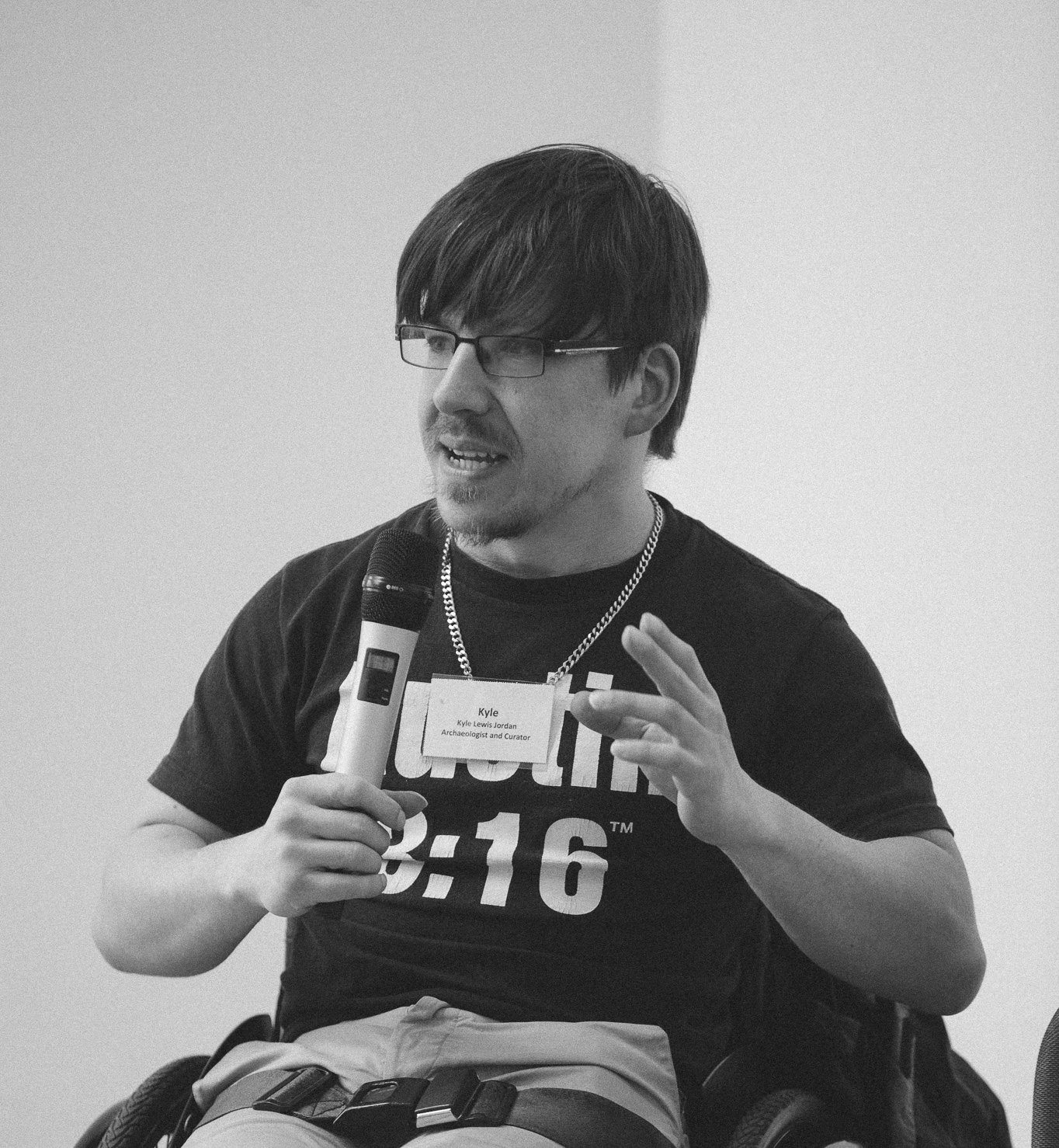
Each year we chat to freelancers and consultants in museums, heritage and culture for Freelancers’ Week, finding out how freelancing works for them and how it might work for you.
Why did you decide to become a freelancer?
I was coming to the end of an almost two-year full-time contract with the Curating for Change project, where I worked at the Ashmolean and Pitt Rivers Museum in Oxford. A friend shared with me a freelance opportunity for a project at the Verulamium Museum in St Albans that sought to produce an exhibition on health and disability in the Roman world. I applied and was successful and went on to curate another exhibition there.
Afterwards, I struggled to find another full-time role as a curator. I realised that freelance work would be the most sensible step whilst I kept looking, especially as my previous experiences had given me plenty of opportunities to network. Furthermore, I felt it would not only be the most optimal way to deepen my experience, but also a way for me to offer my own knowledge and experience in ways that do not always neatly correlate to a single job specification. So, while I’m still interested in curation and interpretation, I can also offer my experience as a disabled person in the workforce, or my skills in public engagement and learning.
What would you say are the benefits of working in a museum consultancy over working in a museum?
The biggest benefit from my experience thus far is that consultancy and freelance work provides you with a degree of independence and separation from the museum, which makes it easier for you to step back and see the bigger picture. Our work is so expansive and involved that it can be easy to “silo” ourselves and stay in our lane, and not see what everyone else is doing and appreciate how our efforts can and should align.
It’s also a huge privilege to get to work across so many different projects, and work with many different kinds of people. Working with museums of all sizes and focuses, with staff and volunteers and visitors from many different walks of life, it all really helps to demonstrate the joy and potential that the sector holds, even in spite of current challenging headwinds.
How has the cost of living affected freelancing in the sector?
The current economic reality we’re dealing with is obviously making times challenging for everyone. With fewer full-time opportunities available and budgets across the sector being squeezed, this obviously has the compounding effect of more people looking for alternative kinds of work – such as freelancing – but with less funding all round to meaningfully engage with them. This, I fear, could have a long-term “drag” effect on the sector where people’s experience isn’t being utilised, and that then in turn harms their opportunities to find work later down the line.
Furthermore, the effect of all of this puts freelancers into a difficult position: we obviously need to adjust our own fees to reflect changing prices, but with fewer opportunities we can easily find ourselves in an even more precarious situation. It’s an increasingly difficult line to walk, especially if you’re only just coming into it now for the first time and/or are coming from a marginalised background.
What skills do you think are most important for freelance or consultancy work?
Aside from the obvious answers – time management, budgeting, etc. – I think two of the most important skills are having a willingness to continue to learn and adapt, and being comfortable to talk honestly. As freelancers, our skills and expertise can be applied in many different ways and spaces, and you should embrace that chance as much as possible to try and explore different avenues.
Since we’re also external to a lot of the museums and galleries we work for, our experiences – both those we bring with us and those we gain from the work we’re doing – provide a vital point of reflection that is worth sharing with those we work with, even if it means pointing out something that might be challenging.
How do you find out about opportunities for freelancing?
My experience thus far has been to check regular job listings on websites for museums, as well as sector-wide bodies and organisations, to see what’s being advertised. Even if it’s not something you’re directly interested in, reading the briefs to get a general sense of what the sector is currently looking for can help to figure out where your experience and skills may align.
But generally, it’s really important to keep talking to people and letting them know you’re available for work – that helps spread the word around. Whether it’s a colleague or friend who works in the sector, or through networking in person or online through sites like LinkedIn, continually showing that you’re present and eager to engage helps people take notice of you and remember you for when the right opportunities do emerge.
What do you wish someone had told you about being a freelancer?
I wish I had someone to tell me that it’s OK if there are slow months, and that not getting offers for work or struggling to find opportunities isn’t a reflection on you or what you bring and have to offer. It can take quite a bit of time to get going, and that the uncertainty can be gut-wrenching at times, but once you find your rhythm and build a reliable network, you can make it.
So, I would recommend that anyone who finds themselves in a similar position to not be afraid to reach out to colleagues and friends, and let them know you’re struggling or feeling unsure. You’re not alone in this, even as a sole trader, and just one conversation might help to provide you with the perspective you need.
What should museums be doing to support the wellbeing of freelancers in the sector?
Make sure your briefs are clear, accessible and respectful of the freelancer’s time and expertise: think about how much unpaid prep work you’re asking from them and whether that is reasonable, particularly if you’re not prepared to give constructive feedback in return.
Furthermore – and this is, in my opinion, a harsh truth for museums looking to hire in general – stop trying to find a unicorn. Our sector risks losing out on future talent if it expects them to be polished and already full of the answers and knowledge we seek – some of these things can only come through experience. Take a good look at your job descriptions and ask yourself, sincerely, if all those essential and desirable criteria are really necessary (or even listed under the right heading).
Once you’re working with a freelancer, you need to respect that they’re not solely your employee, so their work pattern and style of working is naturally going to be different to what you may be used to. Ensure you have an earnest conversation about that from the outset. Also, think very carefully about what happens when the work is finished; make sure to allow for time so that you and the freelancer can give each other honest feedback and that there is a positive legacy for both the individual and the institution.
Lastly, if you’re pleased with the work, make sure you endorse the freelancer and sing their praise: since exposure is so crucial to freelancers’ work, your museum’s connections and platform could very well lead to their next role.