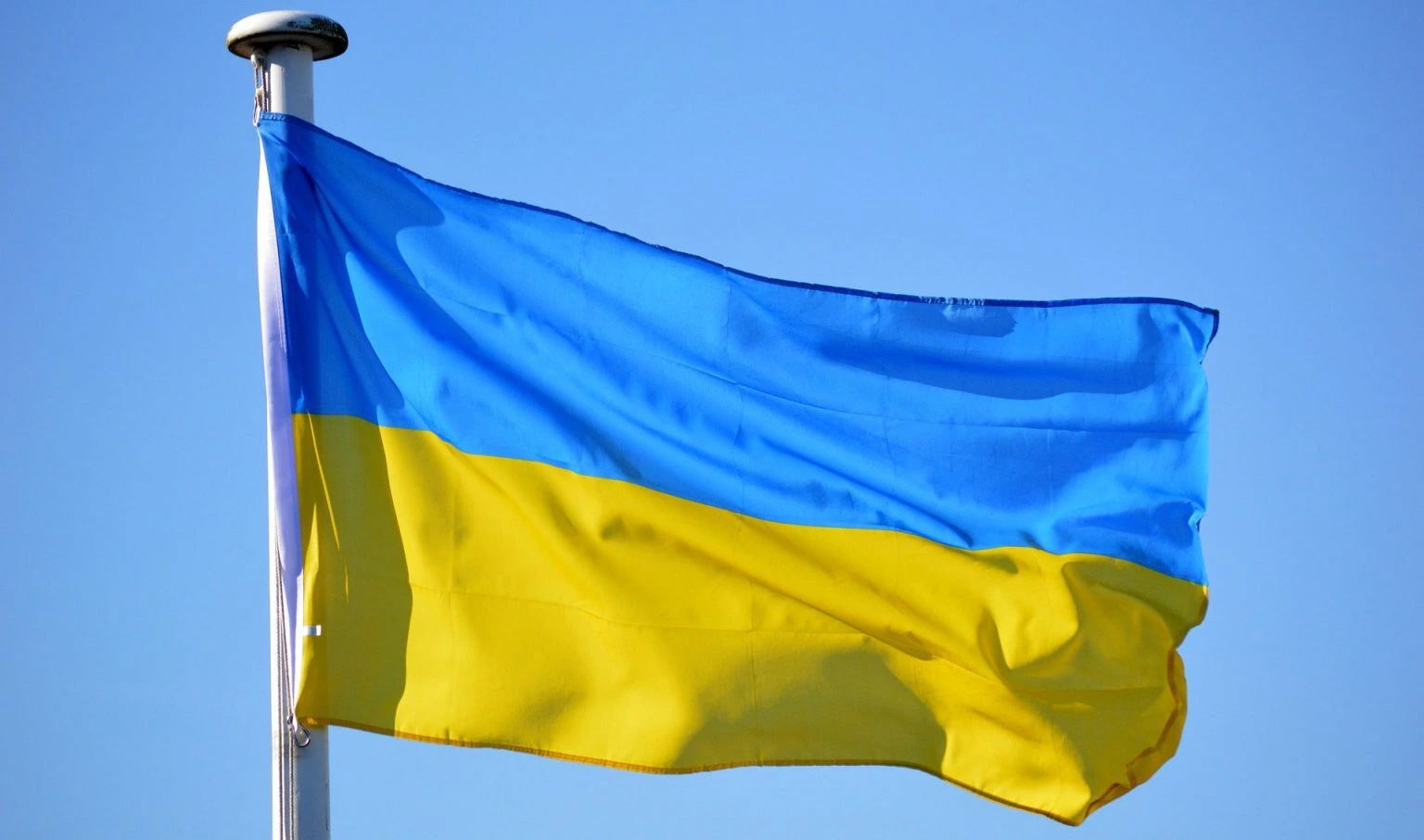
A new museum guide focused on Ukraine has been released through an international partnership project initiated by the Ukrainian Institute in collaboration with ICOM UK, ICOM Ukraine (the United Kingdom and Ukraine national committees of the International Council of Museums) and the Museums Association, with support from the British Council.
The English and Ukrainian versions of the guide are available for free to download from all project partners' websites.
Download
The purpose of the guide is to support museum and cultural heritage professionals globally to include Ukraine in their decolonisation practice. It is written for those who may have limited knowledge about Ukraine but who champion diversity and inclusivity.
As well as offering new perspectives on the rich cultural heritage of this major European country, reliable information equips readers with the confidence to challenge harmful colonial narratives, negative stereotyping, misrepresentation and mislabelling of Ukraine and its cultural heritage.
Although parts of modern-day Ukraine were claimed by different states at different times, the guide focuses on the impact of the Russian empire and the USSR. This is because Russia’s colonial narratives are not widely understood.
Advertisement
By acknowledging the complex and often difficult processes involved in unlearning and relearning the past, the guide positions Ukraine in solidarity with a global network of decolonisation struggles.
The guide has been developed by experts and practitioners from Ukraine and internationally to bring together a range of perspectives and to represent a ‘snapshot in time’ on this decolonisation journey.
Case studies and examples of good practice have been drawn from a variety of fields – including academia, archives, galleries and libraries as well as museums – to show how learning can be shared across different types of memory institution.
We hope that this publication will also be relevant to other global contexts and different colonial settings, and that it will inspire the development of more guides to explain the rich and diverse cultural heritage of other peoples and nations.
“This guide is about Ukraine - but its lessons are far-reaching’, says Kristīne Milere of the Latvian National Museum of Art / Art Museum RIGA BOURSE. “Reading this guide, you can replace the word ‘Ukraine’ with ‘Latvia’ or any of the other Baltic states and it still makes sense.”
“The new guide will help restore epistemic justice to the Ukrainian heritage in the world’s perception. Ukrainian culture has been banned, appropriated and destroyed by Russia for centuries. Every day, Russian troops continue to destroy Ukrainian identity and target cultural and heritage sites. Meanwhile, global museums continue to spread Russian imperial narratives, and Ukrainian culture remains invisible, misattributed, and undervalued. The Guide provides tools to eliminate prejudice and help put Ukrainian heritage in its proper context. This simple and clear approach will allow all institutions working with heritage and memory to work systematically with Ukrainian heritage.”
Tetyana Filevska, creative director, Ukrainian Institute
“The British Council is proud to support the launch of this Decolonisation Guide, an important resource that builds on the momentum and lessons from our work linking Ukraine and UK. Decolonisation is about clarity, sensitivity, and accuracy in the way we represent culture and history. This guide provides museums and cultural institutions in the UK and worldwide with practical tools to deepen their engagement with Ukraine, challenge colonial legacies, and foster authentic intercultural dialogue. We believe it will inspire meaningful reflection and action—not only about Ukraine’s heritage but also about the broader processes shaping cultural representation globally.”
Claire de Braekeleer, director arts Wider Europe, British Council
“For Icom (the International Council of Museums), decolonisation is not a single act but a long-term, multi-faceted transformation. Icom encourages museums to investigate the origins of their collections – particularly those obtained during colonial periods – and to collaborate with source communities to co-curate and reinterpret objects. The tools and advice offered as part of this guide will go some way towards helping museums to diversify the stories they tell about Ukrainian culture and history, and to include perspectives from formerly colonised peoples – whether in Ukraine or in other parts of the world.”
Christian Baars and Maria Blyzinsky, co-chairs of Icom UK
“A key part of the decolonisation process is rethinking who we are — our personal, family, and national histories, as well as the stories of others. This guide is intended as a resource for such reflection, not just about Ukraine and its cultural heritage, but for all peoples who have ever lived under, or been shaped by, empires, including the Russian one.”
Anastasiia Cherednychenko, historian, Phd, chair of Icom Ukraine
“I hope this guide will support colleagues to better understand the history of Ukraine and the Russian empire and to explore objects in collections outside of Ukraine in a new light. The decolonisation process can help us to research new narratives and add to our knowledge of the past as well our understanding of the present, which is vital if we are to help shape a just and peaceful future for all.”
Sharon Heal, director of the Museums Association