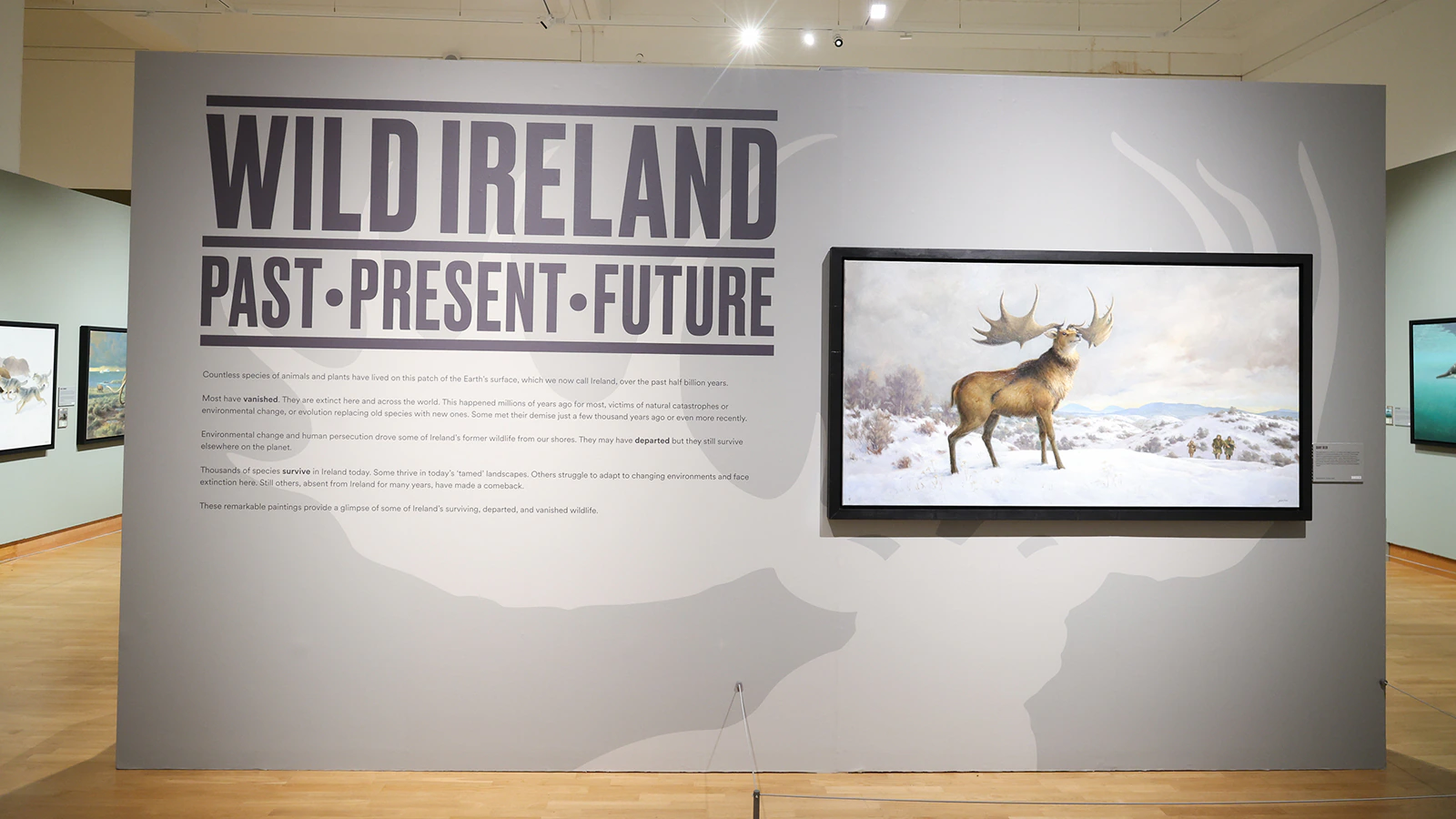
Wild Ireland: Past, Present, Future
Wild Ireland: Past, Present, Future is a new exhibition that opened at Ulster Museum, Belfast in February 2025. In marrying scientific expertise and specimens with artistic representations of Ireland’s wildlife and landscapes, it communicates urgent messages about the threats to the awe-inspiring wonders of our natural world. It highlights the need for positive action to prevent further environmental damage and biodiversity loss.
The origins of the exhibition trace back to 2018 and Ulster Museum’s response to the Natural History Museum’s Dippy on Tour: A Natural History Adventure. Mike Simms, curator of geology, worked with acclaimed local artist Julian Friers to advise on how to recreate images of Ireland’s ‘lost monsters’, and those threatened with extinction today.
A small number of the resulting artworks featured in the Dippy on Tour exhibition, but Mike and Julian continued to work together, and Julian went on to create new paintings at a prolific rate.
Since then, National Museums NI has been proactive in formalising its commitment to the environment and embarking on a range of transformative activities.
For example, we were the first organisation in Northern Ireland to conduct a baseline carbon footprint assessment to inform a carbon reduction action plan; we have trebled capacity and expertise in our Centre for Environmental Data and Recording (CEDaR); and ‘Environment’ is identified as a key impact area in our new corporate strategy, which launched in April 2025.
Advertisement
We have been clear in our commitment to mobilise our museums and collections to promote environmental action and protect our shared planet.
So how could we bring all this important activity and messaging together in an accessible and meaningful way, providing a chance for our audiences to develop understanding and creating a platform for debate? An exhibition based on Julian Friers’ paintings and specimens from our wider collections was the perfect solution.
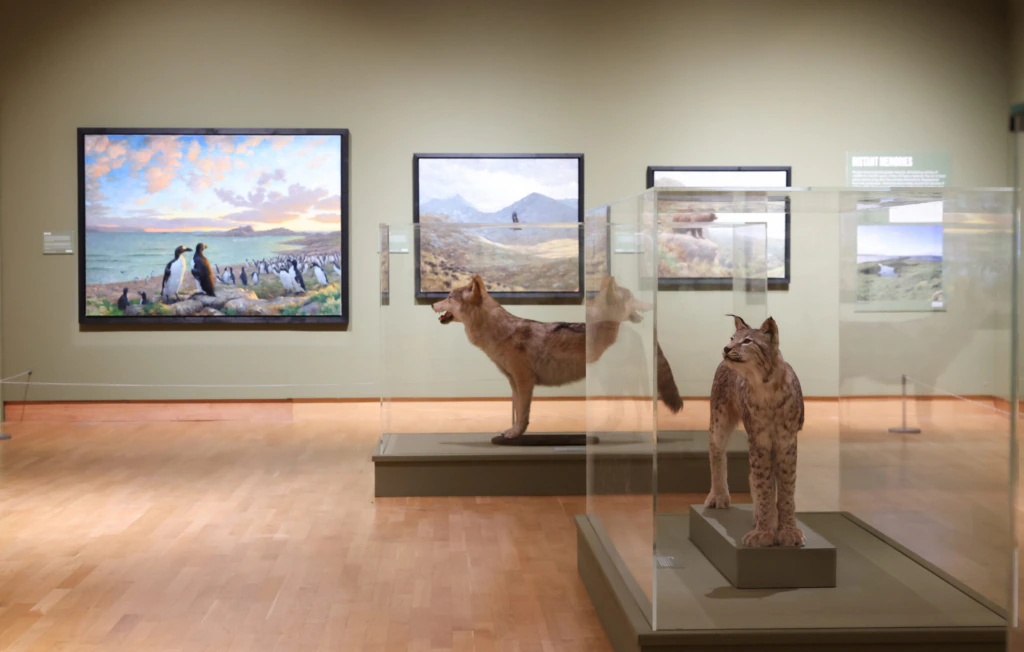
This cross-disciplinary exhibition encourages audiences to explore the big environmental issues affecting us locally, nationally and internationally. It takes them on a timeline journey through eight themes, illustrated using over 60 of Julian’s original paintings and specimens from the collections. The exhibition also includes loans from the National Museum of Ireland.
In terms of biodiversity loss, Northern Ireland currently ranks 12th from the bottom of 240 countries, so there are sobering, urgent messages being communicated.
Julian’s paintings highlight some of the flora and fauna that we have lost, others that are on the brink, and a few that are thankfully making a comeback. By blending artistic interpretation with scientific research, the exhibition demonstrates how visual storytelling can engage audiences and inspire awareness about our natural world.
Advertisement
The final section of the exhibition profiles natural sciences experts from National Museums NI, including curators and educators, to bring the messaging up to date and highlight the vital roles of expertise, research and public engagement. Audiences learn more about the work of CEDaR and the part they can play in recording nature on their doorstep.
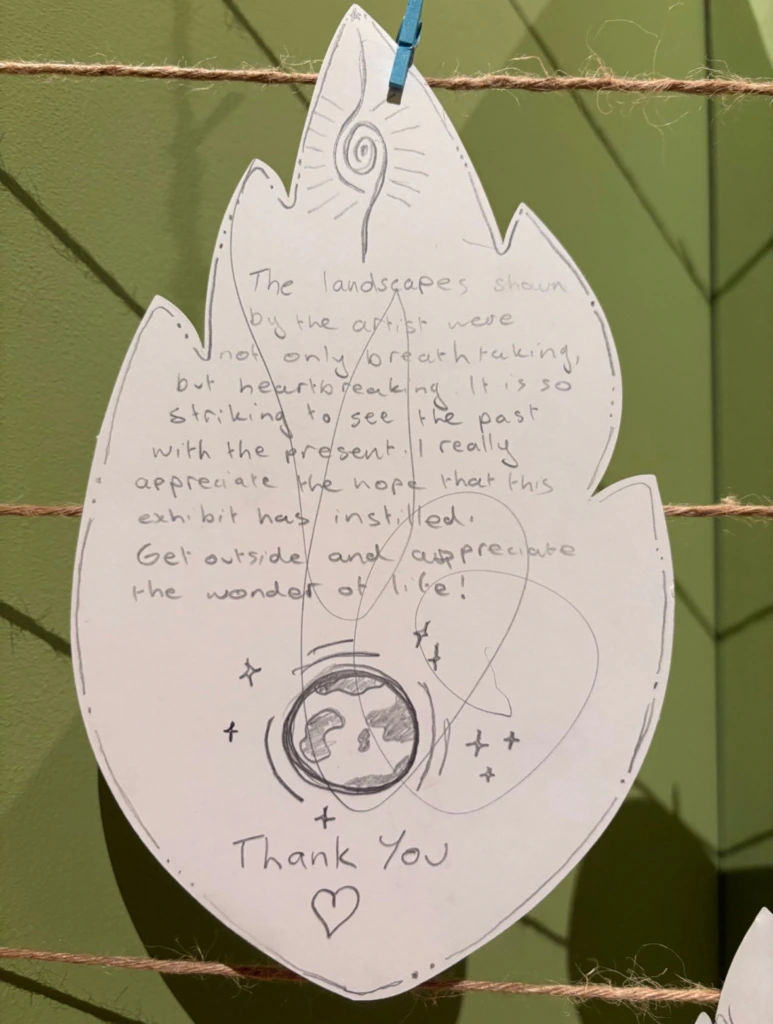
A popular feature is a grove of wooden trees where people can record their responses, thoughts and hopes on paper leaves. These comments demonstrate how awareness has been heightened by the exhibition, and our shared passion and motivation to protect the environment for the benefit of current and future generations.
We hope this will translate into positive action and the learnings are also inspiring us further in our environmental work – Wild Ireland is currently an exhibition but will be translated into a long-term programme across our museums. By using our collections, sites and scientific expertise we strive to be catalysts for environmental action.
Hannah Crowdy is head of curatorial at National Museums NI