What they did
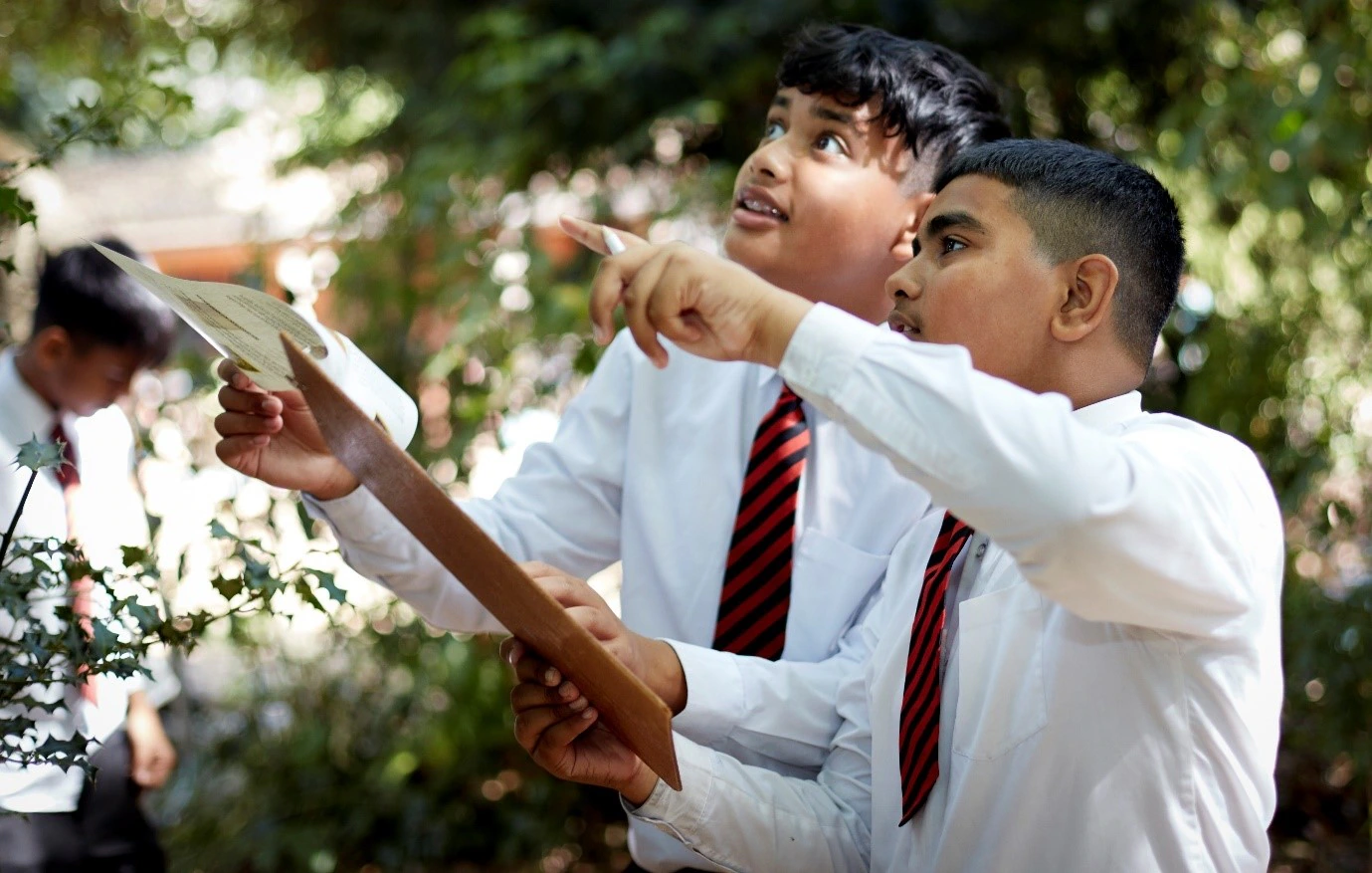
Explore: Urban Nature saw the Natural History Museum (NHM) collaborate with 12 members of its Real World Science (RWS) network to reveal the wonder of nature on doorsteps across the UK. Over three years, the partners became local hubs for nature investigation and engaged over 20,000 students and 1,200 teachers through outdoor learning workshops.
Informed by the NHM’s world-leading research into UK nature recovery, outdoor learning sessions responded to local habitats, natural history collections and stories to bring nature to life. By embedding the school curriculum into sessions, STEM skills were strengthened, further empowering participants to take action for nature in their communities.
How they did it
Alongside the transformation of the NHM’s five-acre site in South Kensington into a welcoming, accessible and biologically diverse green space, the team behind the project was keen for the learnings and tools from the project to extend beyond London and resonate nationwide. Explore: Urban Nature spanned all four UK nations as the team knows that:
- The majority of the UK population lives in towns and cities, and this number is increasing
- There is a shortfall in STEM skills among young people
- Early engagement with nature increases the likelihood of future environmental stewardship
- Outdoor learning supports mental health and wellbeing
- Urban areas are home to a wealth of wildlife and understanding of this biodiversity remains low
Advertisement
The programme, developed in consultation with teachers, young people, and RWS partners, highlighted gaps in existing museum offers. As a result, the project prioritised KS2 and KS3 students, particularly those from disadvantaged and underrepresented backgrounds, and built teacher confidence in delivering outdoor learning experiences.
Activities were wide ranging and included:
- In-person hands-on, outdoor workshops (in museums and schools)
- In-person and online teacher training through STEM Learning
- A suite of free learning resources developed in partnership with organisations such as Imperial College London
- Support for in-school learning activities such as opportunities for CREST Awards
- Career days at museums to raise awareness of green careers
As a national programme spanning diverse settings, partners adopted a place-based approach while aligning with shared objectives. This ensured a unified vision alongside bespoke delivery models, from in-depth engagement with SEND students in Belfast to large-scale secondary school programmes in Glasgow.
Outcomes
The programme ended in December 2024, successfully deepening young people’s connection with local nature.
- Students: Over 20,000 students participated with more than 250 students completing a CREST Award. Students developed critical thinking, teamwork and scientific skills.
- Teachers: Over 1,200 teachers engaged in the CPD programme, while learning resources were downloaded over 11,000 times. Teachers reported an increased awareness of urban nature, changes in teaching practice and greater confidence in outdoor learning.
- Partners: Museums strengthened their school networks, developed staff skills and expanded engagement with underserved audiences. Many museums extended urban nature content beyond KS2 and KS3, reaching adults, families and local communities.
Advertisement
Learning and legacy
Explore: Urban Nature’s legacy was far reaching, and plenty was learned across its delivery, including:
- Flexibility: Working with partners across the UK required tailored approaches to ensure programming was relevant and impactful to their setting.
- Accessibility: Using funds to address practical issues, such as subsidising transport costs for schools, increased student participation and inclusivity.
- Capacity building: Partners reported the value of funding for staff to have the time and resources to develop outdoor learning offers.
- Co-development: Teacher input in programme design ensured learning experiences were both enjoyable and educational for students.
- Network: Peer-to-peer learning and knowledge exchange among RWS members strengthened the quality and reach of the programme and supported museum educators to build confidence in science communication.
The success of the programme has informed other ambitious national projects, including NHM’s first mass-Community Science project, Nature Overheard (currently engaging over 83,000 people), and the National Nature Education Park in partnership with the Department for Education. The work doesn’t end here, and the team is continuing to build an Urban Nature Movement that connects everyone with the nature around them.
Urban Nature national partners
- Natural History Museum, London
- RSPB Giving Nature a Home, Glasgow in partnership with Kelvingrove Art Gallery and Museum
- Great North Museum: Hancock, Newcastle
- Amgueddfa Cymru, National Museum Cardiff
- Birmingham Museums Trust
- Leeds Museums and Galleries
- Wollaton Hall, Nottingham City Museums
- Natural History Museum, Tring
- National Museums Northern Ireland
- Dorset Museum
- Stoke-on-Trent Museums
- Touchstones, Your Trust Rochdale
- Horniman Museum, London
Project thanks
The Natural History Museum thanks all funders to the project, including those who wish to remain anonymous, and in particular expresses its gratitude to:
Lead sponsor
AWS
Lead donors
National Lottery Heritage Fund, Evolution Education Trust, The Cadogan Charity, Garfield Weston Foundation, Kusuma Trust
Supporting donors
The Wolfson Foundation, Charles Wilson and Rowena Olegario, Royal Commission for the Exhibition of 1851, Clore Duffield Foundation
Supporting sponsors
Workman, Accenture
The trustees and executive board of the Natural History Museum
Stephen and Janian Green, Johnson Matthey, Huo Family Foundation, Simon and Harriet Patterson, Kirk B Alexander, Hussain Aga Khan, The William Brake Foundation, Bloomberg L.P., City Bridge Foundation, Dr Douglas Gurr, Hilary Newiss, The Portal Trust, The Hobson Charity, Holly Smith and Neil Osborn, Dustin Chen, The Meghani Bhanji Family Foundation, The Woosnam Foundation